Front Yard Landscaping Ideas: 13 Beautiful Ways to Upgrade Your Curb Appeal
Your front yard doesn’t need to be huge or expensive to make a great first impression. A few smart landscaping choices can turn a plain patch of grass into a welcoming, polished outdoor space that makes your entire home look more attractive.
Whether you’re working with a small suburban yard, a narrow entryway, or a larger lawn, the trick is choosing plants, pathways, lighting, and decorative details that work with the space you already have. These front yard landscaping ideas range from simple weekend projects to more dramatic makeovers, so you can pick the look that fits your home and budget.
1. Create a Welcoming Flower Border
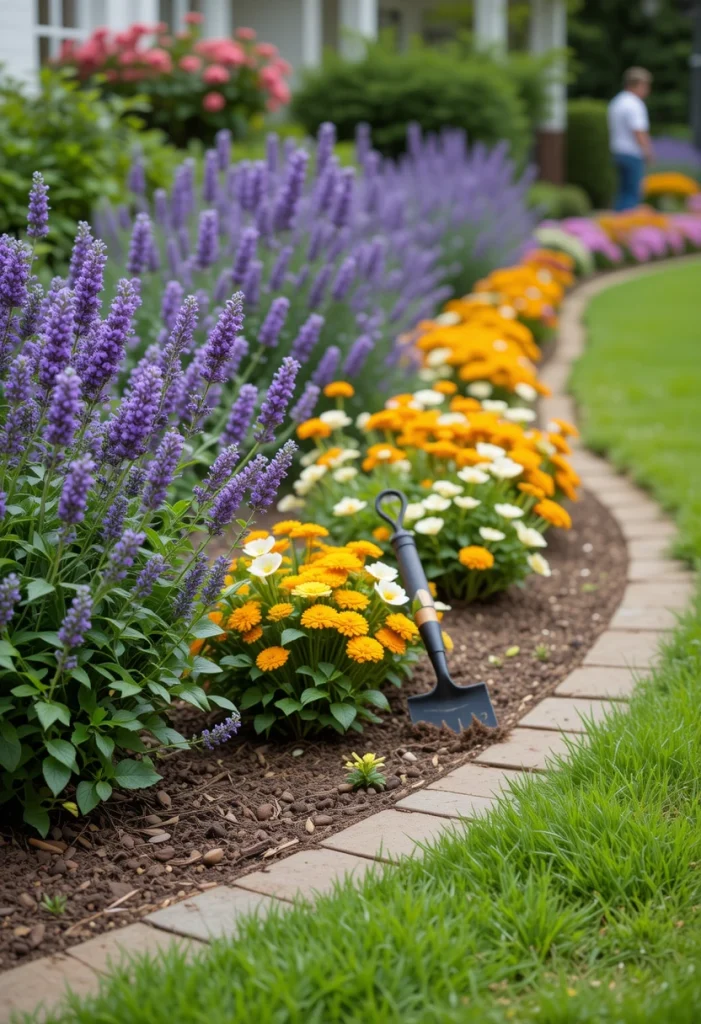
A colorful flower border is one of the easiest ways to give your front yard an instant makeover. Plant flowers such as lavender, marigolds, hydrangeas, or petunias along the edge of your lawn or walkway to create a defined garden area. A garden edging kit can keep the border neat, while a handheld garden trowel and kneeling pad make planting and maintaining the flowers much easier. For a cohesive look, repeat a few of the same flower colors throughout the border rather than planting every variety you can find.
2.Add a Curved Stone Pathway
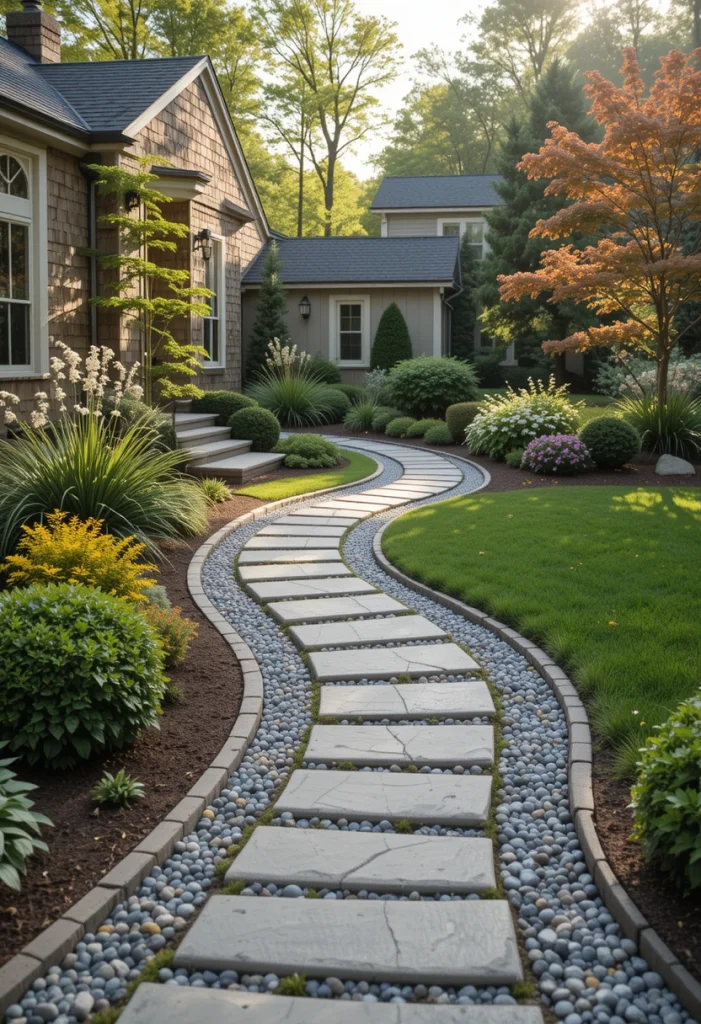
A curved pathway can make a front yard feel more intentional while naturally guiding visitors toward the front door. Use stepping stones, pavers, or decorative gravel to create gentle curves instead of a perfectly straight walkway. A paver installation mold, landscape edging, and rubber mallet are useful tools when you’re installing smaller sections yourself. Curved lines can also make a compact yard appear more interesting because they create movement instead of dividing the space into rigid sections.
3. Use Large Planters Near the Front Door
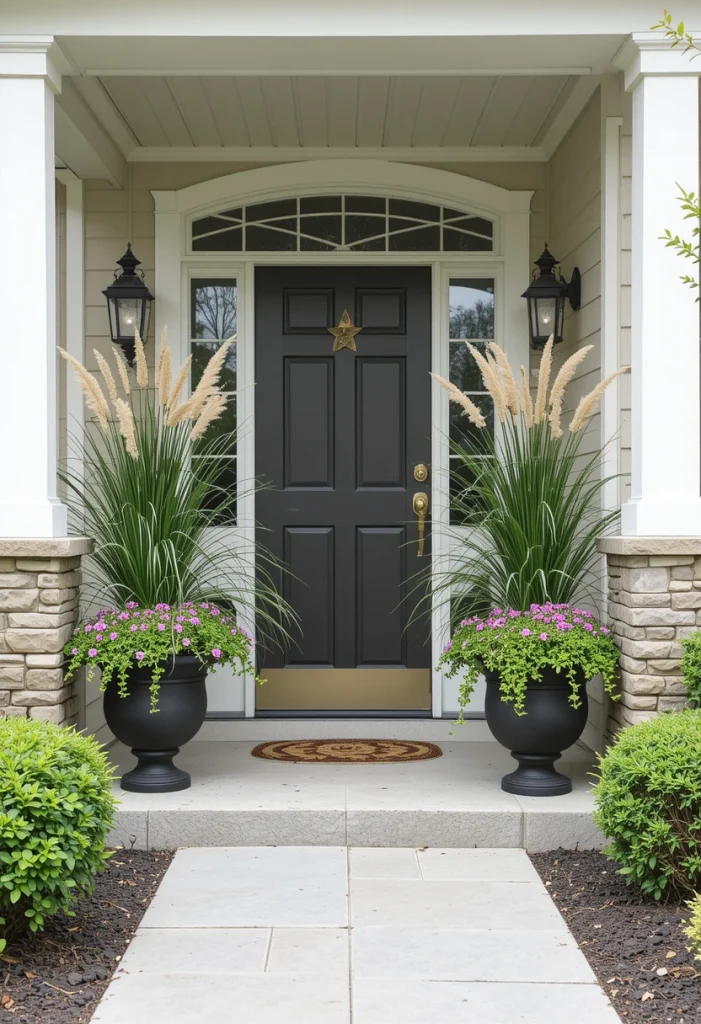
If you don’t have much room for traditional landscaping, large planters can provide plenty of visual impact without requiring a major garden renovation. Place matching outdoor planters on either side of the front door and fill them with tall grasses, flowering plants, or small evergreen shrubs. Add self-watering planter inserts to reduce maintenance and use a watering wand for easy watering. Choose planters that complement your home’s exterior rather than competing with it; simple black, stone, or terracotta finishes tend to work with a wide range of architectural styles.
4. Design a Low-Maintenance Rock Garden
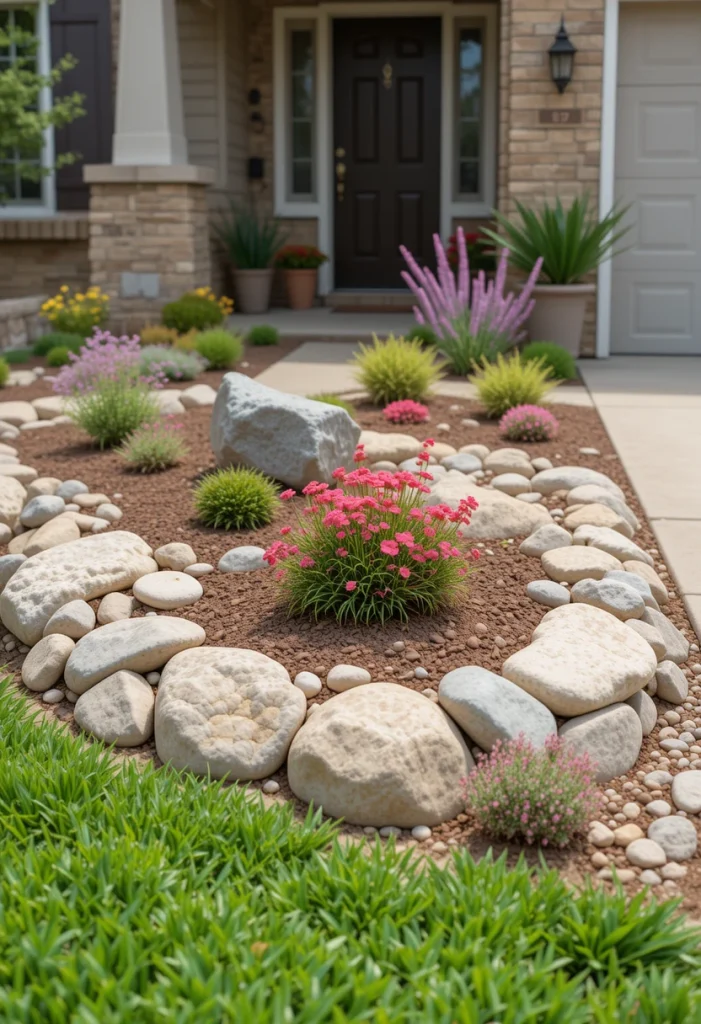
A rock garden is a smart option if you want an attractive front yard without spending every weekend mowing and pruning. Combine decorative landscape rocks, drought-tolerant plants, and a few larger stones to create a structured garden that requires relatively little maintenance once established. A landscape fabric, garden hand rake, and heavy-duty gardening gloves can make installation and upkeep easier. This approach works particularly well around entryways, driveways, and areas where grass struggles to grow.
5. Plant Small Trees for Structure
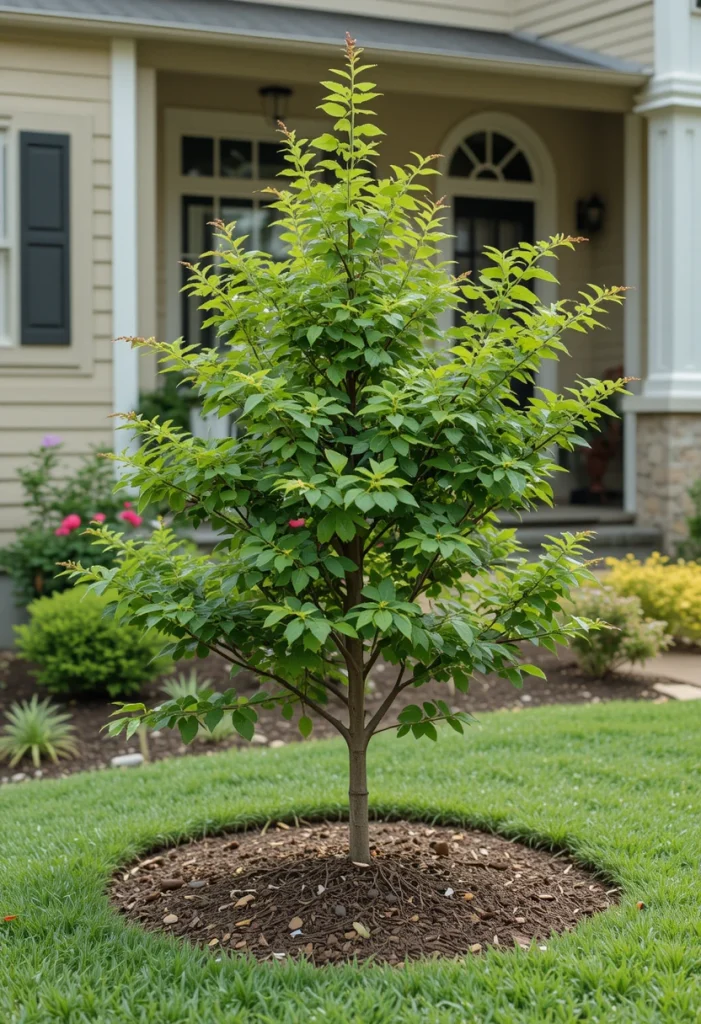
A carefully positioned small tree can become the anchor of your entire front yard. Consider varieties that suit your climate and available space, then surround the base with mulch, flowering plants, or low-growing ground cover. A tree watering bag, plant support stakes, and mulch fork can help with establishing and maintaining a young tree. Avoid planting large trees too close to the house because mature roots and branches can eventually create maintenance problems.
6. Add Solar Landscape Lighting
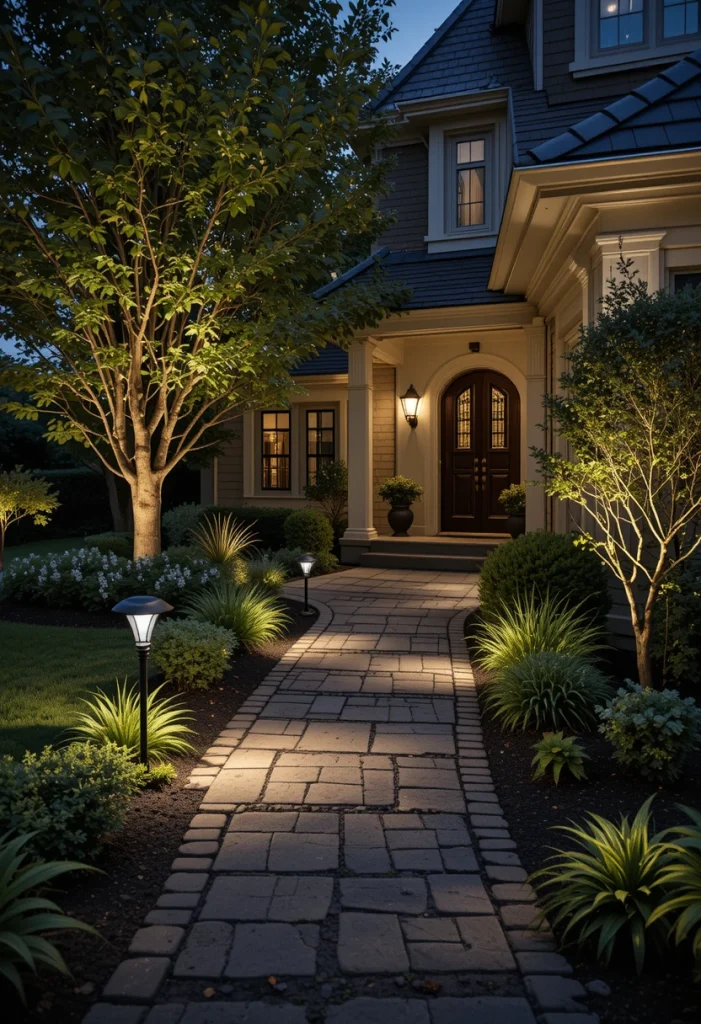
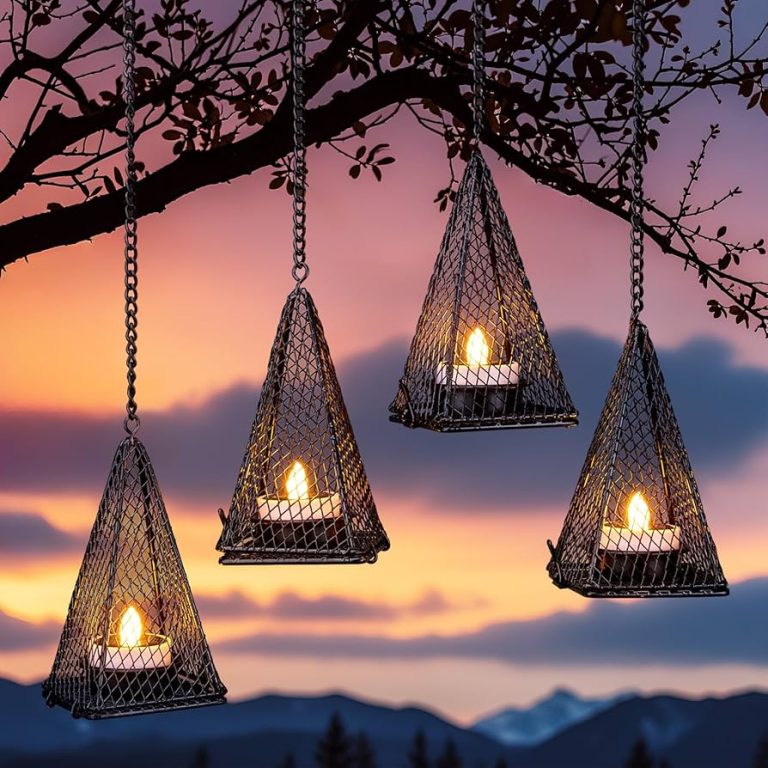
Your landscaping shouldn’t disappear as soon as the sun goes down. Solar pathway lights can illuminate walkways and garden borders while adding a warm glow around the front of your home. Use spotlights to highlight a tree or architectural feature and add solar string lights around a porch or garden area for extra atmosphere. Lighting also makes the walkway easier to navigate after dark, so this upgrade combines curb appeal with everyday practicality.
7. Create a Modern Gravel Landscape
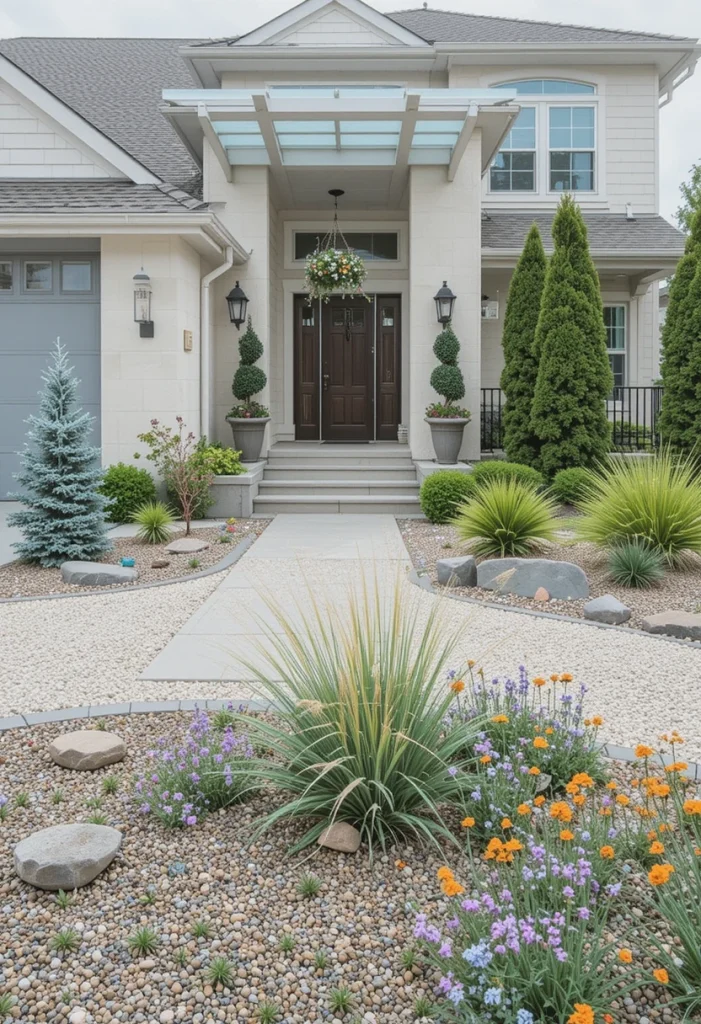
For a contemporary home, gravel can create a clean, architectural front yard that feels completely different from a traditional grass lawn. Combine pea gravel or decorative stone with geometric planting beds, ornamental grasses, and evergreen plants for a modern appearance. Landscape edging, a bow rake, and a landscape fabric cutter are useful additions when creating clean gravel borders. Keep the plant palette relatively simple because too many colors and varieties can undermine the crisp look you’re trying to achieve.
8. Frame the Walkway with Evergreen Shrubs
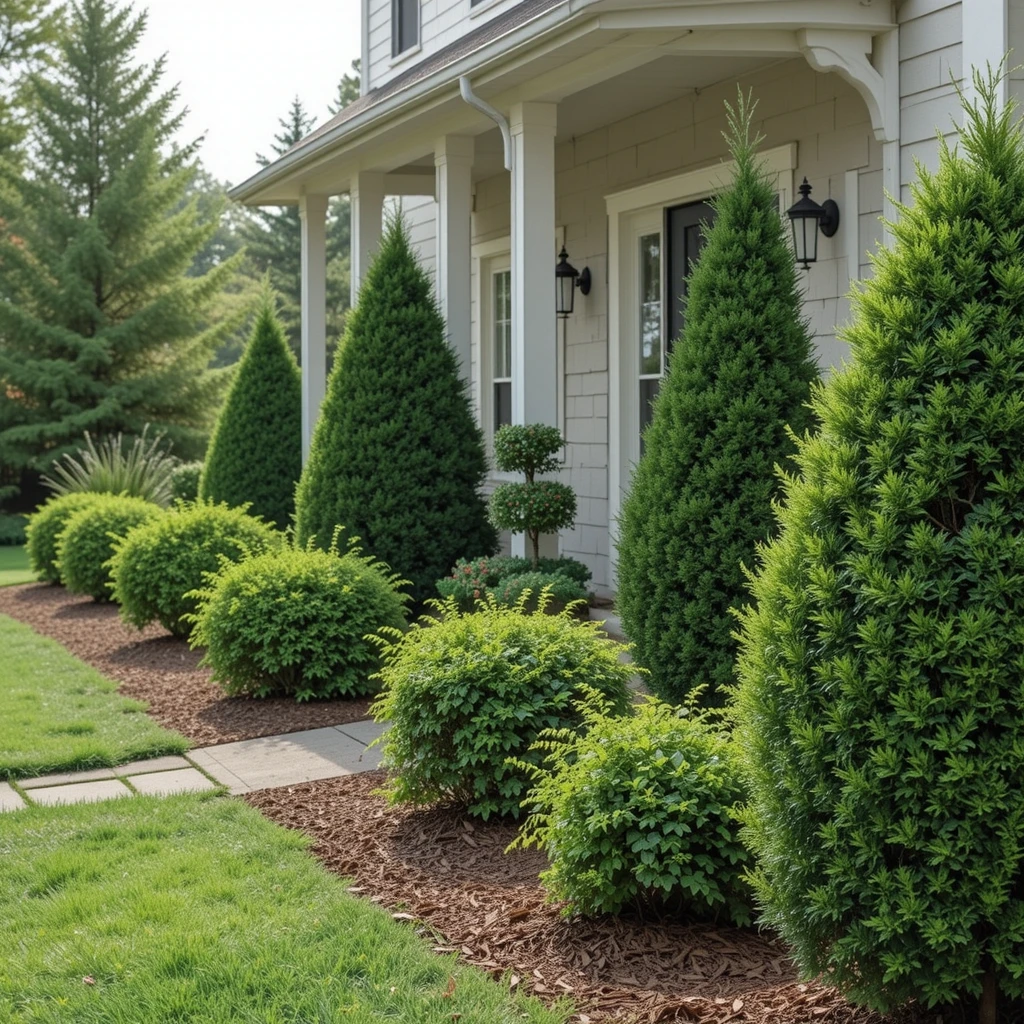
Evergreen shrubs provide structure throughout the year, making them especially useful for front yard landscaping. Plant them in pairs or repeating groups along the walkway to create a balanced appearance without making the garden feel overly formal. A battery-powered hedge trimmer, bypass pruning shears, and garden mulch can help keep the shrubs healthy and neatly shaped. This is a particularly good strategy if you want your front yard to look finished even during seasons when flowering plants aren’t blooming.
9. Build a Cottage-Style Front Garden
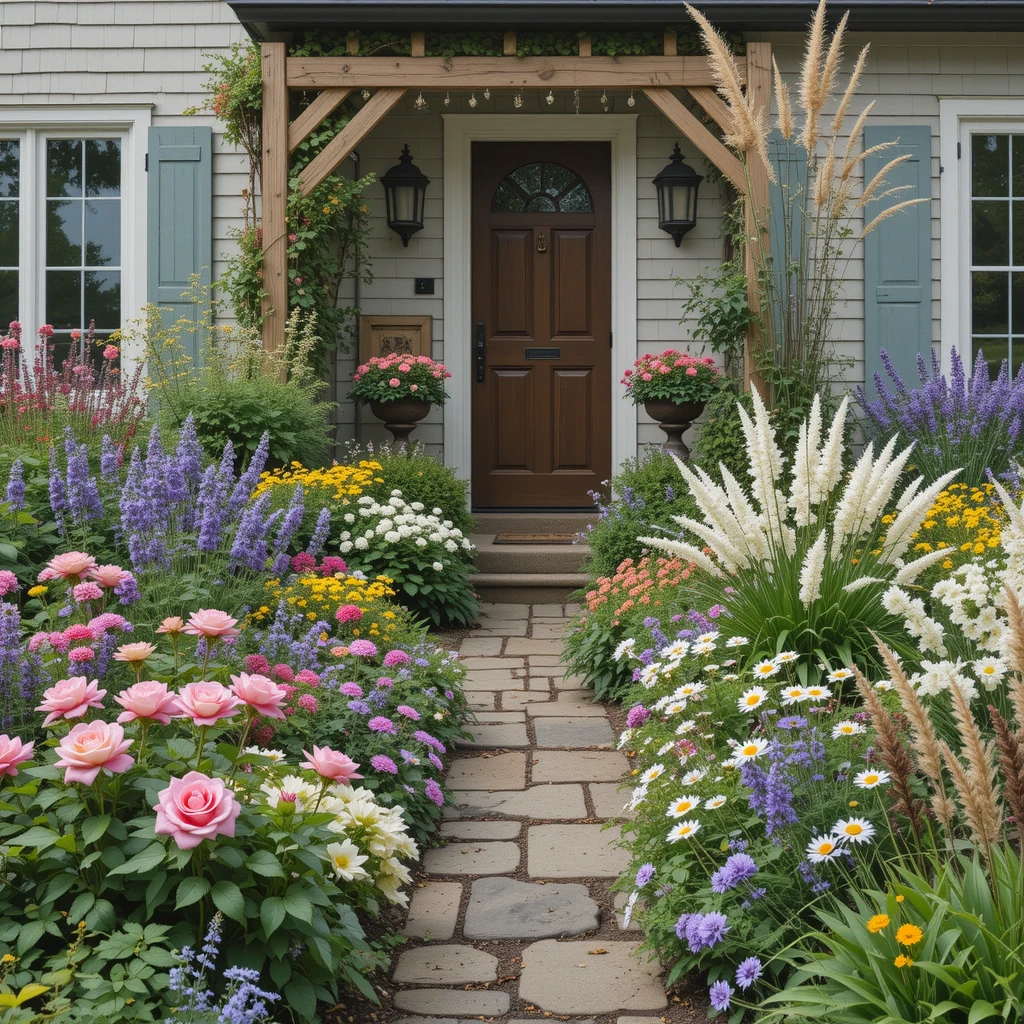
If you prefer a softer and more romantic look, create a cottage-style front garden filled with flowering plants at different heights. Mix roses, lavender, daisies, ornamental grasses, and other suitable plants so the garden feels abundant rather than perfectly arranged. A wooden garden trellis, decorative plant supports, and garden twine can help climbing and taller plants stay organized. The key is controlled variety: let the garden feel relaxed while still keeping pathways and the home’s entrance clearly visible.
10. Install a Raised Garden Bed
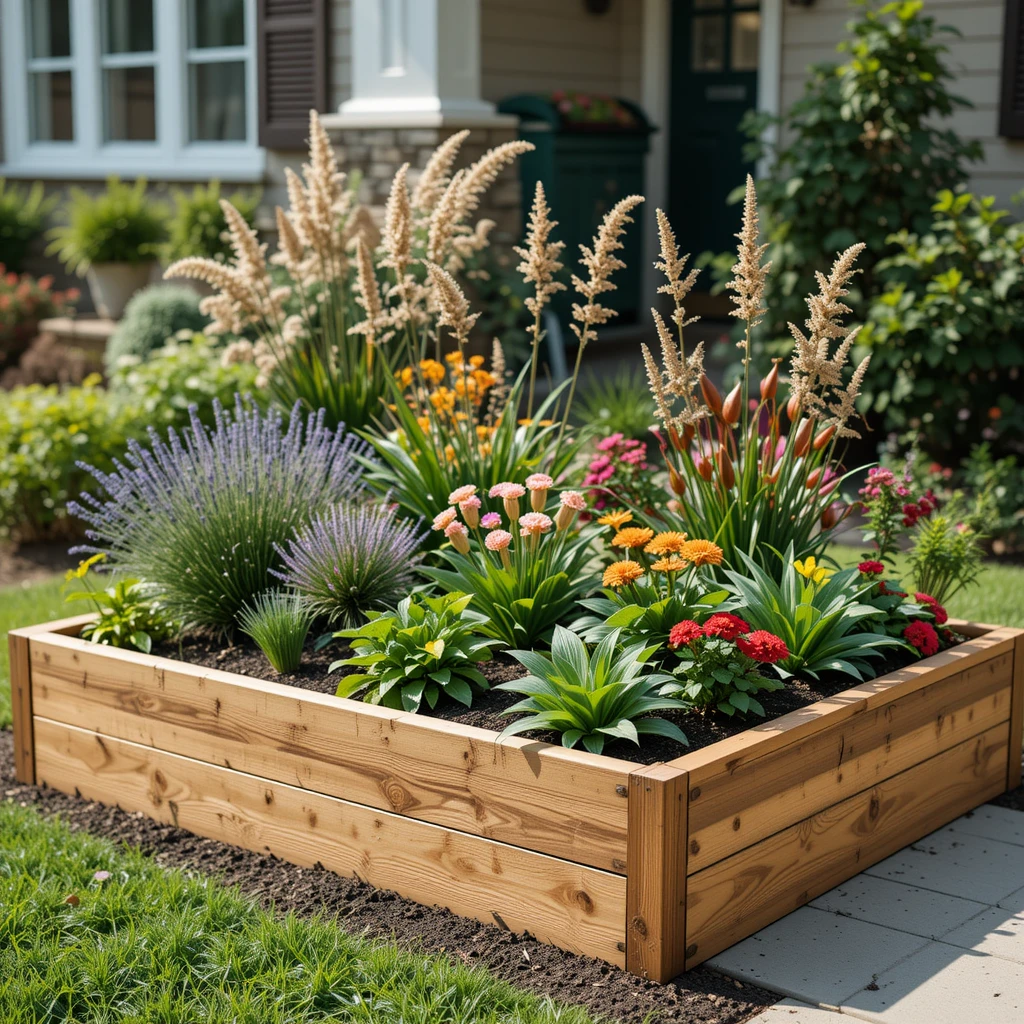
Raised beds aren’t just useful for vegetables; they can also create attractive planting areas in a front yard. Use a wooden or metal raised garden bed near the entrance and fill it with ornamental grasses, herbs, flowering plants, or seasonal color. A garden soil scoop, compost bin, and planting gloves make it easier to maintain the bed throughout the growing season. Raised beds are particularly useful when the existing soil is poor because you can control the growing medium instead of trying to improve the entire yard.
11. Add a Decorative Front Yard Bench
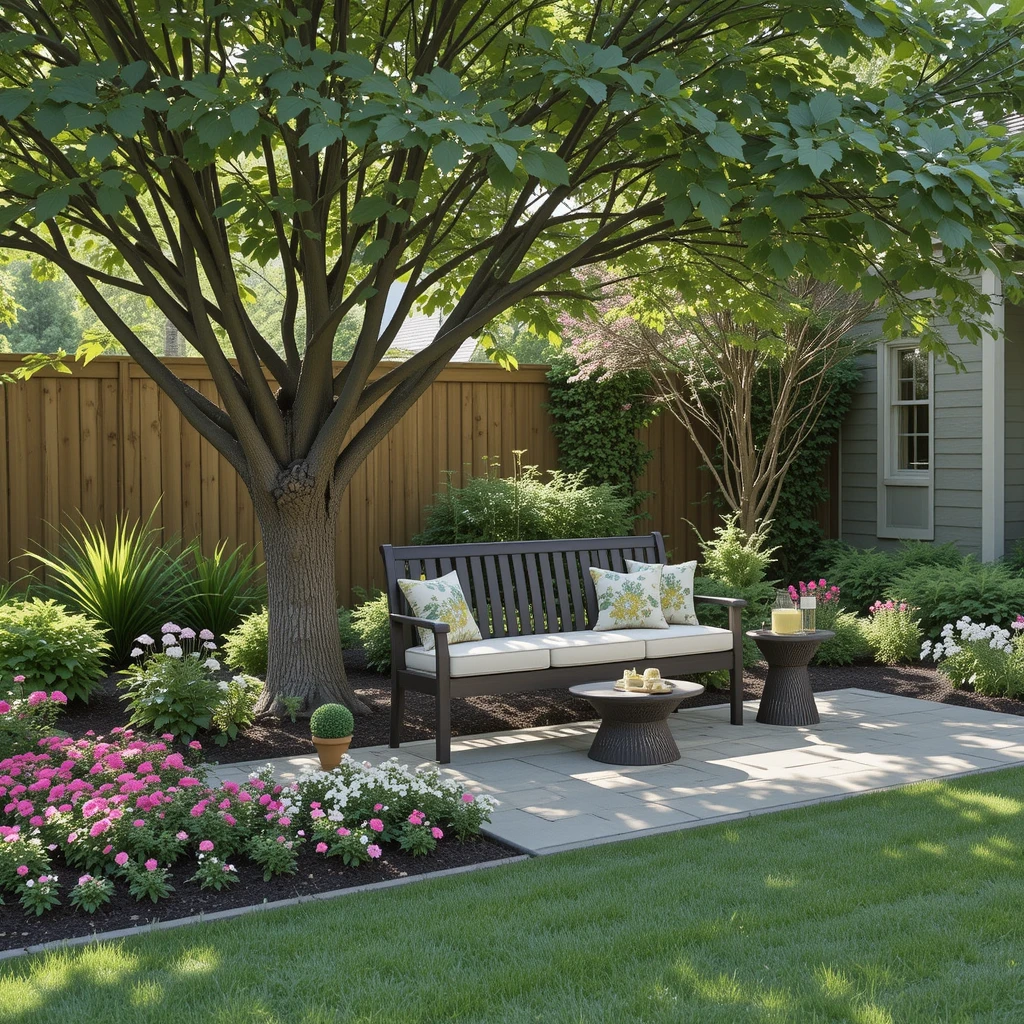
A bench can turn a purely decorative landscape into a space you can actually enjoy. Position a weather-resistant outdoor bench beneath a tree or beside a flower bed, then add an outdoor seat cushion and a small side table for a comfortable finishing touch. Keep the furniture slightly away from the main walkway so visitors can move easily toward the front door. Even if you rarely sit outside, a well-placed bench can give a large garden a focal point and make the landscape feel more intentional.
12. Use Mulch to Define Garden Beds
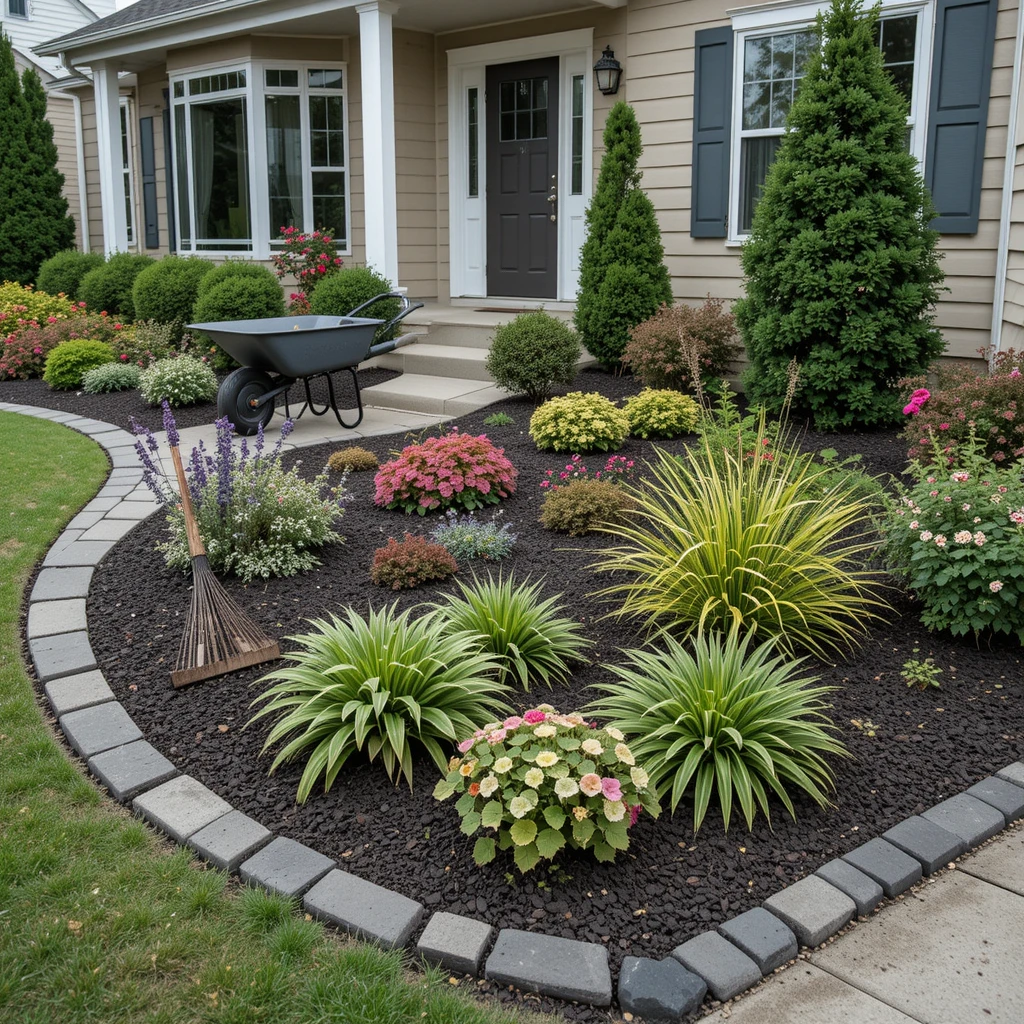
Never underestimate what a fresh layer of mulch can do for a front yard. Dark mulch creates contrast against green plants and colorful flowers, while also helping garden beds look cleaner and more defined. A wheelbarrow, garden rake, and landscape edging tool make spreading and shaping mulch much easier. Instead of covering every available area, concentrate mulch around trees, shrubs, and flower beds to create clear visual zones throughout the yard.
13. Combine Lawn, Plants, and Decorative Stones
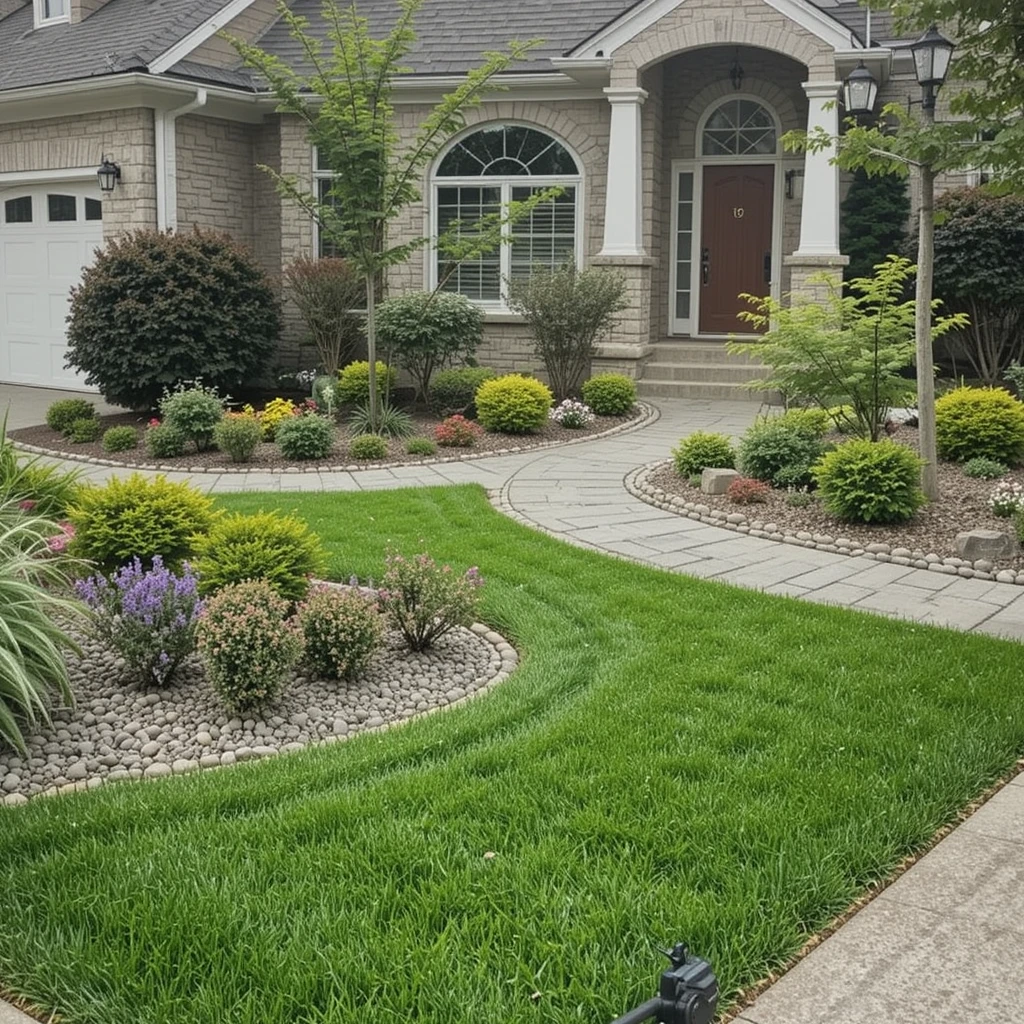
For a balanced front yard, combine several landscaping elements instead of relying entirely on one. Keep a manageable section of green lawn, surround it with planting beds, and introduce decorative stones or pavers around trees and pathways. A cordless lawn mower, garden hose nozzle, and landscape edging shears can help keep the different areas looking neat. This combination works especially well for family homes because it provides a polished appearance while leaving enough open lawn for children, pets, or everyday outdoor activities.
How to Choose the Right Front Yard Landscaping Style
Before buying plants or outdoor accessories, take a good look at your home’s architecture. A modern house often looks best with clean lines, gravel, ornamental grasses, and simple planters, while a traditional home can handle fuller flower beds, shrubs, stone paths, and classic garden details.
Also consider how much maintenance you’re realistically willing to do. If you travel frequently or don’t enjoy gardening, prioritize low-maintenance plants, mulch, gravel, and automated or easy watering solutions. If gardening is something you genuinely enjoy, you can create more elaborate beds with seasonal flowers and plants that require regular pruning.
Small Front Yard Landscaping Tips
A small yard doesn’t mean you have to sacrifice style. Use vertical planters, narrow flower beds, large containers, and compact trees to add greenery without taking up too much ground space.
You can also create the illusion of a larger yard by keeping the center relatively open and concentrating plants around the perimeter. Repeating the same plants, colors, or materials throughout the space creates continuity and prevents a small landscape from feeling cluttered.
Conclusion
The best front yard landscaping ideas don’t necessarily require a complete garden renovation. Something as simple as new planters, pathway lighting, fresh mulch, or a defined flower border can make a noticeable difference in how your home looks from the street.
Start with one area that bothers you most and improve it first. Once that section looks right, you can gradually add pathways, plants, lighting, seating, and decorative details until your front yard feels welcoming, functional, and completely your own.