Gothic Dining Room Decor Ideas: 20 Bold Ways to Create Drama and Atmosphere
Some dining rooms feel polite and predictable—yours doesn’t have to be one of them. If you’re drawn to rich colors, dramatic silhouettes, and a touch of old-world mystery, a gothic dining space can turn an ordinary meal into a full-blown experience. This style isn’t about making your home dark or moody without purpose—it’s about creating a room that feels intentional, compelling, and visually unforgettable.
A gothic dining room works for anyone craving bold personality in their home. Whether your style leans medieval, Victorian, modern gothic, or something uniquely your own, the right pieces can transform even a small space into something striking.
20. Deep Burgundy Walls
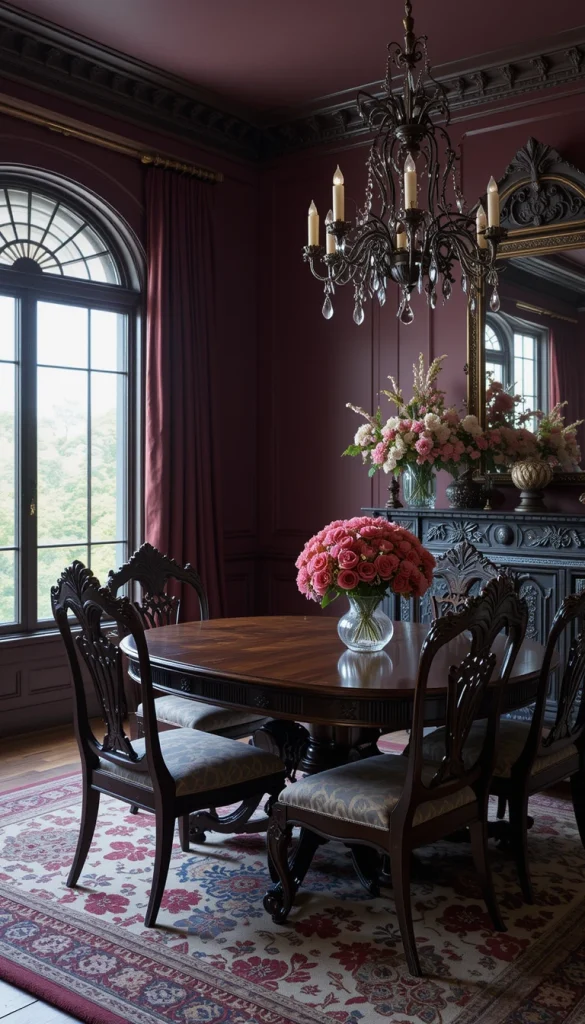
A deep burgundy wall instantly grounds the room with a warm, dramatic backdrop that feels luxurious rather than gloomy. This color works especially well when paired with ornate wood furniture because it highlights carved details. In smaller rooms, use matte paint to reduce glare and create a cozy cocoon effect. If you want a softer look, keep the trim a shade darker for subtle sophistication. Homeowners often find this shade easier to live with long-term compared to pure black.
19. High-Backed Carved Chairs
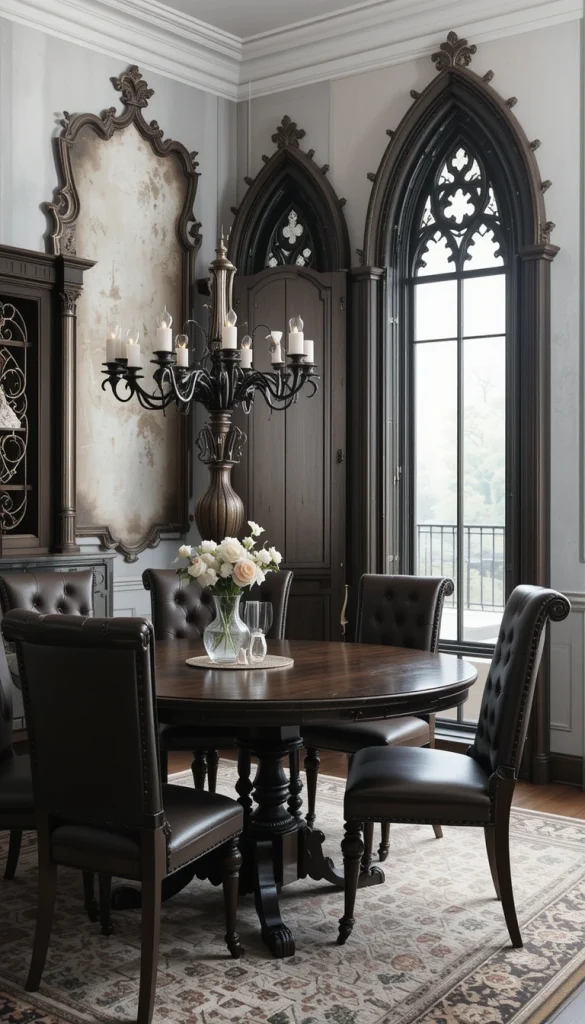
High-backed chairs with carved details add architectural drama even if the rest of the room is simple. They create a sense of height and grandeur, which is a hallmark of gothic style. Upholstered versions add comfort while still feeling theatrical. Dark leather or velvet can help the chairs feel more substantial. This is a great upgrade if you’re renting or avoiding major renovations.
18. Dramatic Candelabras
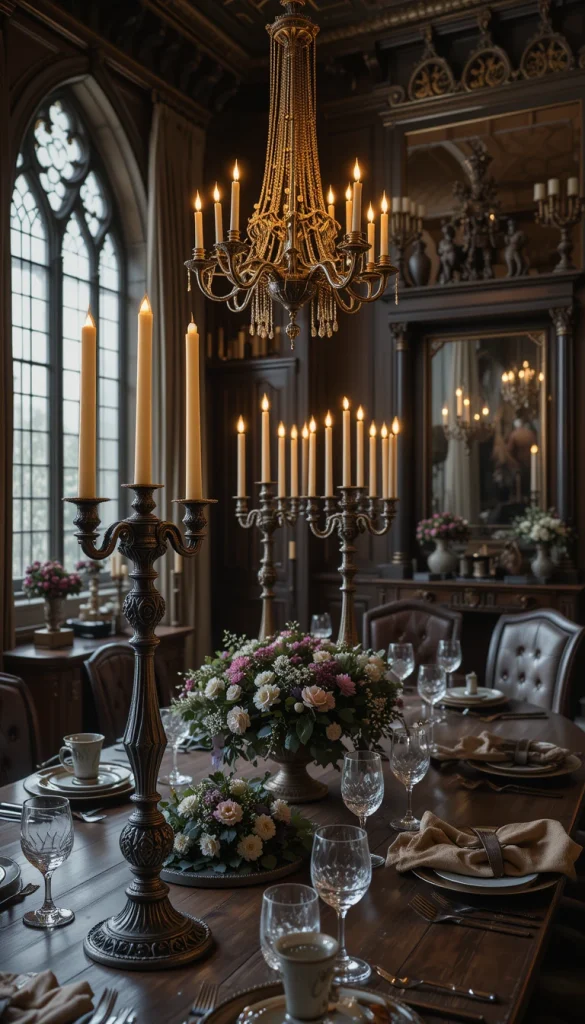
Tall candelabras instantly introduce gothic elegance without overwhelming the space. Real candles add atmosphere, but LED versions work for everyday use. Choose iron or aged brass for authenticity. Placing them at the center of the table ties the entire dining room together visually. This small detail often becomes the most commented-on feature by guests.
17. Ornate Mirrors
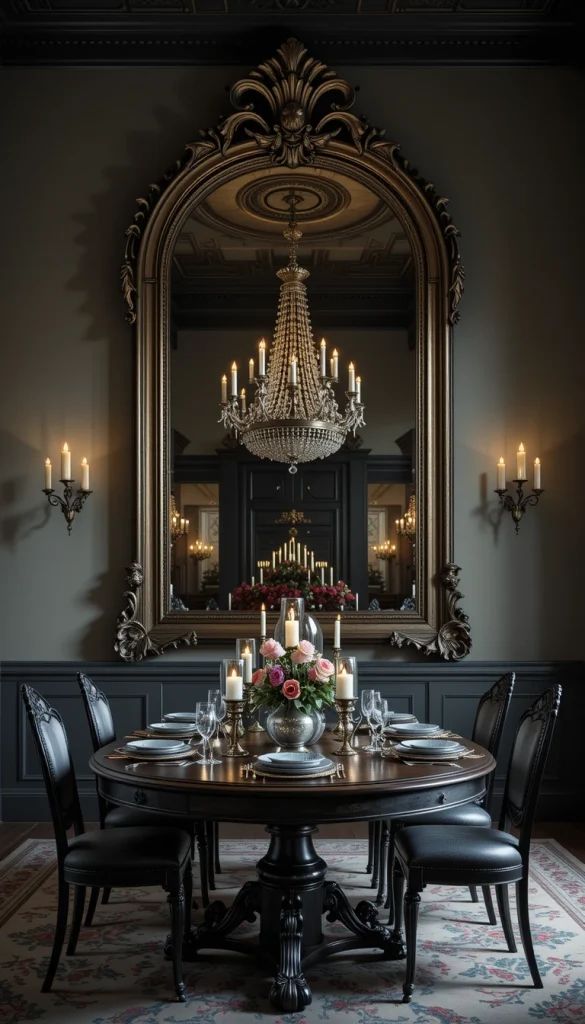
An oversized ornate mirror can visually expand the room while amplifying your gothic elements. Look for baroque frames, distressed metallic finishes, or antique shapes. Mirrors help reflect candlelight, which is a huge advantage in setting a gothic mood. One large mirror usually looks better than multiple small ones in this style. If you want subtle drama, hang it opposite your dining table for a symmetrical, luxurious effect.
16. Velvet Dining Chairs
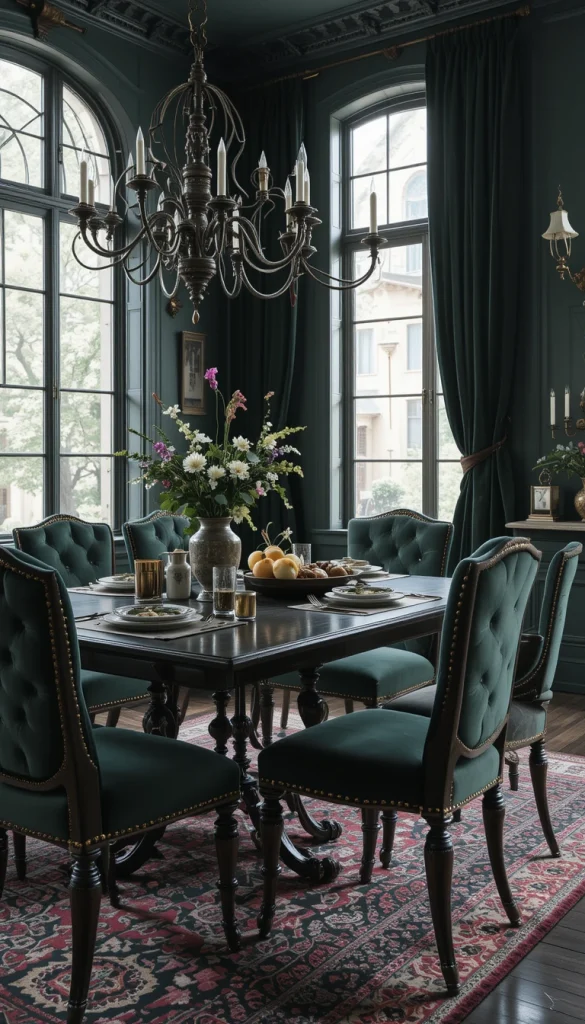
Velvet brings rich texture that instantly elevates a gothic space. Deep greens, charcoals, blacks, or burgundies tend to look especially lush. Velvet also contrasts beautifully with stoneware, metal accessories, and rustic wood. If the idea of solid velvet feels too bold, choose chairs with velvet upholstery on only the seat or back. Homeowners often find that velvet surprisingly hides wear better than expected.
15. Black and Gold Color Accents
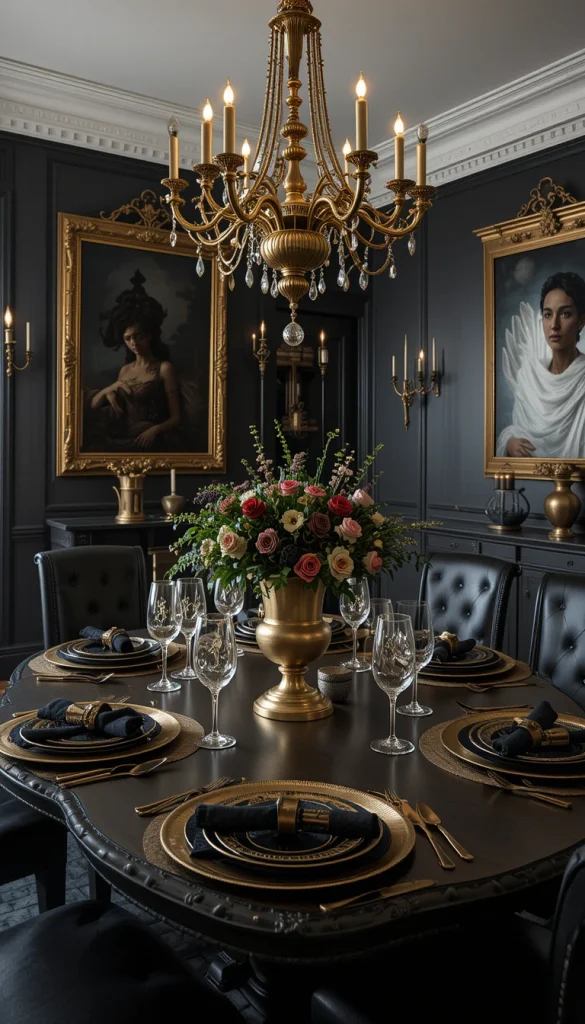
Black sets the gothic tone, but gold provides warm contrast that prevents the room from feeling flat. Use gold on frames, silverware, charger plates, or napkin rings. The combination instantly reads as opulent and grounded. If you prefer subtlety, choose brushed or antique gold instead of high-shine finishes. Even a single gold centerpiece can shift the overall feel of your dining space.
14. Gothic Arch Wall Decor
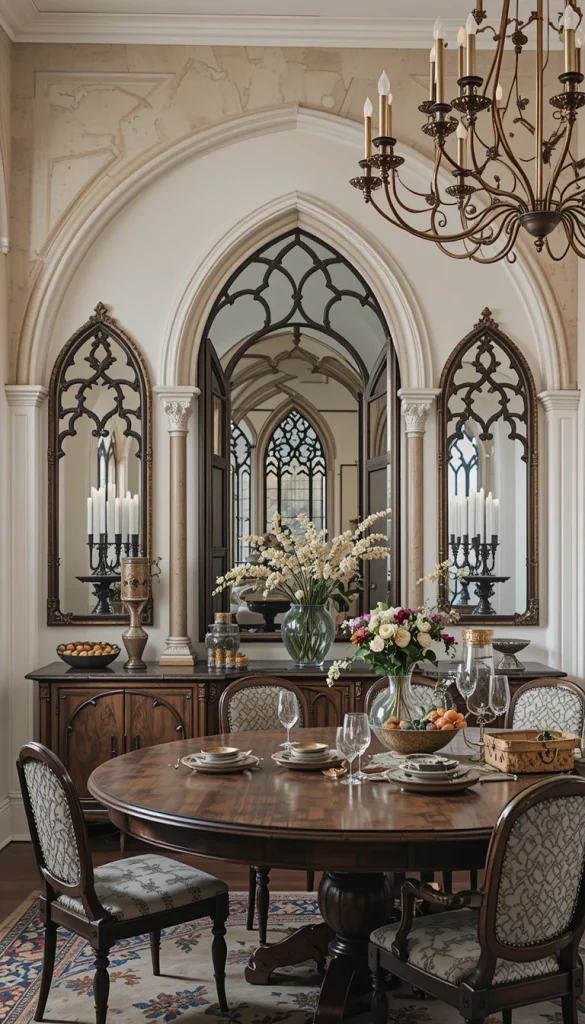
Gothic arches are one of the most recognizable elements of the style. Wall panels, mirrors, or decals featuring arch silhouettes add architectural focus without needing major construction. They work on accent walls or as pairs flanking a sideboard. This shape adds height, elegance, and medieval character to the room. Many homeowners use arches as a shortcut to a more “cathedral-like” feel.
13. Heavy Drapery
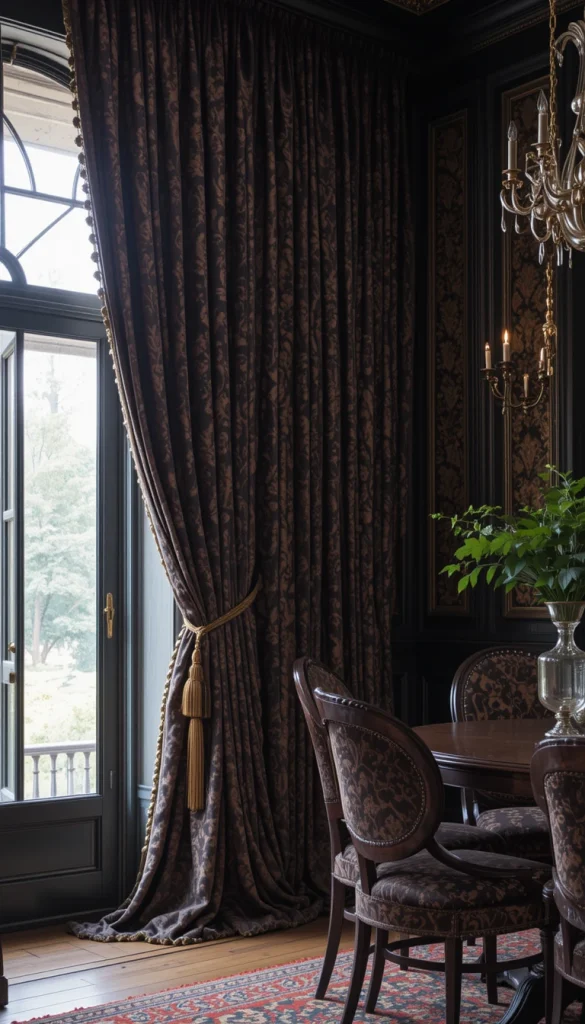
Thick fabric drapery in velvet, brocade, or jacquard instantly adds luxury and privacy. Floor-to-ceiling panels create the biggest impact. Use deep colors that complement your walls, or go darker for dramatic contrast. Tiebacks with tassels lean traditional, while metal holdbacks can feel modern-gothic. Heavy drapes also help with sound control, making the dining room feel more intimate.
12. Vintage Portrait Art
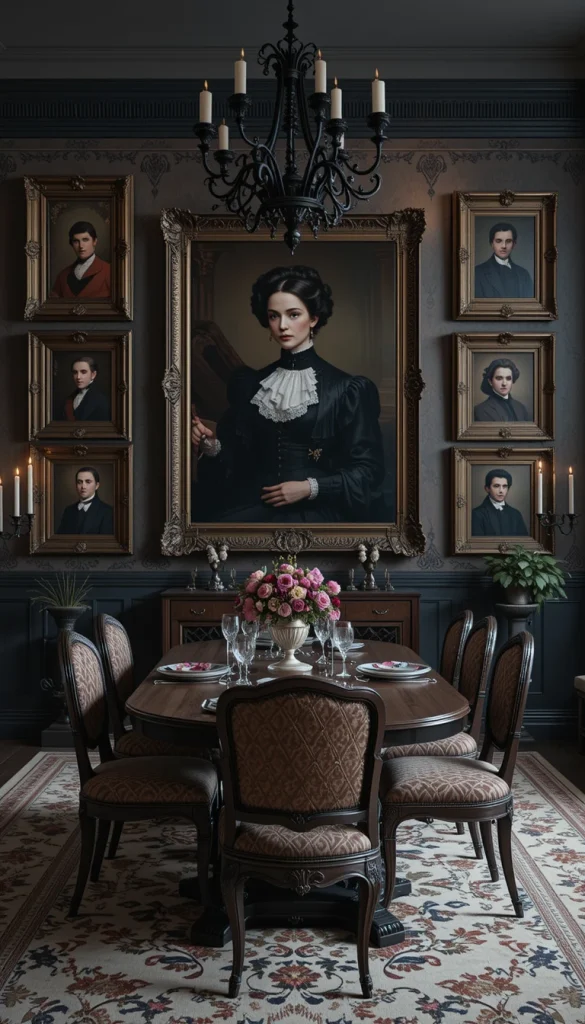
Victorian-style portraits are iconic in gothic interiors because they introduce intrigue and narrative. Choose artworks with moody colors or ornate frames. Hanging a single oversized portrait creates a confident focal point. A gallery wall of smaller portraits can feel like a curated collection with personal significance. This idea works surprisingly well in both modern and traditional homes.
11. Stone or Concrete Tableware
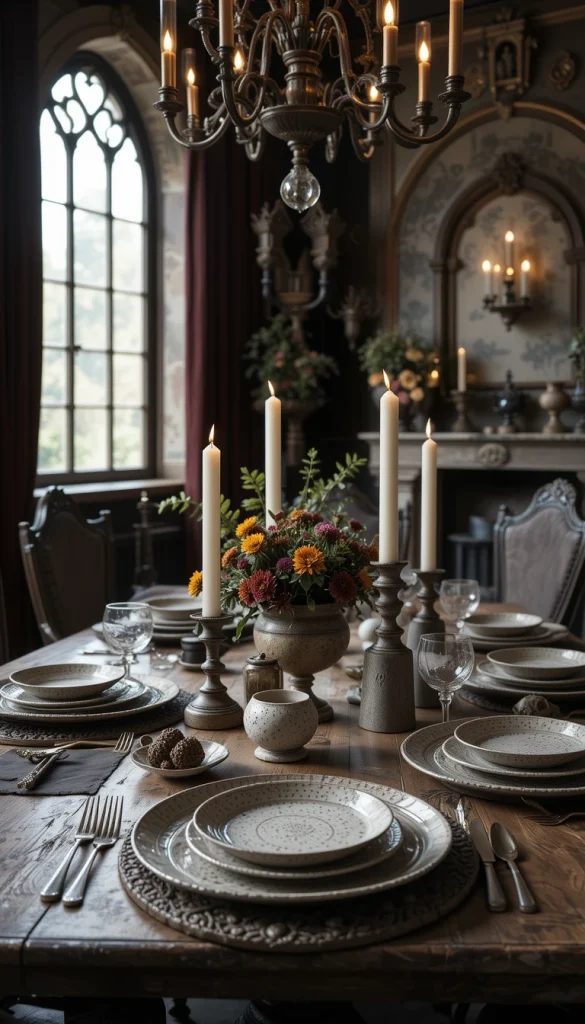
Stoneware plates, concrete candleholders, or textured serving platters add raw, medieval charm. These materials introduce weight and earthiness that balance out the more ornate elements in the room. They’re also incredibly durable for everyday use. Pairing stoneware with velvet and metal creates a satisfying contrast. Guests often remember these tactile details long after the meal.
10. Dark Floral Centerpieces
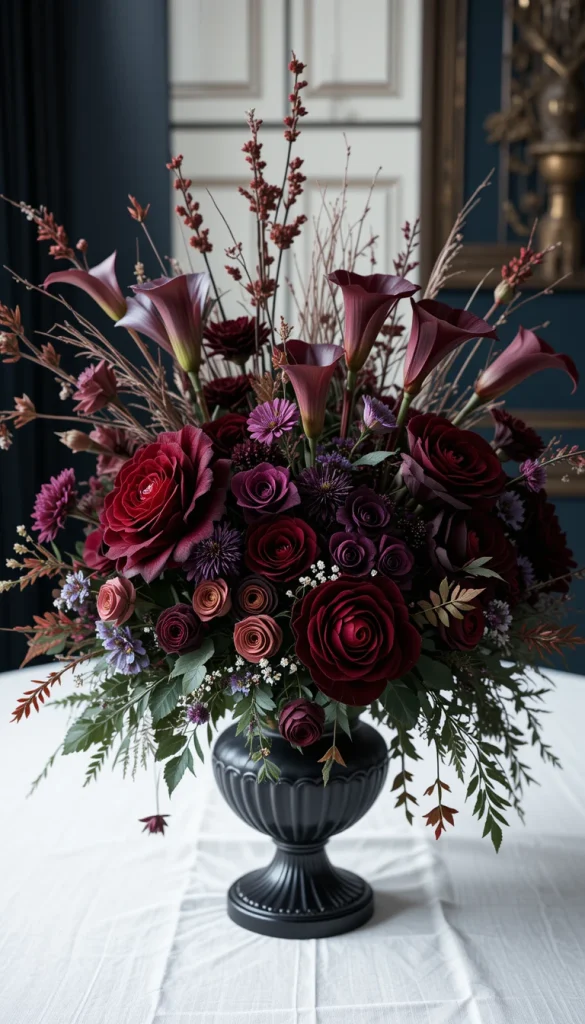
Dark florals—like black dahlias, deep red roses, or purple calla lilies—bring romance with an edge. Arranged in an antique vase, they anchor the table beautifully. Add dried flowers or branches for added gothic character. These arrangements can be refreshed seasonally to keep the décor feeling alive. Even a simple bouquet becomes dramatic with the right color palette.
9. Antique Silver Cutlery
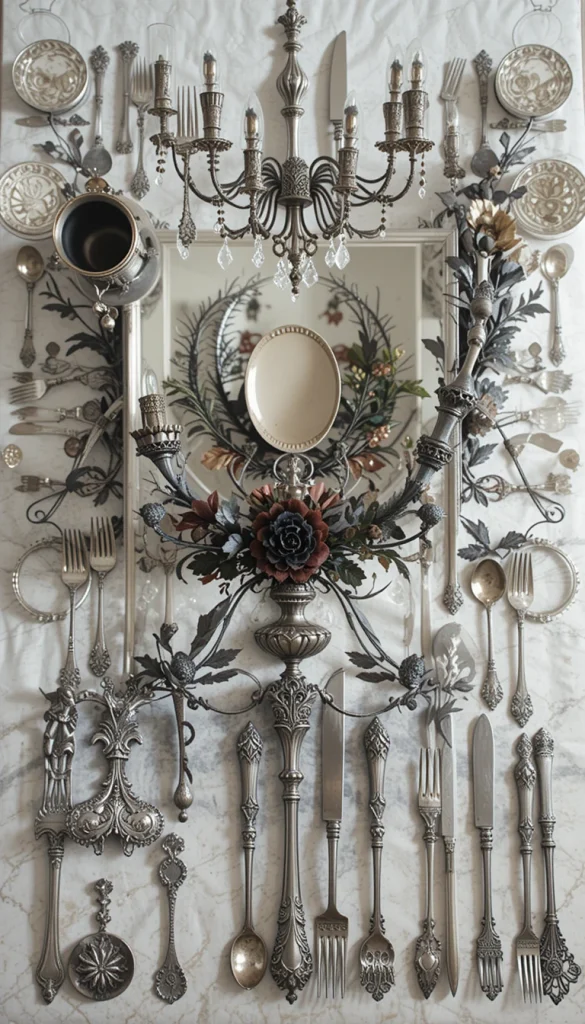
Antique or antique-style silverware instantly adds old-world sophistication. Tarnished silver, in particular, enhances the gothic mood. Mix-and-match pieces can feel charmingly eclectic, while full sets create a more formal look. Pairing silver with dark linens makes the metal stand out beautifully. Many homeowners source pieces affordably from vintage shops or estate sales.
8. Wall Sconces with Warm Lighting
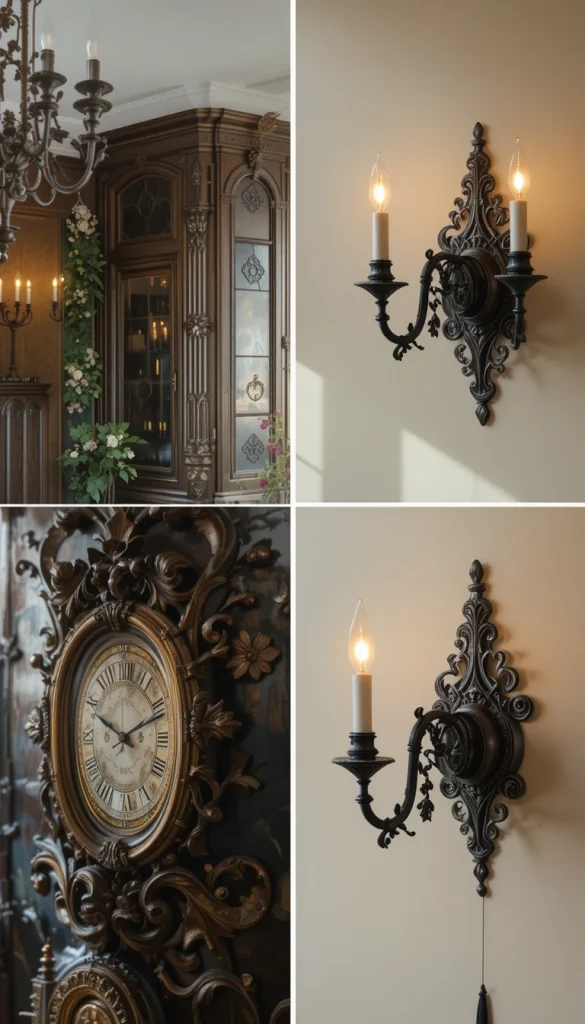
Wall sconces give your dining room an ambient glow that complements candlelight. Choose wrought iron, brass, or carved wood styles. Warm bulbs soften the shadows and bring depth to the room. Placing sconces symmetrically helps reinforce the gothic love for balance and structure. They’re especially helpful in smaller dining rooms where overhead fixtures can feel too harsh.
7. Tapestry or Damask Wallpaper
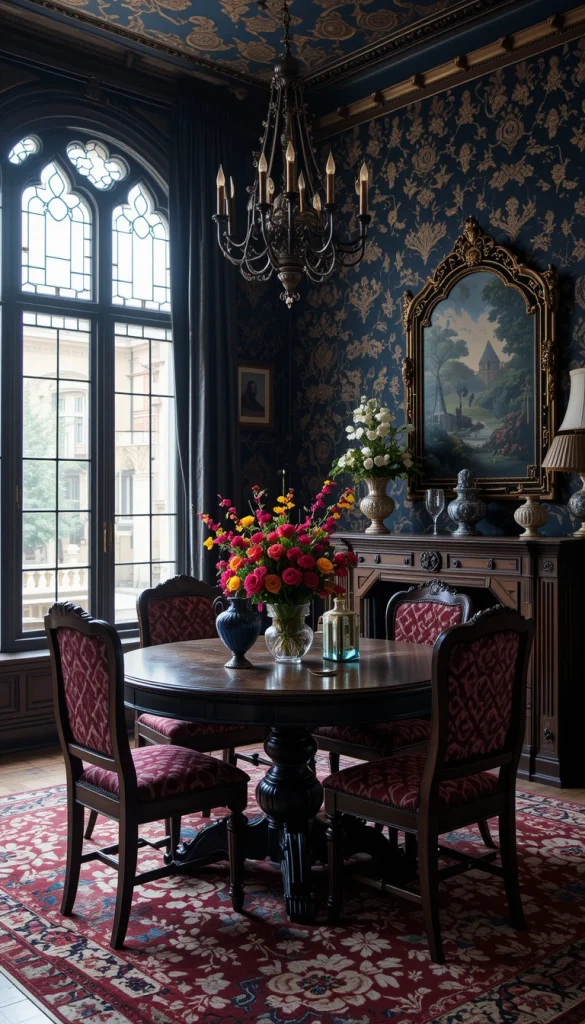
Tapestries and damask wallpapers add historic richness that feels instantly gothic. They bring visual warmth and help fill empty wall space without cluttering the room. Deep blues, reds, and blacks tend to look most cohesive with gothic furniture. If wallpaper feels too permanent, a large tapestry can create the same effect. This idea also enhances acoustics by softening echoes.
6. Iron or Crystal Chandelier
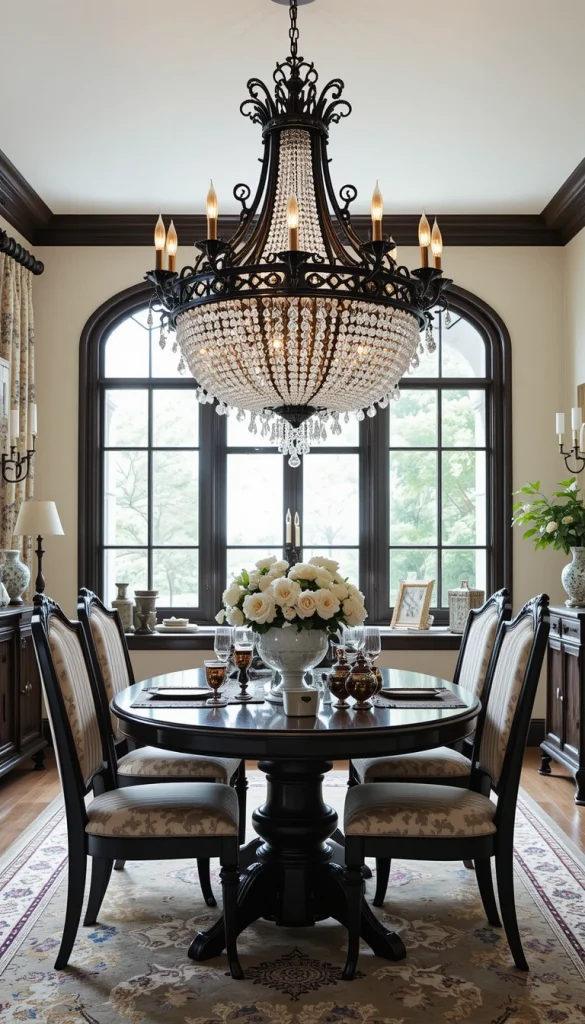
A dramatic chandelier is practically the crown of a gothic dining room. Iron chandeliers add medieval weight, while crystal versions introduce glamorous sparkle. Installing dimmers helps tailor the atmosphere for everyday dining versus special occasions. Oversized chandeliers work well even in modest rooms when hung at the correct height. This single upgrade can transform the room’s entire mood.
5. Dark Wood Dining Table
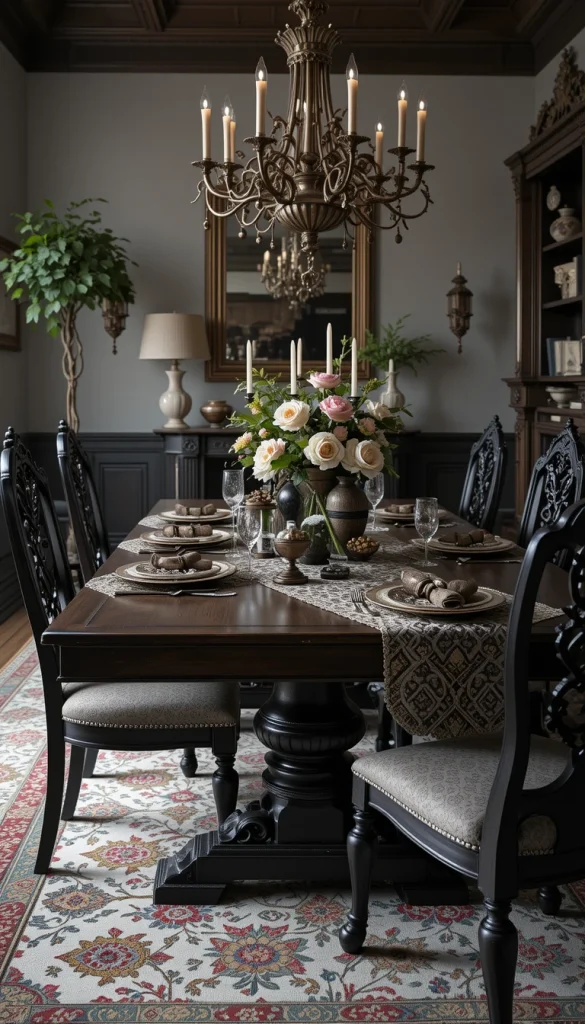
A dark wood table—especially one with carved legs—creates a strong anchor for the entire space. Walnut, mahogany, and ebony finishes are popular choices. These tables look even better with layered textures like lace runners or velvet placemats. The sturdiness and visual weight help define the gothic style without needing excessive accessories. Many homeowners consider this the foundational piece of the room.
4. Moody Artwork
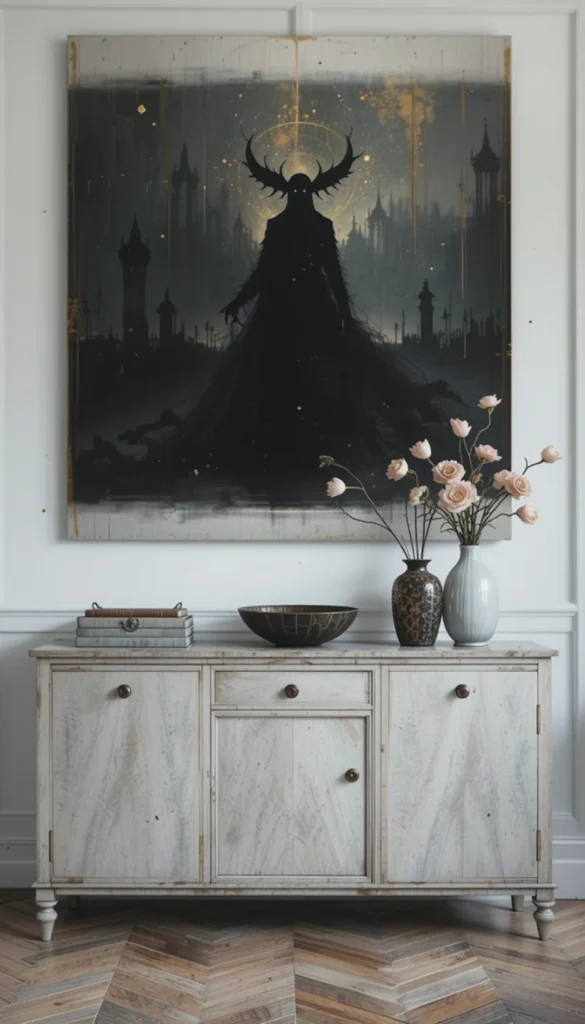
Abstract or traditional moody artwork reinforces the room’s atmosphere. Look for art with deep tones, dramatic lighting, or mysterious subject matter. Oversized pieces work especially well above buffets or sideboards. This type of artwork adds emotional depth without being overly literal. A single large piece often feels more intentional than several smaller ones.
3. Black Tablecloths and Runners
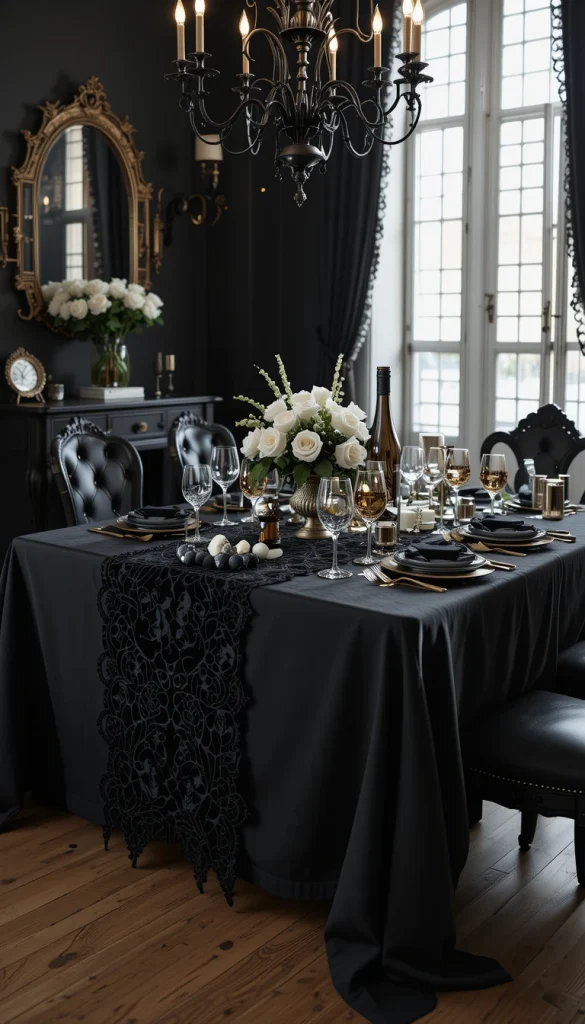
A black tablecloth is a simple way to create instant drama with minimal effort. It makes your tableware and centerpieces stand out more clearly. Runners in lace or velvet can add texture without overwhelming the table. This option is great for both everyday use and special dinners. Many people find this easier to maintain than lighter linens.
2. Gothic-Style Sideboard
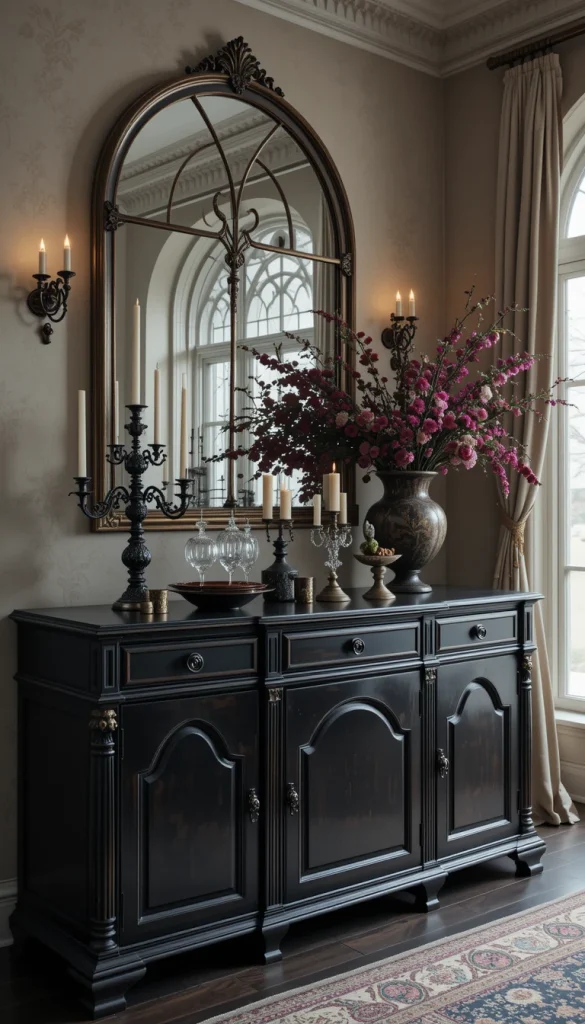
A gothic sideboard provides both function and striking style. Look for pieces with arched doors, heavy hardware, or dark finishes. It becomes the perfect place to display candelabras, gothic glassware, or dramatic floral arrangements. Sideboards also offer much-needed storage for table linens and serving pieces. Even a modern room becomes more atmospheric with the right sideboard anchor.
1. Black Accent Ceiling
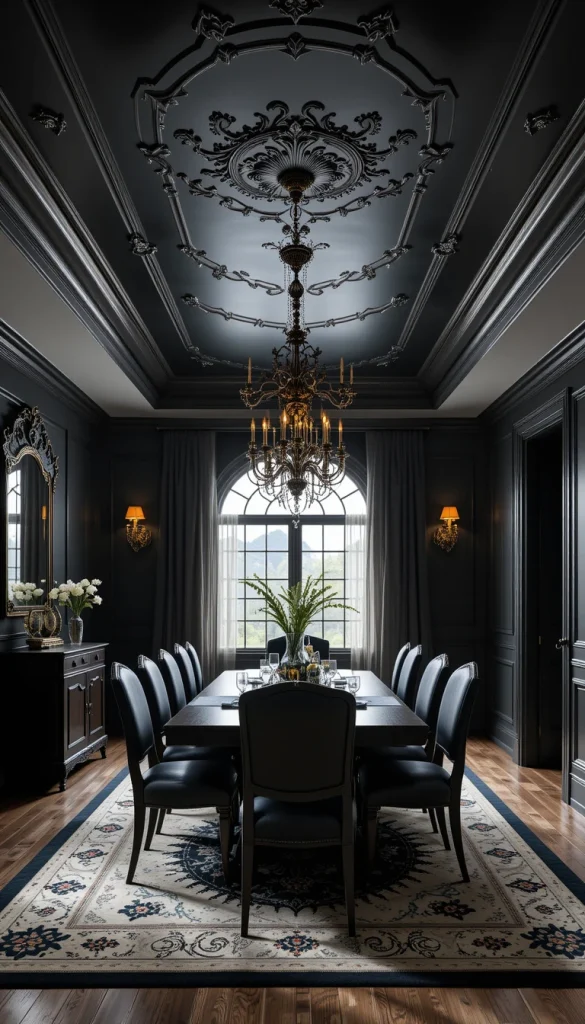
Painting the ceiling black is bold, but it creates an incredibly immersive gothic dining experience. It adds dramatic enclosure without making the room feel smaller when paired with warm lighting. This idea works best with lighter walls or metallic accents to prevent visual heaviness. The ceiling becomes a design feature instead of a forgotten surface. Homeowners who try this often say it’s the most transformative change they made.
Conclusion
A gothic dining room doesn’t require a complete renovation—just thoughtful choices that build character, texture, and atmosphere. Whether you start with lighting, furniture, or color, each idea above helps you shape a room that feels bold, personal, and memorable. With the right mix, your dining space can become the most intriguing room in your home. Let your style lean dramatic—you might be surprised how naturally it all comes together.