14 Linen Closet Organization Ideas With Storage Baskets and Bins for a Tidy, Clutter-Free Space
A messy linen closet can turn the simplest task, like grabbing a clean towel or finding your favorite bedsheets, into a frustrating search. Towels end up in uneven piles, pillowcases go missing, and extra toiletries seem to take over every available shelf. The good news? Storage baskets and bins can transform even a small linen closet into a neat, practical space without requiring an expensive renovation.
The secret is giving everything a designated home. With the right combination of baskets, labeled bins, shelf dividers, and simple folding techniques, you can make your linen closet look beautiful while keeping everyday essentials easy to reach. Whether you’re organizing a spacious hallway cupboard or squeezing storage into a tiny apartment closet, these 14 ideas will help you create a system that’s easy to maintain.
1. Use Matching Woven Baskets for a Warm, Organized Look
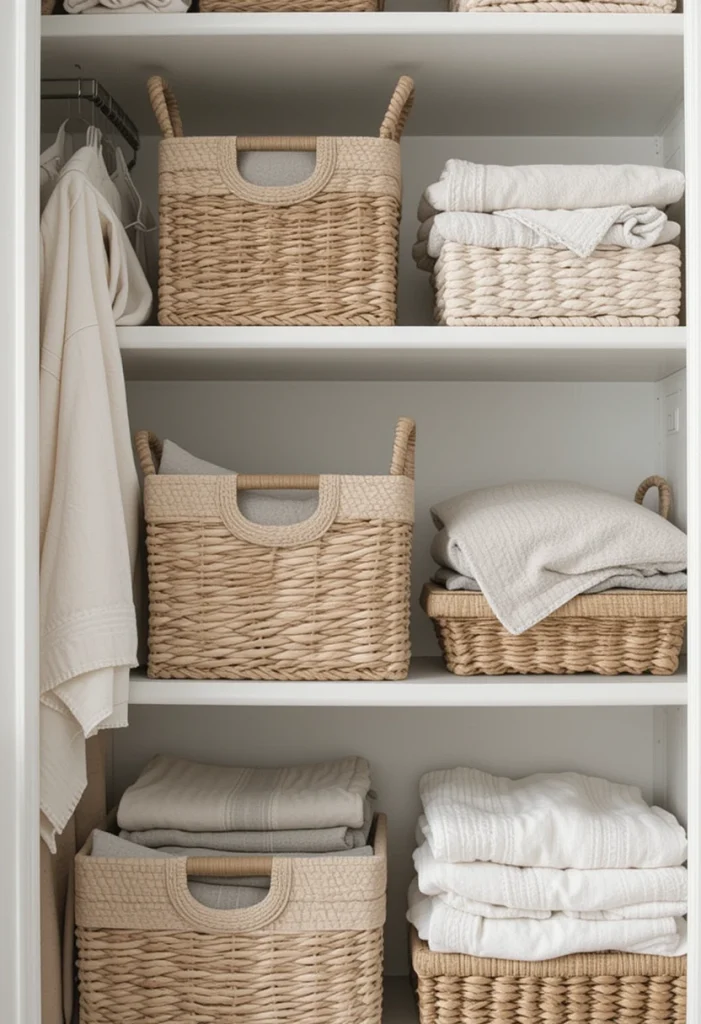
Woven baskets are a lovely way to combine practical storage with a stylish, homey appearance. Place them on open shelves to store hand towels, washcloths, extra pillowcases, and lightweight blankets, keeping similar items together instead of stacking everything in loose piles. Natural wicker, seagrass, and water-resistant woven-look baskets can complement a variety of interior styles, from modern farmhouse to contemporary minimalist. Choose baskets that fit your shelf depth and leave a little room to pull them out comfortably so your closet stays functional as well as attractive.
2. Organize Bedsheets in Clear Plastic Bins
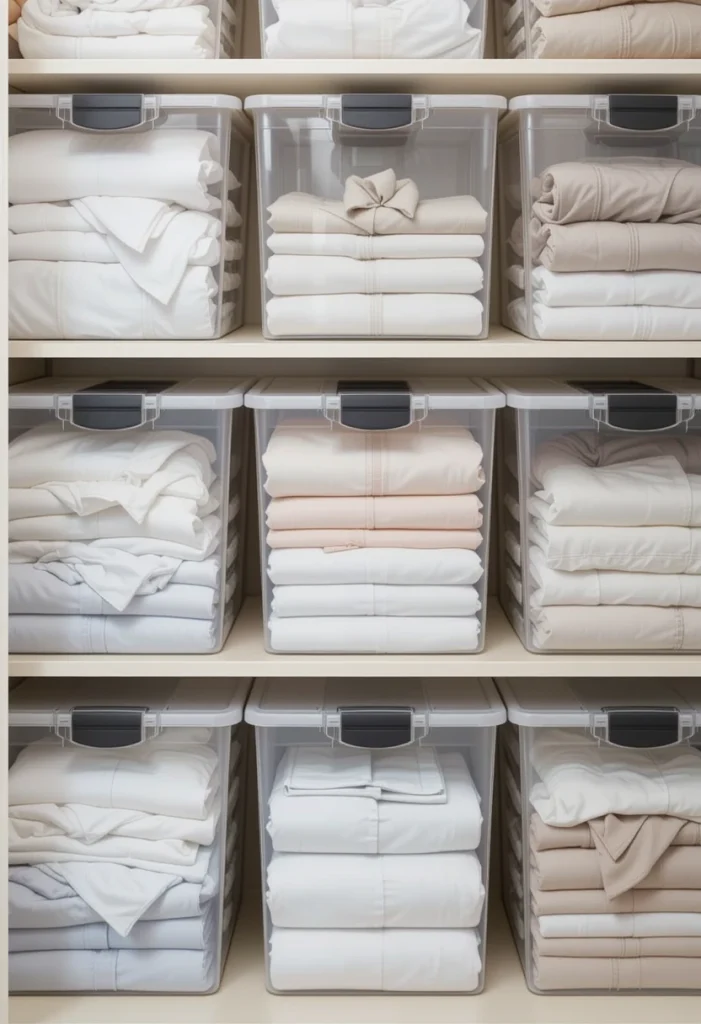
Bedsheets can quickly become one of the messiest parts of a linen closet, especially when different sizes are mixed together. Use clear plastic bins to separate king, queen, full, and twin sheet sets, making it easy to find the right bedding without unfolding several piles. A practical trick is to fold each fitted sheet, flat sheet, and pillowcase together and store the complete set inside one bin. Transparent bins make it easier to see what you own at a glance, which is particularly helpful when you have multiple bedrooms to manage.
3. Add Labeled Fabric Bins for Everyday Essentials
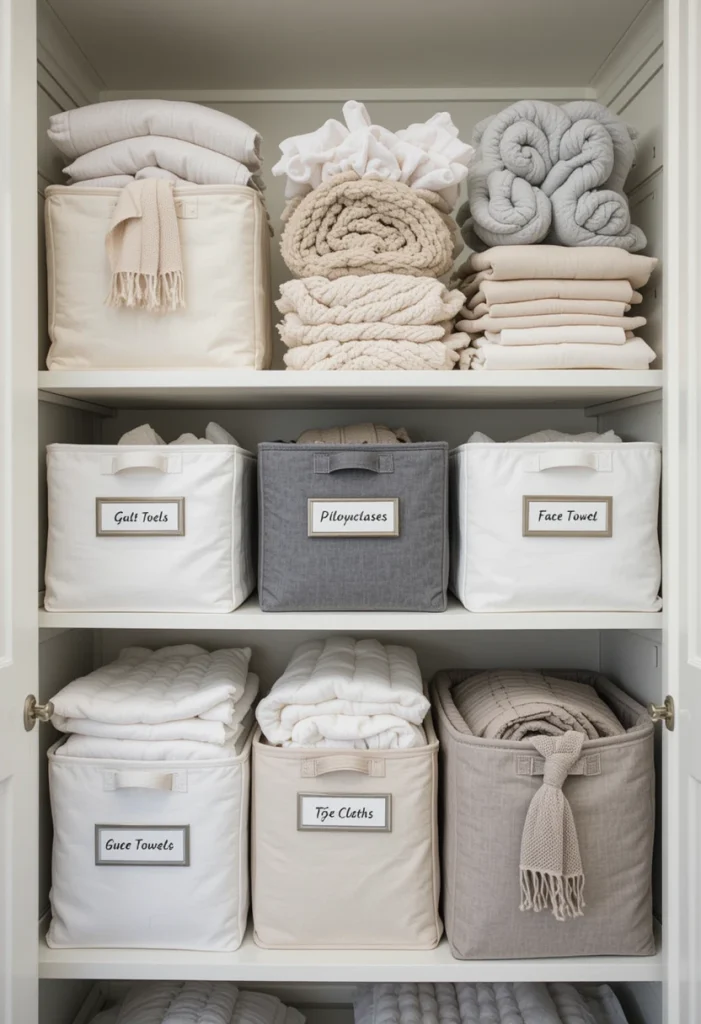
Fabric storage bins are ideal for items you use regularly but don’t necessarily want on display. Dedicate individual bins to categories such as guest towels, spare pillowcases, face cloths, and lightweight throws, then add simple labels to the front. Neutral shades like white, charcoal, soft gray, and warm beige can create a coordinated appearance without making the closet feel visually busy. If several family members share the same linen closet, clear labels help everyone return items to the correct place instead of leaving them on whichever shelf is closest.
4. Create a Dedicated Towel Basket System
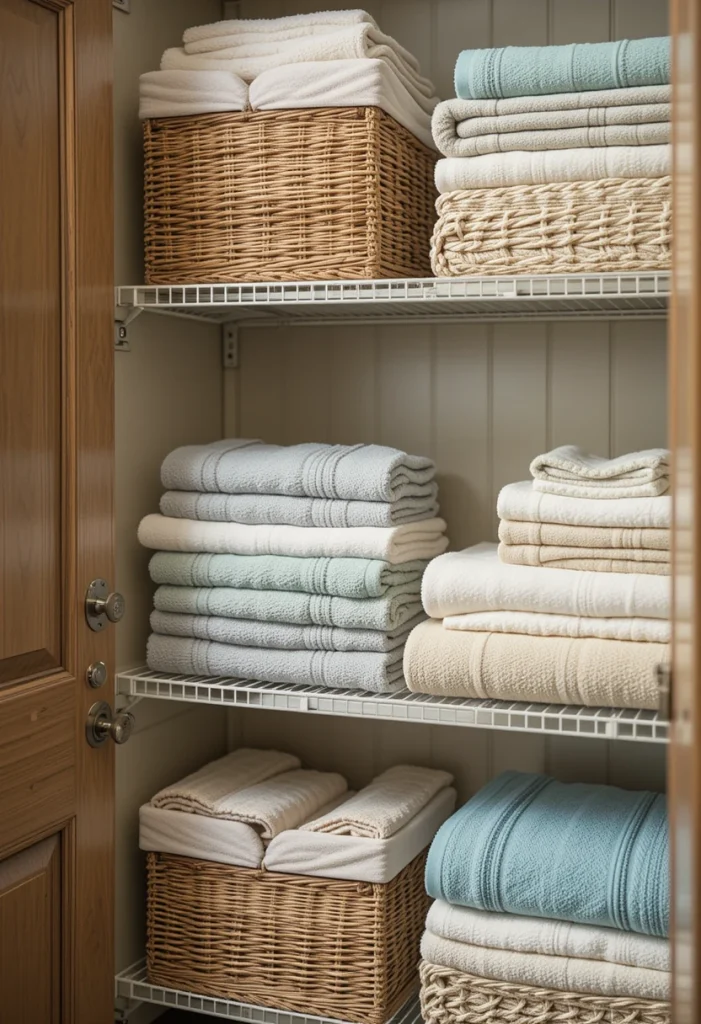
Instead of stacking every towel in one tall pile, assign separate baskets to bath towels, hand towels, and washcloths. Place the most frequently used towels at eye level and reserve higher shelves for extra stock or guest linens. For example, a family bathroom might have one large basket for bath towels and two smaller containers for hand towels and washcloths. Grouping towels by size and purpose makes daily routines faster and helps prevent the entire shelf from becoming disorganized whenever someone takes a towel.
5. Use Stackable Bins to Maximize Vertical Space
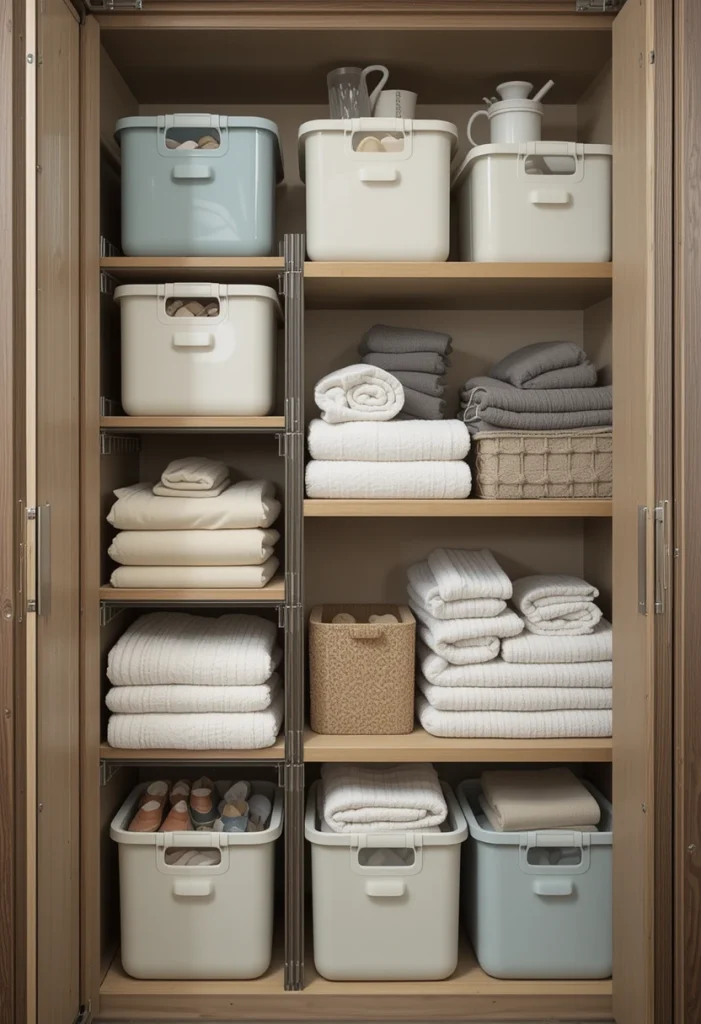
If your linen closet has tall shelves with lots of unused space above the stored items, stackable bins can help you make better use of that height. Choose sturdy containers designed to stack securely, preferably with front openings or easy-to-remove lids so you can access items without dismantling the entire arrangement. Store lighter, less frequently used items on upper levels and keep everyday essentials lower down. Vertical storage is especially useful in small homes and apartments, where adding another cabinet may not be possible.
6. Store Toiletries in Small Divided Bins
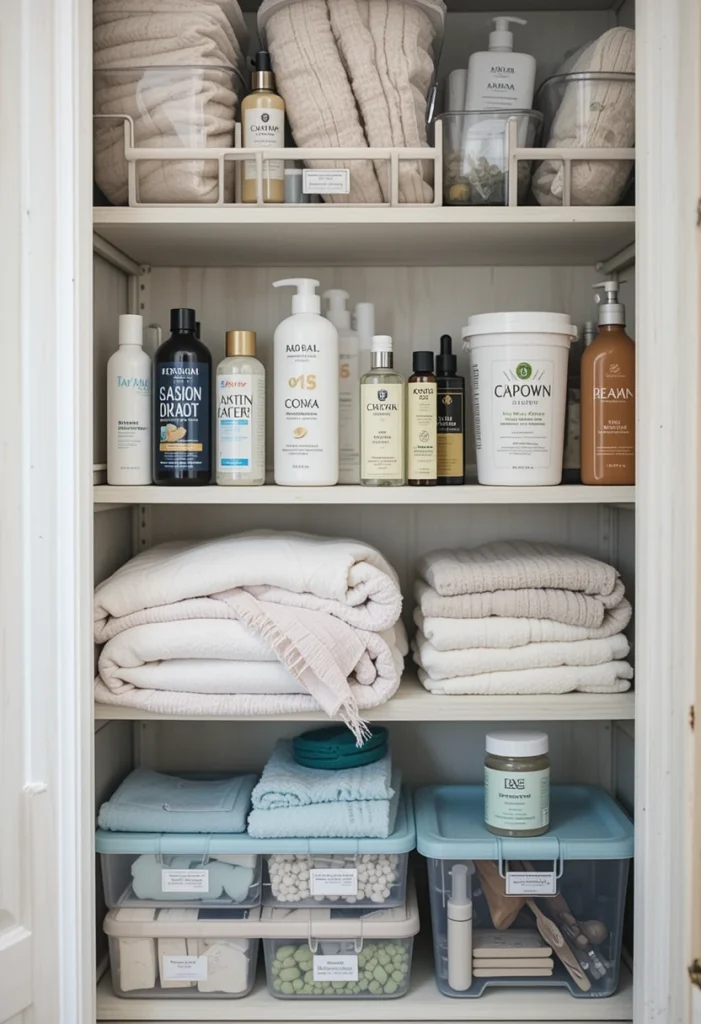
Extra shampoo, soap, toothpaste, cotton pads, and skincare products can easily crowd out your towels and bedding. Use small plastic bins or divided organizers to separate toiletries into categories such as hair care, dental care, bath products, and travel essentials. This approach also makes it easier to spot duplicate products before purchasing more. Keep liquids upright in leak-resistant containers and separate them from clean linens to protect towels and bedsheets from spills.
7. Arrange Guest Linens in a Separate Basket
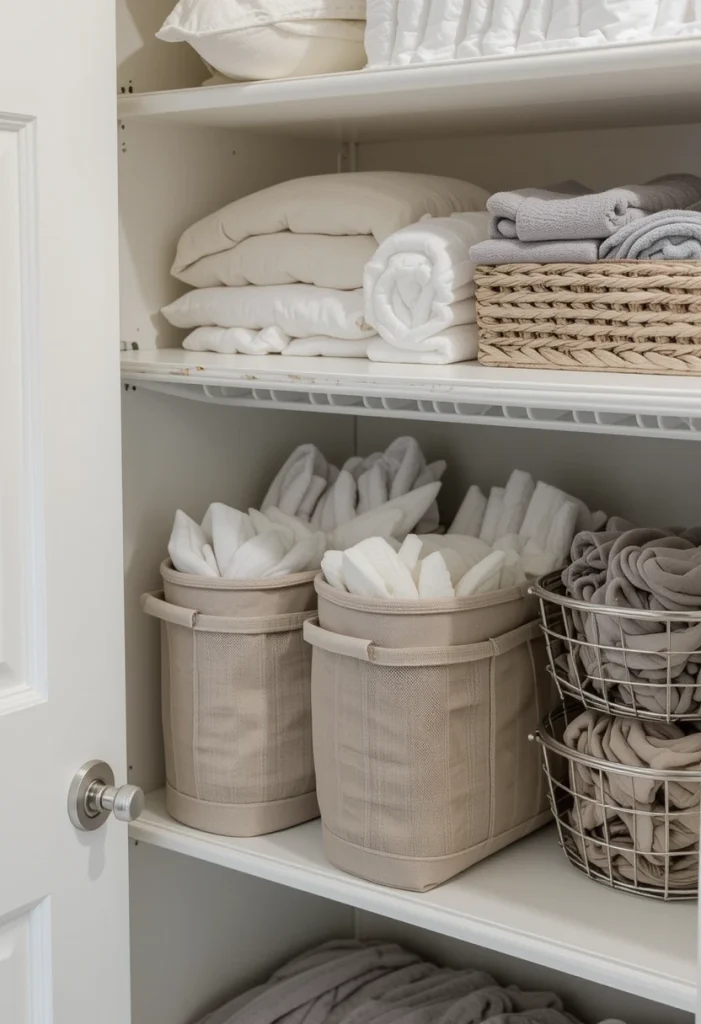
Guest bedding deserves its own dedicated space, especially if you regularly host family or friends. Use a medium or large fabric basket to hold a complete guest sheet set, spare pillowcases, and perhaps a lightweight blanket, keeping everything together for quick access. You could also create a separate bin for guest towels so that preparing a bedroom doesn’t involve searching through several shelves. A ready-to-use guest linen basket saves time when visitors arrive unexpectedly and keeps guest essentials separate from everyday household supplies.
8. Use Slim Bins for Small or Narrow Shelves
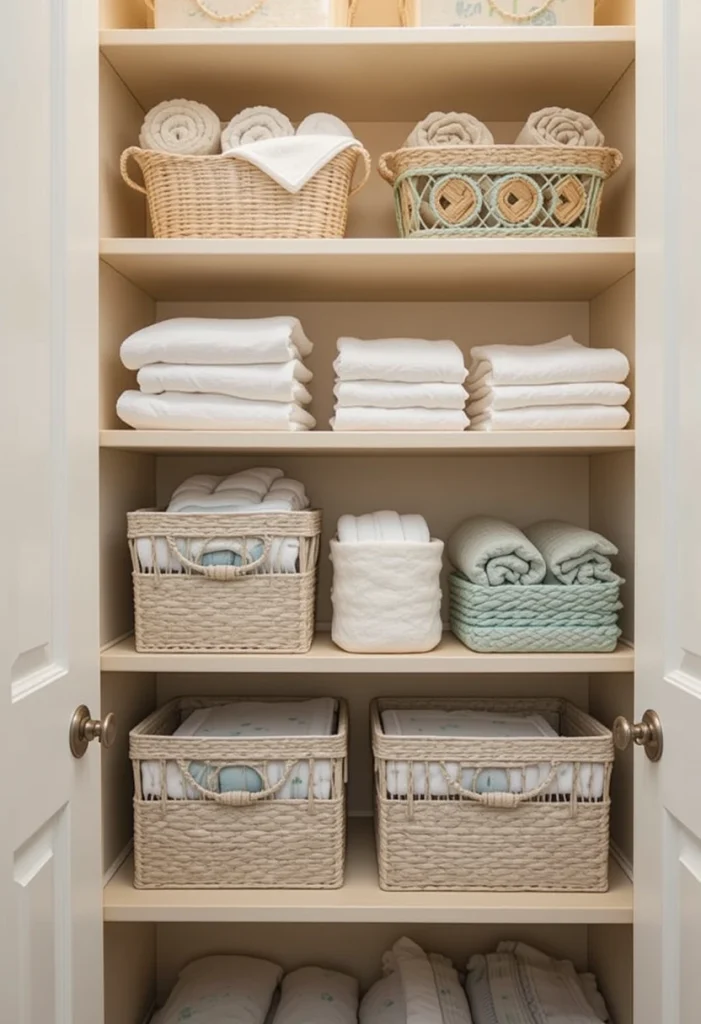
Not every linen closet has generous shelving, and bulky baskets can waste valuable space in narrow cupboards. Slim storage bins are a better fit for rolled washcloths, pillow protectors, small towels, and other compact items that might otherwise get lost at the back. Measure the shelf width and depth before buying containers so you don’t end up with bins that block the door or are difficult to remove. A few well-fitted bins are more useful than oversized baskets that leave awkward gaps or make it difficult to reach stored items.
9. Keep Cleaning Cloths in a Separate Storage Bin
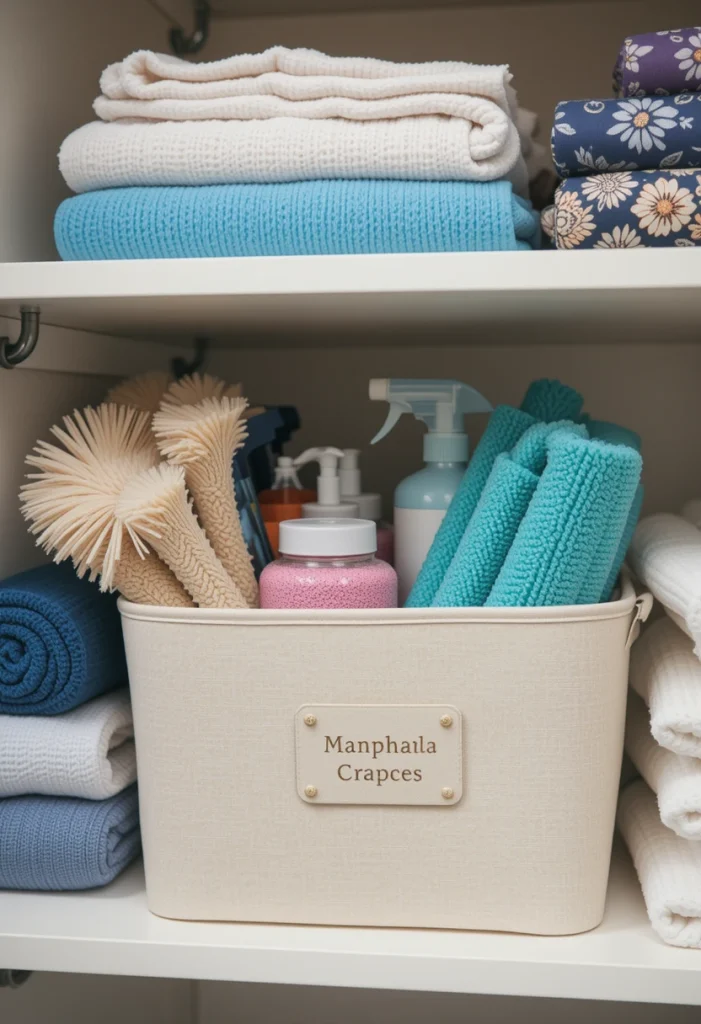
Microfiber cloths, spare dusters, cleaning towels, and reusable household wipes often find their way into linen closets. Rather than allowing these items to mix with bath towels and bedsheets, place them in a dedicated, clearly labeled bin on a lower shelf. Choose a washable fabric container or an easy-to-clean plastic bin, depending on how you use and store your supplies. Keeping cleaning materials separate from personal linens creates a more hygienic and organized storage system, particularly in busy households.
10. Use Pull-Out Baskets for Hard-to-Reach Shelves
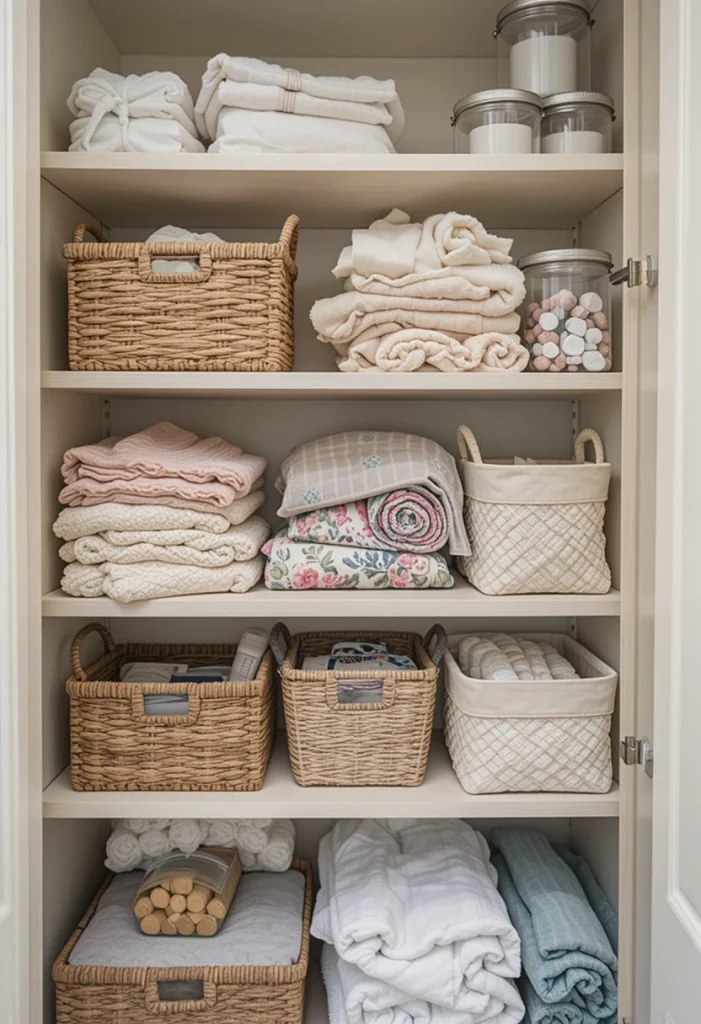
Deep linen closet shelves can hide items at the back, making it easy to forget what you already own. Pull-out baskets allow you to bring stored items forward instead of reaching blindly behind stacks of towels or bins. They work especially well for extra toiletries, spare washcloths, small blankets, and other items that tend to get pushed out of sight. Choose baskets with handles and a width that fits the shelf comfortably so you can slide them out without knocking over neighboring containers.
11. Create a Color-Coded Bin System for Family Members
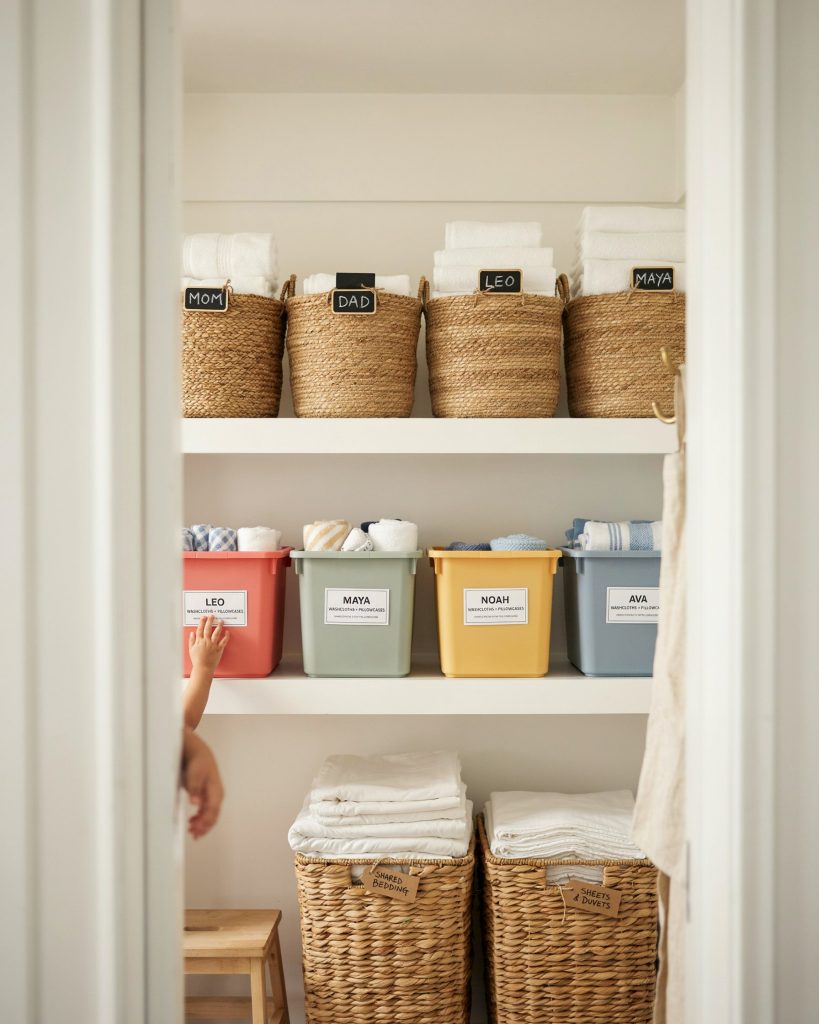
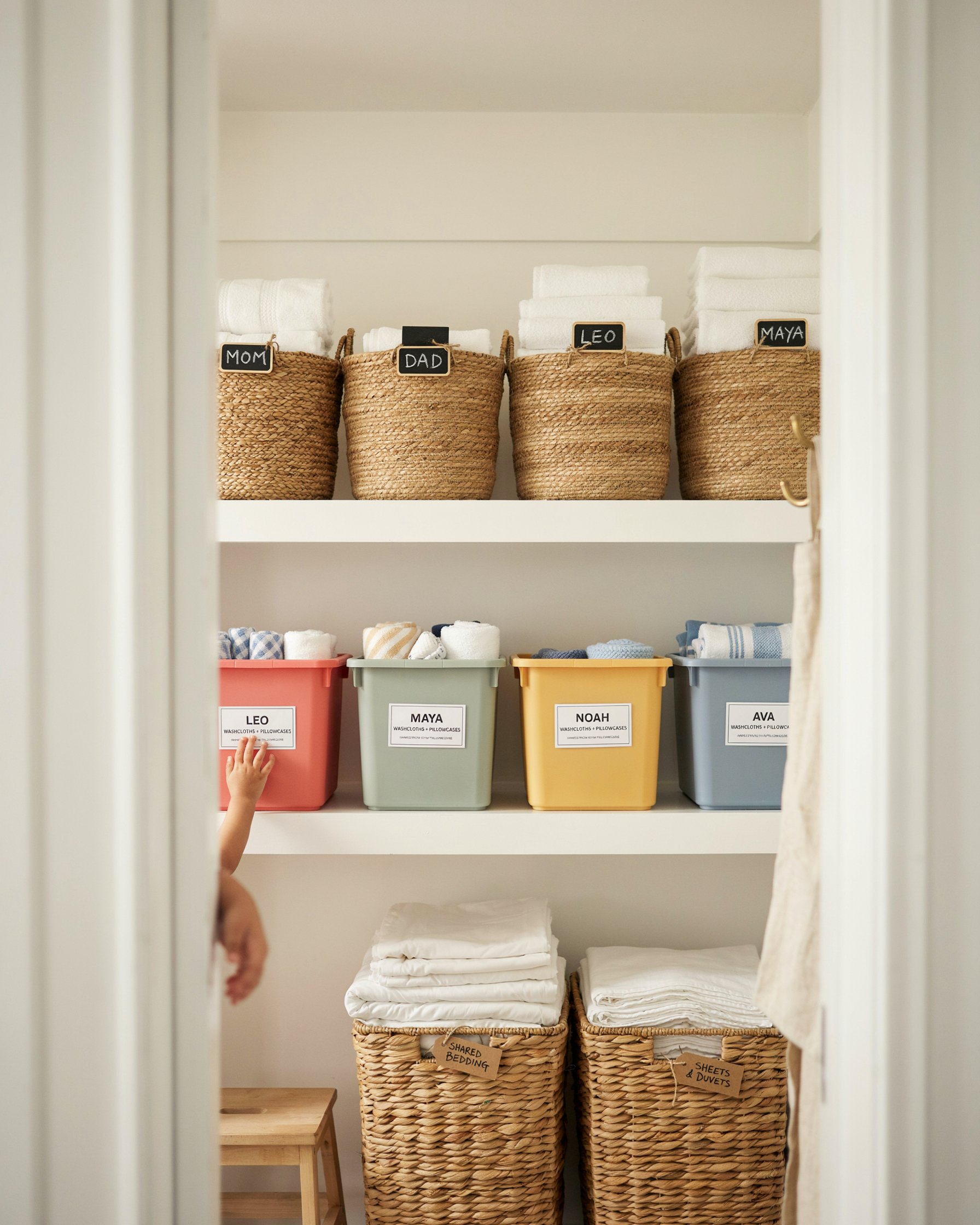
When several people share one linen closet, assigning a storage category to each person can make the space easier to manage. Use different colored bins or matching bins with personalized labels for children’s towels, individual bedding sets, or personal bathroom essentials. For example, each child could have a small labeled basket for washcloths and spare pillowcases, while shared bath towels remain in a separate section. A simple color-coded system helps everyone find their belongings and put them away independently, reducing the daily clutter that builds up in family homes.
12. Store Seasonal Bedding in Large Lidded Bins
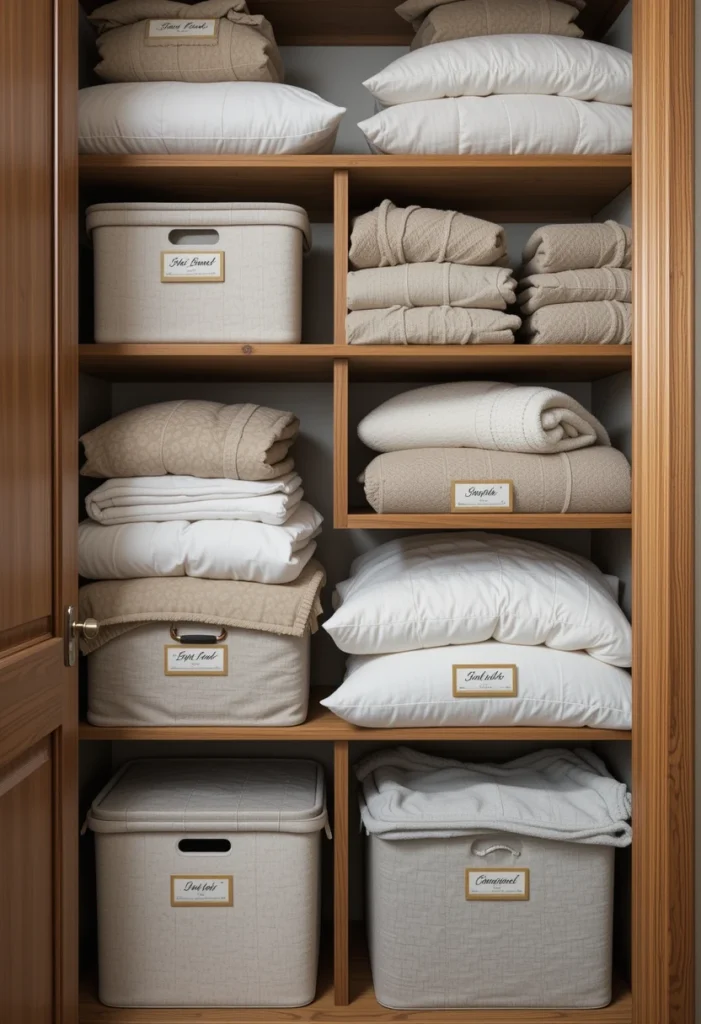
Thick comforters, extra blankets, flannel sheets, and seasonal bedding can occupy a surprising amount of closet space. Store these items in large lidded bins when they’re not needed, keeping them separate from the lighter linens you use every day. Label each container clearly so you can identify winter bedding or guest blankets without opening every box. Reserve the easiest-to-reach shelves for current-season essentials and place seasonal items higher up or in another suitable storage area if closet space is limited.
Before storing bedding for a long period, make sure it is completely clean and dry. Avoid packing linens into containers while damp, as trapped moisture can lead to unpleasant odors and mildew.
13. Combine Baskets and Shelf Dividers for Neater Stacks
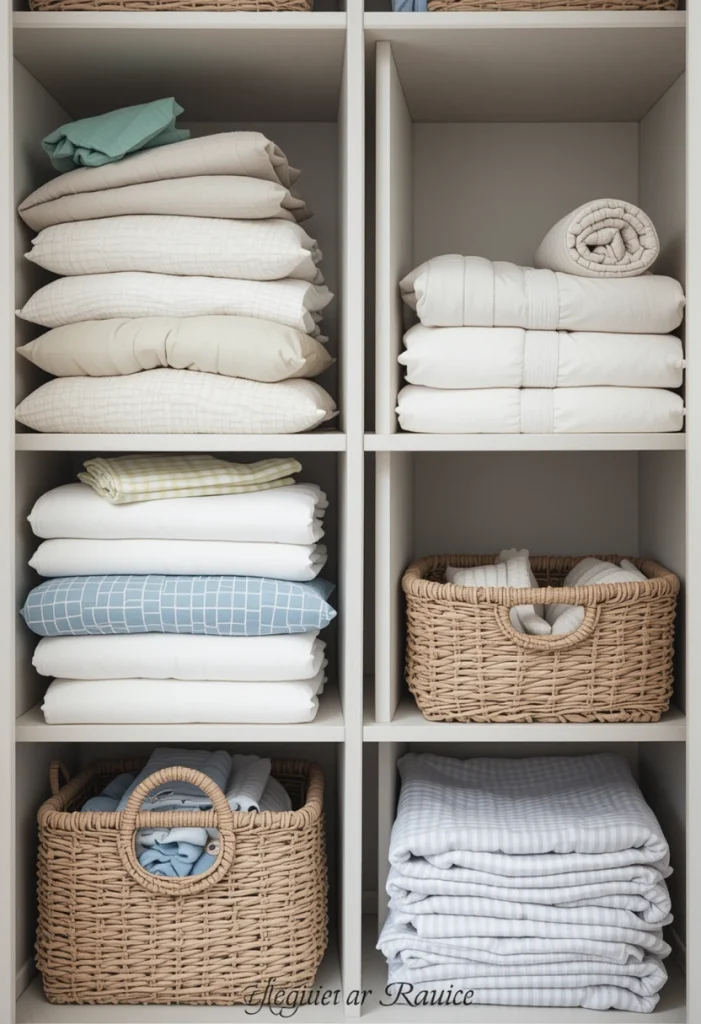
Baskets are excellent for smaller items, but neatly folded towels and sheet sets can sometimes be stored directly on the shelves. Add shelf dividers to keep separate piles upright and prevent them from leaning into one another, then place small baskets beside them for washcloths or pillowcases. This combination gives you the best of both storage methods without filling every inch of the closet with containers. Use baskets for loose or frequently handled items and dividers for folded stacks to maintain a tidy arrangement while making the most of your available space.
14. Create a Minimalist Linen Closet With Uniform Bins
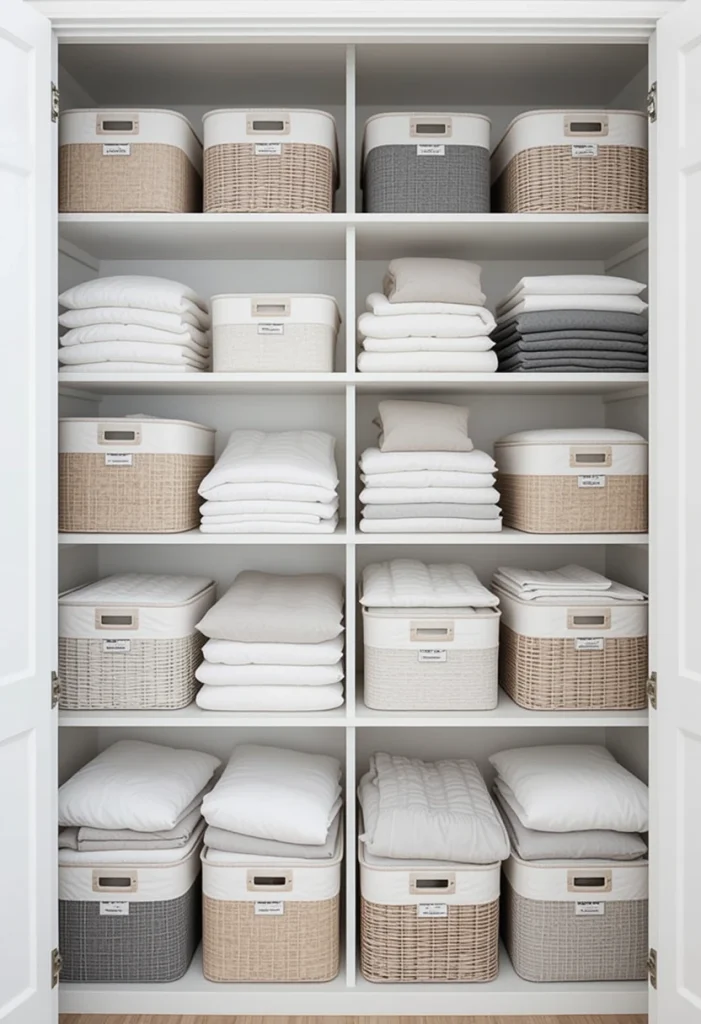
If you prefer a clean, coordinated look, use matching bins throughout the closet instead of mixing different shapes, materials, and colors. White, soft gray, charcoal, or natural woven-look containers can create a consistent appearance, while simple labels keep each category easy to identify. Arrange the bins by frequency of use, placing everyday towels and sheets within easy reach and occasional-use items on higher shelves. The best minimalist closet is not just visually appealing; every container should have a clear purpose so you don’t end up hiding clutter inside attractive boxes.
How to Keep Your Linen Closet Organized Long-Term
Even the most beautiful storage system can become messy if it is difficult to maintain. A few simple habits will help your baskets and bins stay useful long after you’ve finished organizing.
- Return items to their designated bins: Avoid creating temporary piles on shelves after laundry day.
- Fold linens consistently: Choose one folding method for towels and another for sheet sets so the stacks remain uniform.
- Check supplies regularly: Remove worn-out towels, donate usable excess linens where appropriate, and use up duplicate toiletries before buying more.
- Avoid overfilling containers: Leave enough space to remove items without pulling everything else out.
- Do a quick monthly reset: Spend five to ten minutes straightening baskets, checking labels, and returning misplaced items.
You don’t need to buy an entirely new set of organizers to get started. Measure your shelves, sort what you already own, and purchase only the baskets and bins that solve a genuine storage problem.
Conclusion
An organized linen closet starts with a simple idea: give every towel, bedsheet, blanket, and household essential a designated place. Matching woven baskets, clear plastic bins, labeled fabric containers, and stackable organizers can make even a small cupboard easier to use and more pleasant to look at.
Start with one shelf, group similar items together, and build a storage system that fits your household’s routine. With a little planning and a few practical containers, you’ll spend less time searching for clean linens and more time enjoying a home that feels calm, tidy, and well organized.