DIY Vent Hood Cover Ideas: 13 Creative Ways to Transform Your Kitchen
Last updated on June 4th, 2026 at 04:16 am
A plain vent hood can quietly drag down the entire look of a kitchen. It’s one of those elements most builders treat purely as functional, but with a little creativity, it can become a beautiful focal point that ties the whole room together. If you love DIY projects that make a big visual impact without requiring a full kitchen renovation, a custom vent hood cover is a fantastic place to start.
What I love about vent hood covers is how adaptable they are. Whether your kitchen leans modern farmhouse, minimalist, rustic, or traditional, there’s a style that can elevate the space instantly.
1. Classic Shiplap Vent Hood Cover
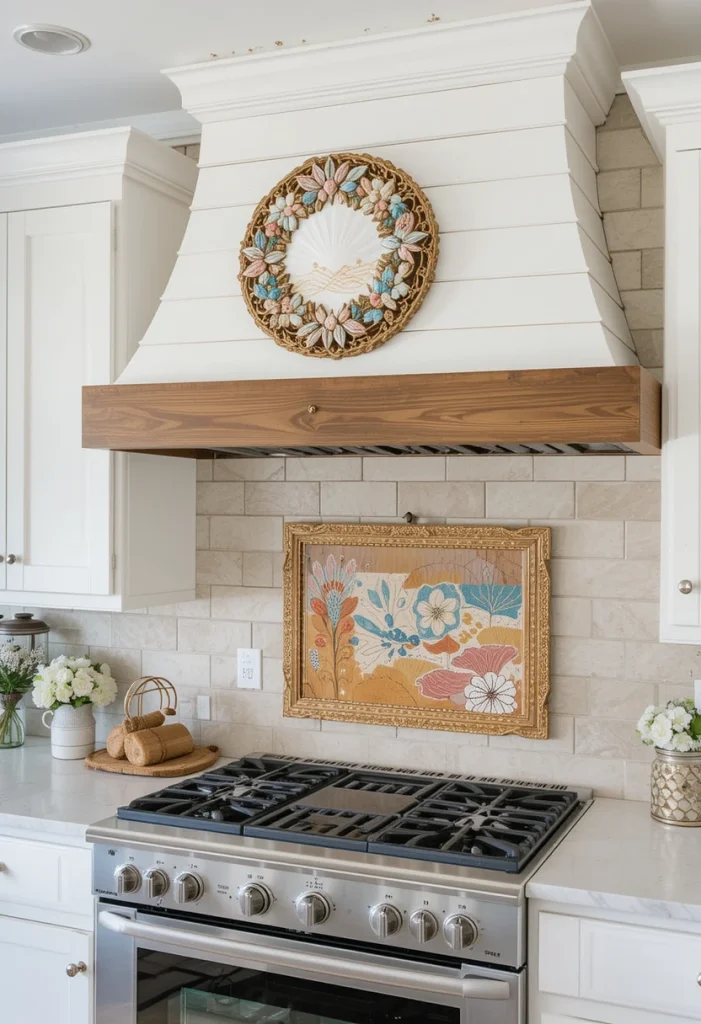
A shiplap vent hood cover instantly introduces that cozy farmhouse charm many homeowners love. By wrapping the hood structure with horizontal shiplap boards, you create subtle texture that pairs beautifully with white cabinets and warm wood accents. This approach works particularly well in kitchens where the goal is to add visual interest without overwhelming the space. I’ve seen homeowners paint the shiplap the same color as their cabinets for a seamless effect, or slightly contrast it for added dimension. It’s a simple DIY that delivers a surprisingly polished designer look.
2. Rustic Reclaimed Wood Hood

Using reclaimed wood is one of my favorite ways to give a kitchen authentic character. Old wood boards naturally come with knots, patina, and grain variations that make the vent hood feel like a statement piece with history. A reclaimed wood cover works beautifully in rustic kitchens or modern farmhouse designs where warmth is key. I recommend keeping the surrounding cabinetry lighter so the wood hood becomes the star. The contrast between aged wood and clean kitchen finishes creates a balanced, layered design.
3. Modern Minimalist Box Hood
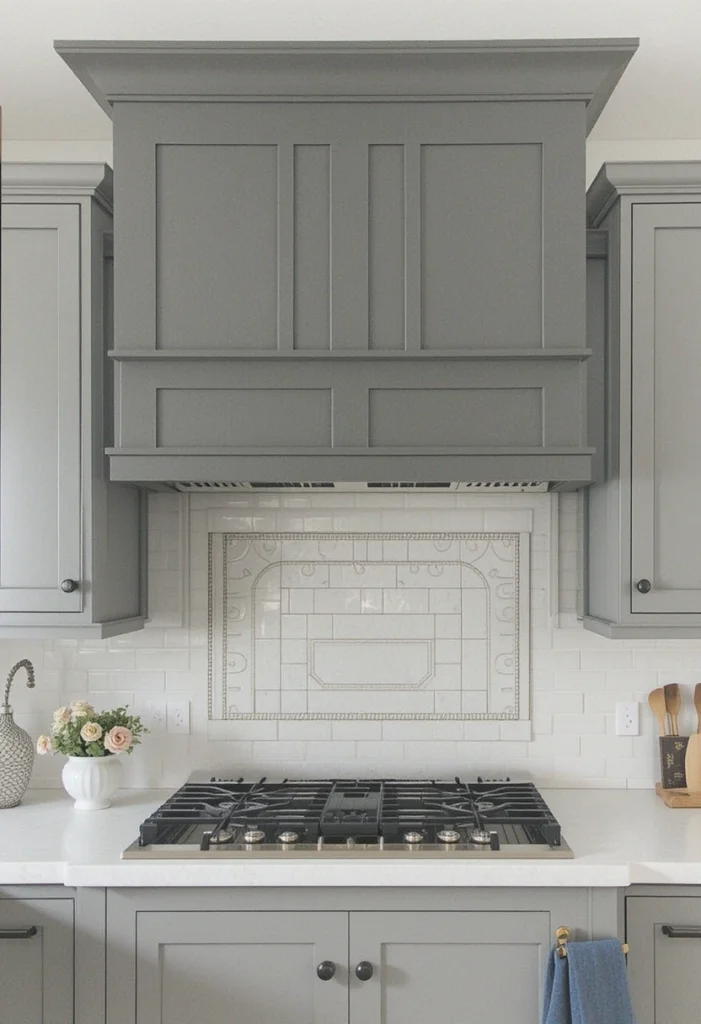
Sometimes the most striking designs are also the simplest. A minimalist box-style vent hood cover features clean lines and flat panels, creating a sleek architectural look. This style works beautifully in contemporary kitchens where clutter-free surfaces are the goal. Many DIYers build a basic plywood box and paint it the same color as the cabinets for a streamlined effect. The simplicity keeps the kitchen feeling calm and modern while still hiding the metal vent hood.
4. Plaster-Inspired Smooth Hood

A plaster-style vent hood gives kitchens that high-end European feel people often admire in designer homes. The DIY version typically involves building a basic hood structure and finishing it with drywall compound or plaster techniques to achieve a soft, seamless surface. What I love about this approach is how organic it looks compared to rigid cabinetry. The subtle texture reflects light beautifully and creates an understated elegance. Pair it with warm wood shelves or natural stone for a timeless kitchen aesthetic.
5. Arched Vent Hood Cover
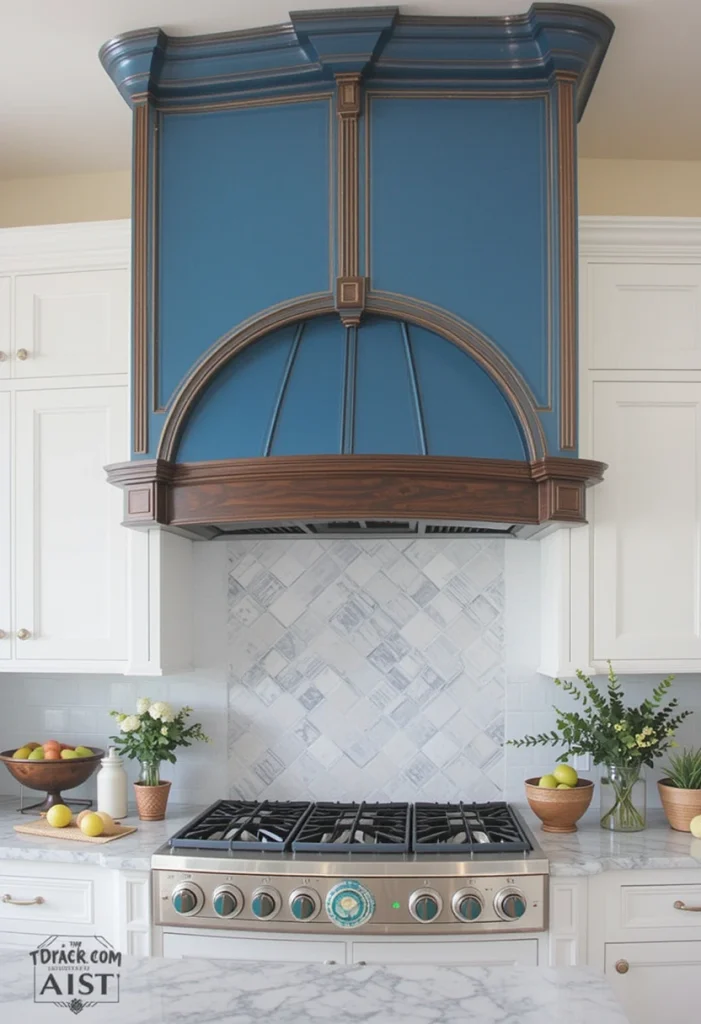
Straight lines dominate most kitchens, which is exactly why an arched vent hood cover feels so special. The curved shape instantly softens the room and introduces architectural interest that draws the eye upward. DIY builders usually frame the structure first and then shape the arch with flexible trim or cut plywood forms. This style works wonderfully in Mediterranean-inspired or traditional kitchens. Even in smaller spaces, the arch adds a custom, built-in feel that looks far more expensive than it is.
6. White Oak Panel Hood

White oak has become incredibly popular in kitchen design because of its warm tone and subtle grain pattern. A white oak vent hood cover blends beautifully with neutral kitchens and adds natural warmth without feeling heavy. The wood panels can be arranged vertically to emphasize height and make the kitchen feel larger. I especially love this look paired with white cabinets and brass hardware. The combination feels modern, calm, and intentionally designed.
7. Trimmed Traditional Hood

If your kitchen leans classic, adding decorative trim can turn a basic hood into a refined focal point. Crown molding, panel trim, and small architectural details give the vent hood a built-in furniture-like quality. This style works particularly well in traditional or transitional kitchens with shaker cabinets. Many DIYers simply attach molding pieces to a box hood and paint everything the same color for cohesion. The result feels custom without requiring complicated carpentry.
8. Board and Batten Vent Hood
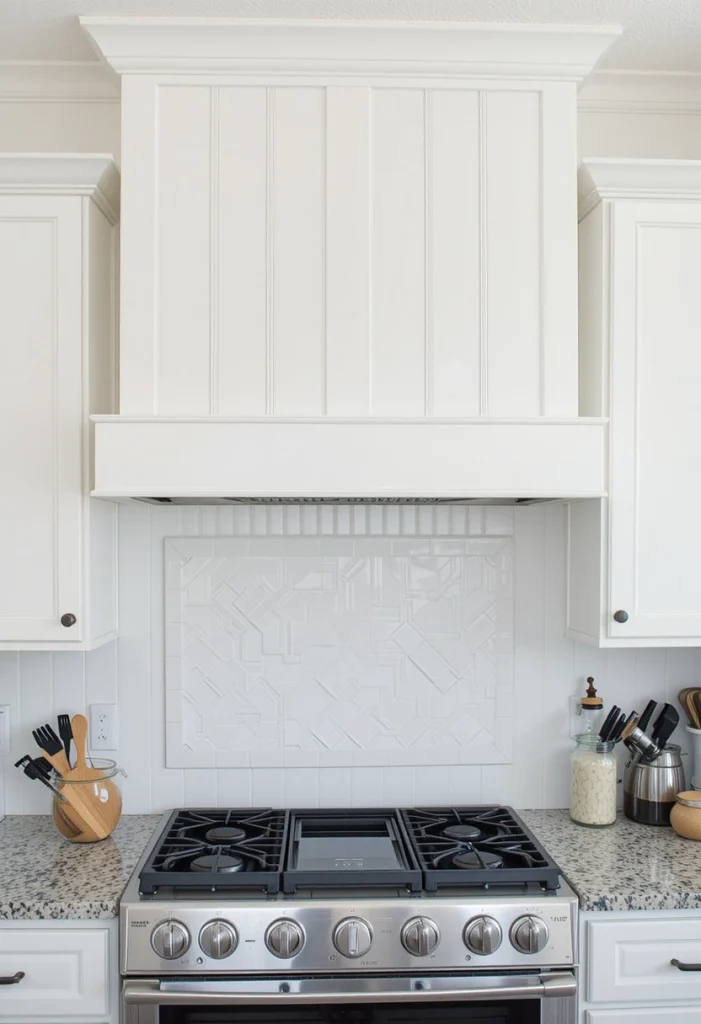
Board and batten isn’t just for walls—it works beautifully on vent hood covers too. The vertical battens introduce rhythm and structure while keeping the design visually clean. This style is ideal for farmhouse or cottage kitchens that benefit from subtle texture. I like to recommend spacing the battens evenly to maintain a balanced look. Painted white or soft gray, this hood style adds depth without making the kitchen feel busy.
9. Floating Shelf Hood Surround

This design combines a vent hood with open shelving, creating a practical and visually interesting setup. The hood sits between two floating shelves, forming a balanced composition across the cooking area. It’s a fantastic option if you enjoy displaying everyday dishes or small decorative items. Many DIY homeowners build the hood from wood and match the shelves for continuity. The combination adds storage while making the kitchen feel more relaxed and lived-in.
10. Tapered Wood Hood Cover

A tapered vent hood cover gradually widens toward the bottom, creating a classic silhouette often seen in custom kitchens. The shape adds elegance and visual movement compared to a straight box hood. DIY builders typically construct a simple frame and then attach angled side panels to achieve the tapered effect. I find this style works beautifully with painted cabinets and warm wood accents. The gentle slope instantly elevates the kitchen’s design.
11. Industrial Metal Accent Hood
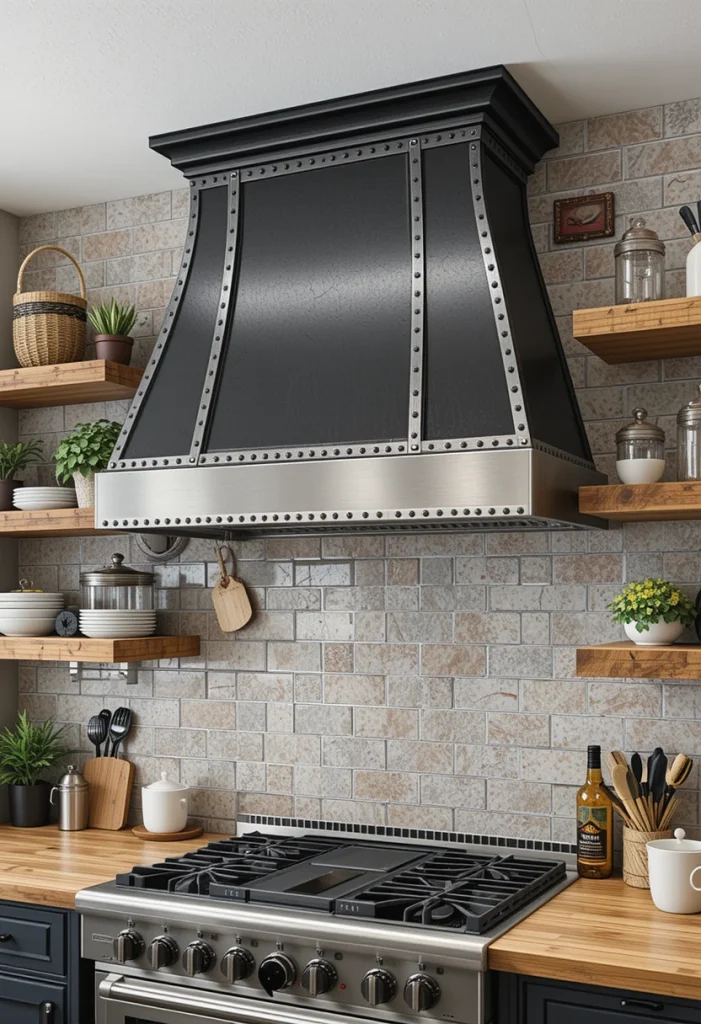
For kitchens leaning industrial or modern loft style, a vent hood cover with metal accents can look incredible. Some DIYers use black steel panels, riveted sheets, or brushed metal trim to give the hood a bold, urban personality. The key is balancing the metal with warmer elements like wood shelves or butcher block countertops. This prevents the kitchen from feeling too cold. The contrast creates a strong focal point while maintaining a functional cooking space.
12. Painted Statement Hood

A painted vent hood cover can act like an accent wall for the kitchen. Instead of blending in with the cabinets, the hood is finished in a contrasting color such as deep navy, forest green, or charcoal. This works particularly well in kitchens with mostly neutral cabinetry. The hood becomes a subtle centerpiece that anchors the cooking zone. A bold color choice adds personality without requiring a full kitchen makeover.
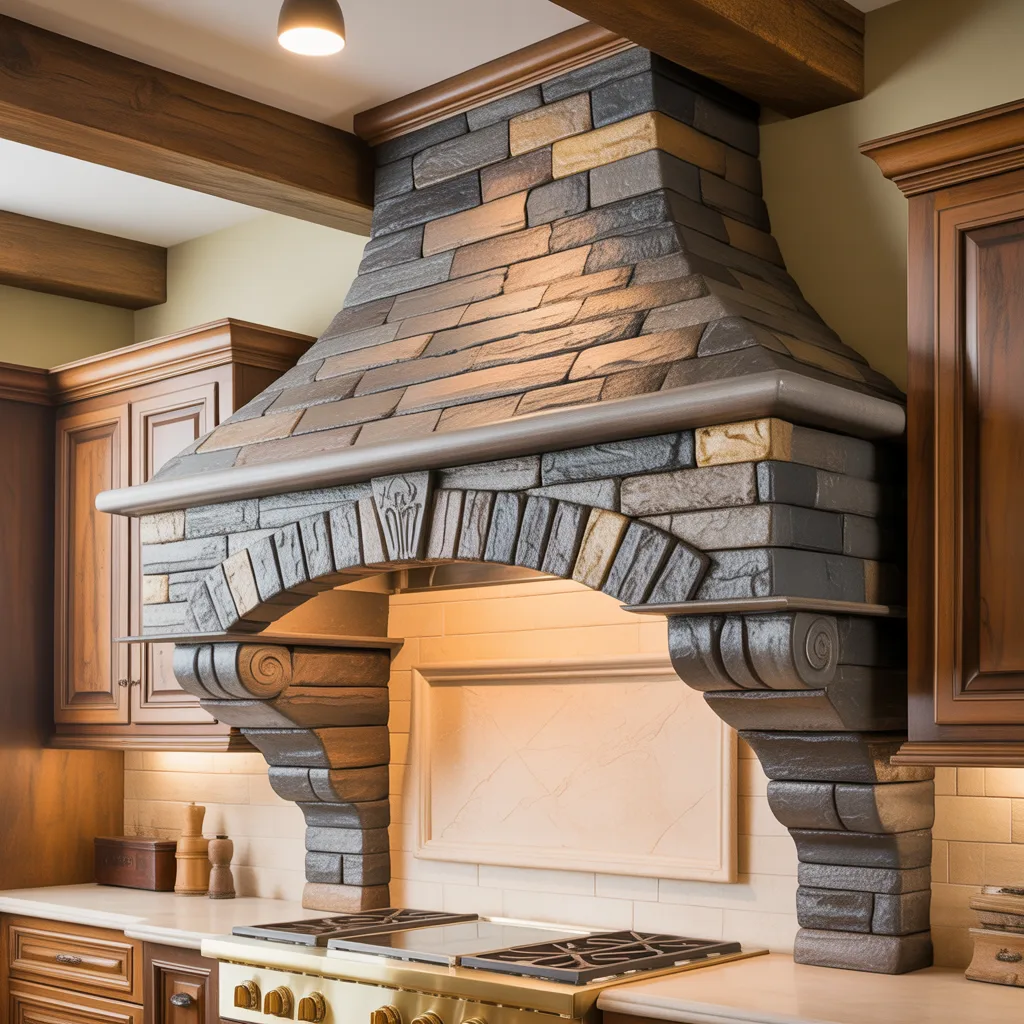
13. Stone or Faux-Stone Hood
A stone-style vent hood creates a dramatic, old-world kitchen atmosphere. Real stone can be heavy, but many DIYers achieve the look with lightweight faux-stone panels or stone veneer. This approach works beautifully in rustic kitchens or homes inspired by European country design. Pairing the hood with natural wood beams or warm cabinetry enhances the effect. The textured stone instantly adds depth and timeless character to the kitchen.
Conclusion
A vent hood doesn’t have to be just another appliance hiding in plain sight. With a thoughtful DIY cover, it can become one of the most visually interesting features in your entire kitchen. Whether you prefer rustic wood, sleek minimalist designs, or classic trim details, there’s a style that can complement your space beautifully.
The best part is that most of these ideas start with a simple frame and a bit of creativity. Once you start thinking of the vent hood as a design element instead of just ventilation, the possibilities open up—and your kitchen gains a whole new level of character.