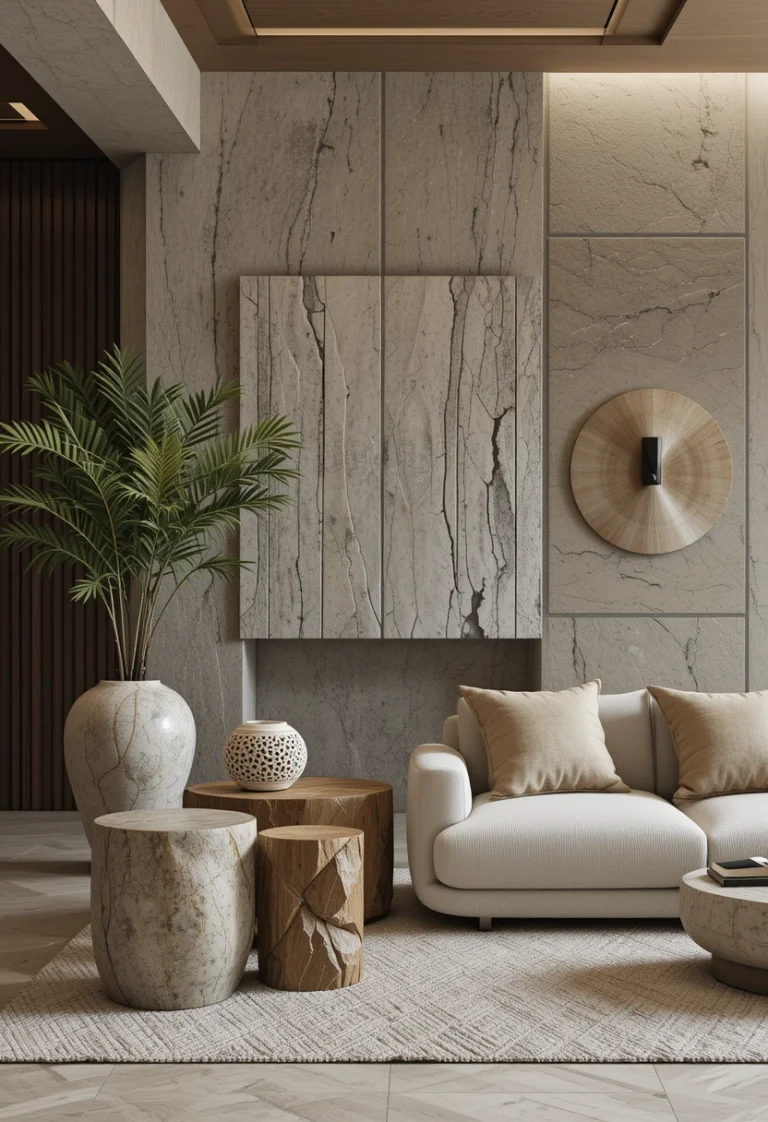
Japandi Living Room Ideas: 22 Inspiring Ways to Create Calm, Clean, and Comfort-First Spaces
If your living room feels chaotic, cluttered, or simply not as peaceful as you want it to be, Japandi style might be exactly what you’re craving. It blends the warmth of Scandinavian comfort with the clean precision of Japanese minimalism, giving you a living space that feels grounded, intentional, and genuinely restful.
Many people love the idea of minimalism but feel overwhelmed by where to begin. Japandi works beautifully because it doesn’t demand perfection—just thoughtful design choices that bring clarity and warmth to the room you spend the most time in.
22. Neutral Base Palette
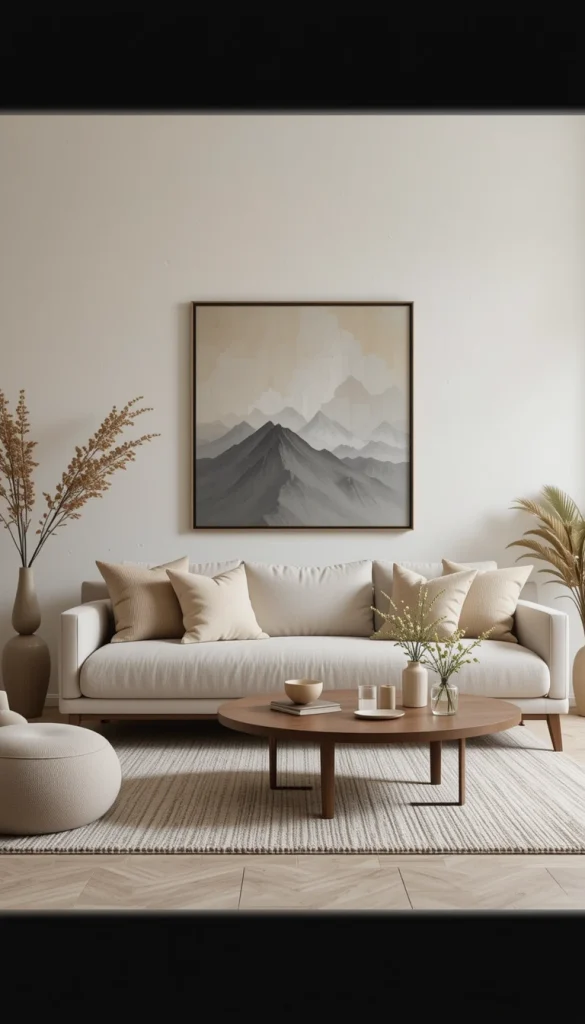
A neutral palette gives your living room a calm starting point, which is foundational to Japandi style. Colors like beige, sand, stone, and soft gray keep the space visually quiet without feeling cold. When everything starts from the same tonal family, your décor automatically looks more cohesive. It also makes it easier to bring in textures without overwhelming the eye. Real-life example: a simple beige sofa instantly looks more elegant when paired with lightly textured off-white walls.
21. Low-Profile Furniture
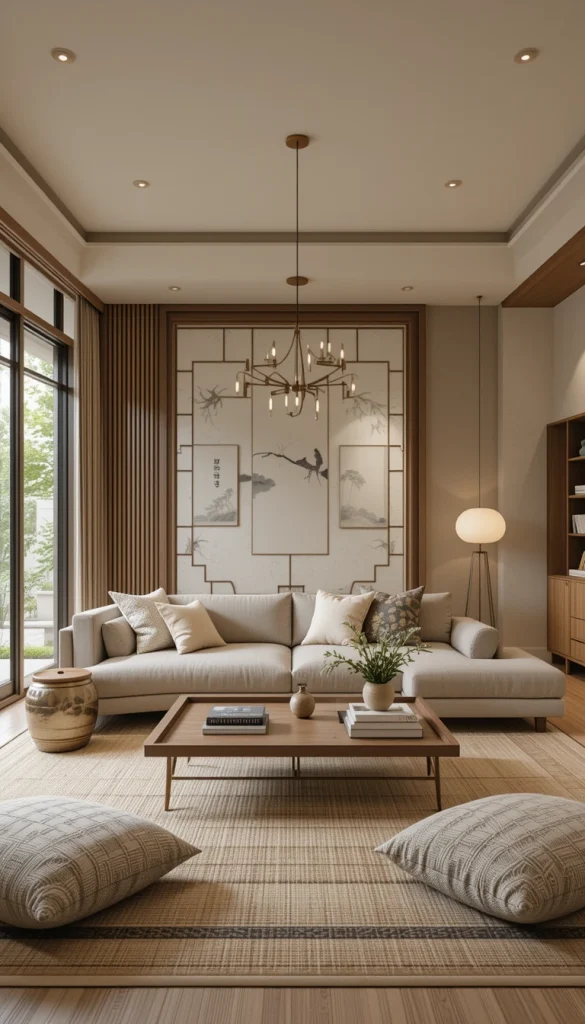
Furniture that sits closer to the ground encourages a sense of ease and relaxation. In Japandi design, low sofas, grounded coffee tables, and floor cushions create visual spaciousness. This works especially well in smaller living rooms because it opens up vertical space. Low-profile silhouettes also echo Japanese tatami-inspired living. You’ll feel the shift immediately—the room feels slower, softer, and more connected to the floor.
20. Natural Wood Everywhere

Wood is the backbone of Japandi style because it adds warmth without overpowering the room. Choose light to medium tones like ash, birch, or oak for a soft Scandinavian feel. Japanese interiors traditionally use wood to create a sense of nature indoors, which adds calm and balance. A single wooden feature—like a console or slatted panel—can anchor the whole room visually. If you have dark floors, mixing in lighter wood creates an elegant contrast that still feels cohesive.
19. Clean-Lined Sofas

A Japandi living room benefits from a sofa with straight edges, simple frames, and no bulky curves. This keeps the room feeling open and clutter-free. Clean lines also pair well with minimal furnishings, allowing your accent pieces to shine. If your goal is serenity, the sofa design matters more than you think—busy silhouettes add mental noise. Look for cotton, linen, or textured upholstery in earthy tones for a balanced look.
18. Soft Textiles for Contrast

While Japandi style leans minimal, it’s not meant to feel harsh or cold. Adding soft throws, linen cushions, or woven rugs provides warmth and subtle contrast. These textures keep the room feeling lived-in rather than overly curated. Real-life payoff: your guests will actually want to sit down and relax rather than admire the décor from a distance. The goal is comfortable simplicity, not museum silence.
17. Thoughtful Negative Space
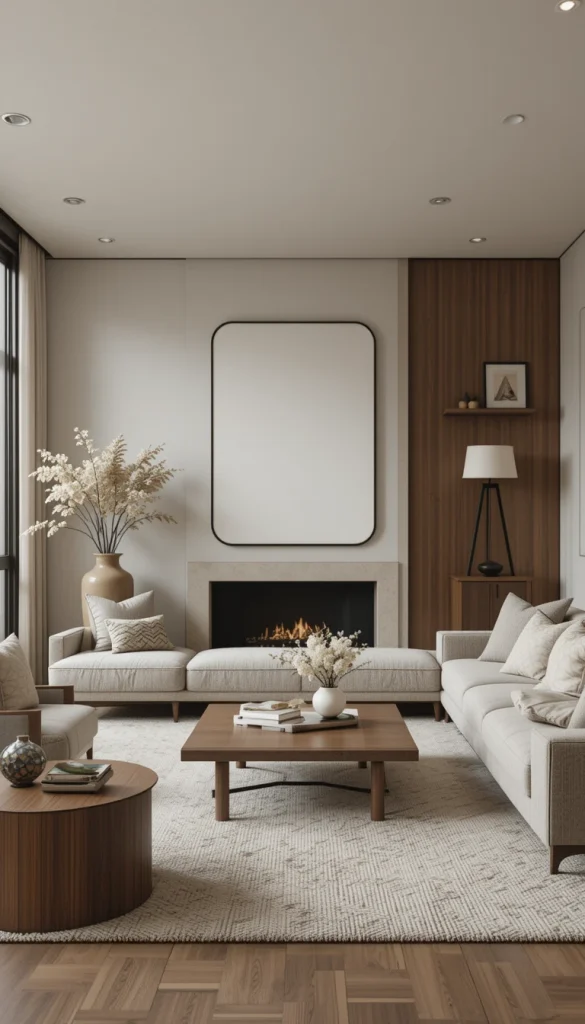
Negative space—intentional empty areas—prevents your living room from feeling stuffed. Japandi relies on editing, not adding, to create tranquility. Leaving breathing room around furniture helps highlight each piece. This means you don’t need to decorate every corner; in fact, the space feels more luxurious when you don’t. Think of negative space as visual exhaling.
16. Warm Ambient Lighting

Lighting changes everything in a Japandi living room. Use soft, warm light, not cool white, to maintain a cozy environment. Paper lanterns, wooden table lamps, and simple pendants create a calm glow that feels balanced. Layering multiple light sources prevents harsh shadows and adds dimension to the space. Consider it mood-setting, not task lighting.
15. Incorporating Matte Black Accents

While Japandi is soft and natural, a touch of matte black adds modern structure. This could be a lamp, picture frame, or coffee table detail. The contrast keeps the space from feeling washed out. It also nods to Japanese design, which often mixes light woods with striking dark elements. Use it sparingly for the biggest impact.
14. Low-Maintenance Greenery

Plants bring life to a Japandi living room without overwhelming the space. Choose simple, sculptural greenery like a snake plant or olive tree. The key is restraint—one or two plants, not an indoor jungle. Their shapes add gentle movement and an organic element that softens clean lines. Think calming, not cluttered.
13. Soft Curves in Select Places
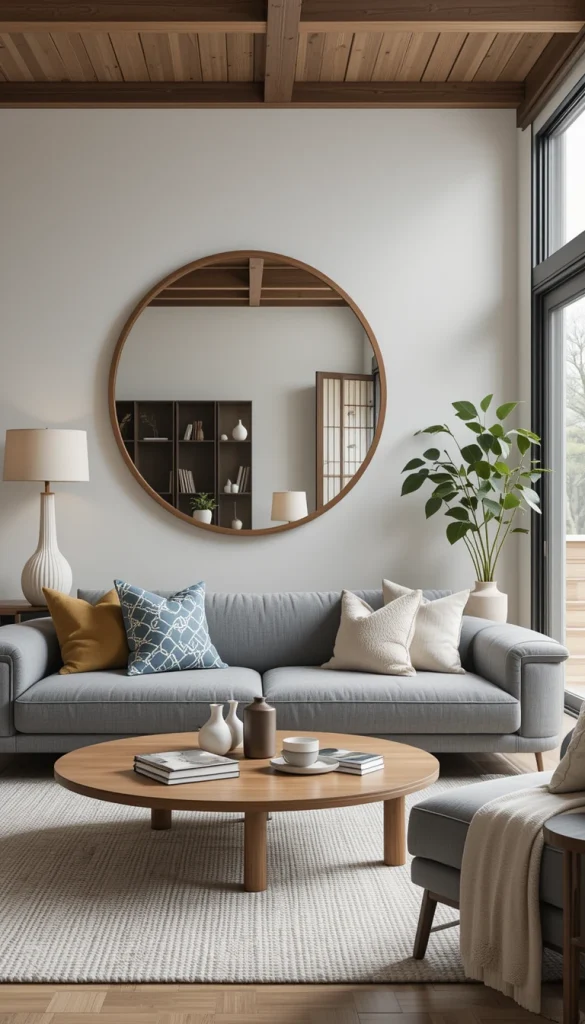
Even though Japandi leans linear, a few subtle curves—like a round mirror or soft-edged coffee table—add balance. Curved forms break the rigidity without introducing chaos. They also make the space more welcoming, especially in family homes. This blend mirrors the harmony between Scandinavian coziness and Japanese precision. One curved piece can shift the entire tone of a room.
12. Minimal Wall Art

Japandi wall art tends to be subtle and intentional. Choose pieces with simple lines, natural colors, or abstract organic shapes. The goal isn’t to fill the walls but to create visual rest. One well-placed artwork can elevate the entire room, especially if it echoes your color palette. Think slow-living meets gallery simplicity.
11. Layered Natural Textures
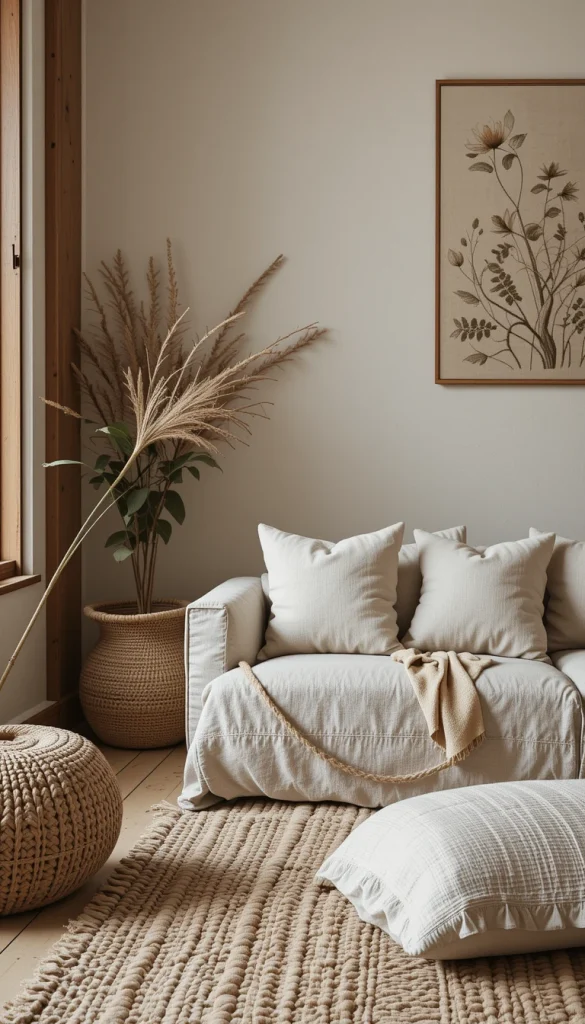
Layering is essential for creating warmth without clutter. Use linen, jute, wool, and raw wood to build a tactile but calm environment. These textures work together because they share natural roots. A woven rug paired with linen cushions creates depth without overpowering the room. You get softness, comfort, and authenticity all at once.
10. Hidden Storage Solutions

Storage is your secret weapon in Japandi design. Clutter is the fastest way to break the sense of calm, so closed cabinets, baskets, and built-in shelving are priceless. Keeping everyday items out of sight lets the room breathe. It also makes cleaning easier—a huge real-life win. Minimalism works best when it’s practical, not performative.
9. Muted Decorative Accents
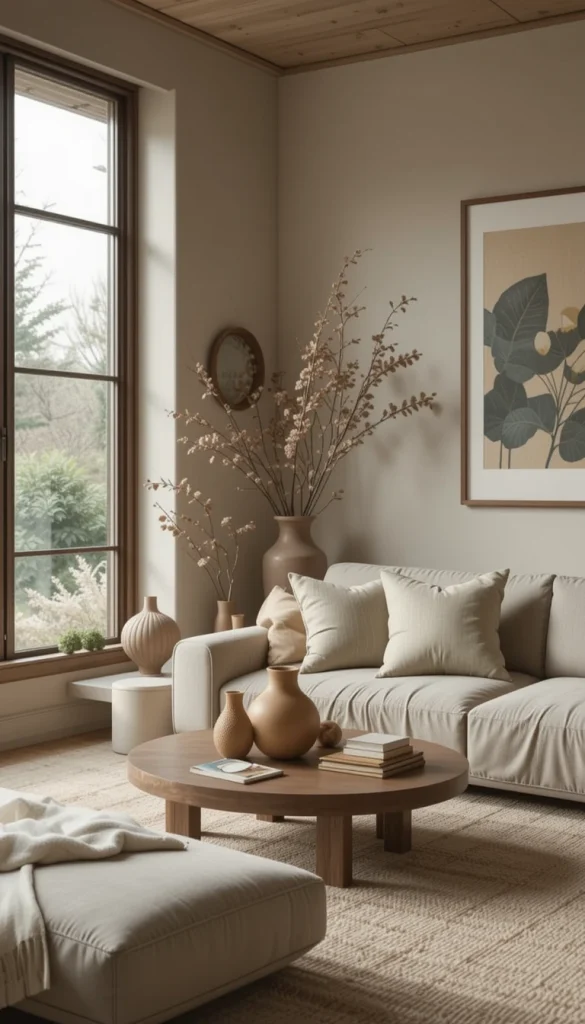
Japandi décor avoids bright pops of color in favor of muted, earthy tones. Think clay vases, sage cushions, or sand-colored ceramics. These tones reinforce visual harmony while still adding personality. You don’t need bold objects to make a statement; subtlety can be incredibly powerful. It’s the equivalent of a soft whisper in a calm room.
8. Organic Shapes and Handmade Pieces

Handmade items add soul to Japandi interiors. A hand-thrown ceramic bowl or irregularly shaped vase introduces tactile character. These pieces offer gentle imperfections that balance the clean lines in the room. They also bring a sense of craftsmanship and intention. A few carefully chosen handmade items can tell a story without saying a word.
7. Slatted Wood Details
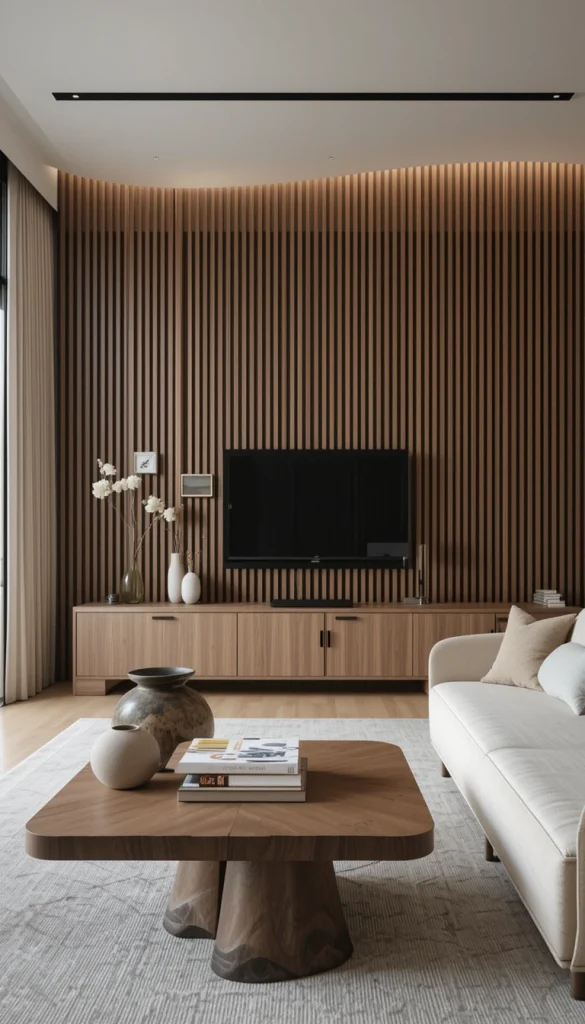
Slatted wood is a signature Japandi feature that adds rhythm and texture. Use it as a wall panel, cabinet front, or room divider. The lines create visual order without feeling harsh. It also adds warmth and depth, making your living room look more refined instantly. This small architectural touch can transform even basic furniture.
6. Calm, Clutter-Free Surfaces

Japandi surfaces should feel open and intentional, not decorated for the sake of decorating. Keep only a few well-loved objects on coffee tables or consoles. This helps maintain the overall feeling of quiet. A clear surface also highlights the beauty of your furniture. It’s a simple rule with a huge payoff in serenity.
5. Soft, Earth-Based Rugs
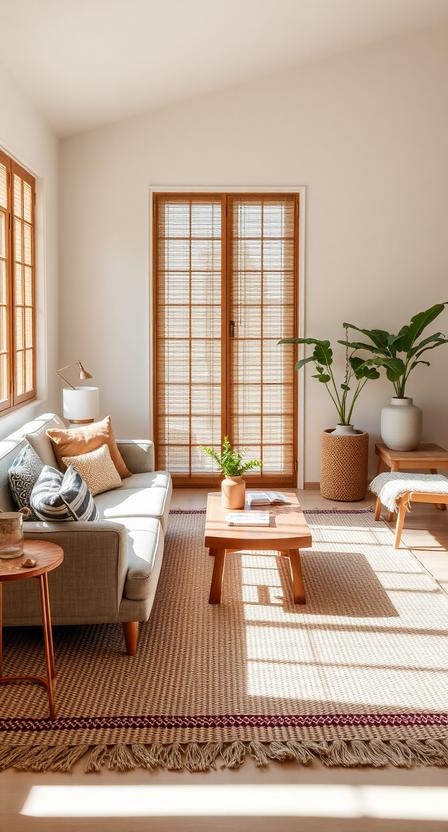
A rug anchors the entire living room, especially in Japandi design. Look for wool, jute, or cotton rugs in sandy or stone hues. They provide warmth, define the seating area, and add coziness underfoot. A natural rug also balances the clean lines of your furniture. Think grounding, comforting, and practical.
4. Subtle Scent Elements

A Japandi living room feels complete when all senses are considered, including scent. Use cedar, sandalwood, or light herbal diffusers to create a calm atmosphere. These natural scents pair beautifully with wood elements. A subtle fragrance can make the room feel instantly more curated. It’s a small detail with a surprisingly big emotional effect.
3. Multi-Functional Furniture

Japandi style values functionality as much as beauty. Choose pieces like storage ottomans, nesting tables, or modular sofas. These items let you adapt the room for different needs without adding clutter. Real-life example: a nesting table set gives you extra surfaces only when needed. Functionality keeps the design grounded and realistic.
2. Intentionally Simple Window Treatments
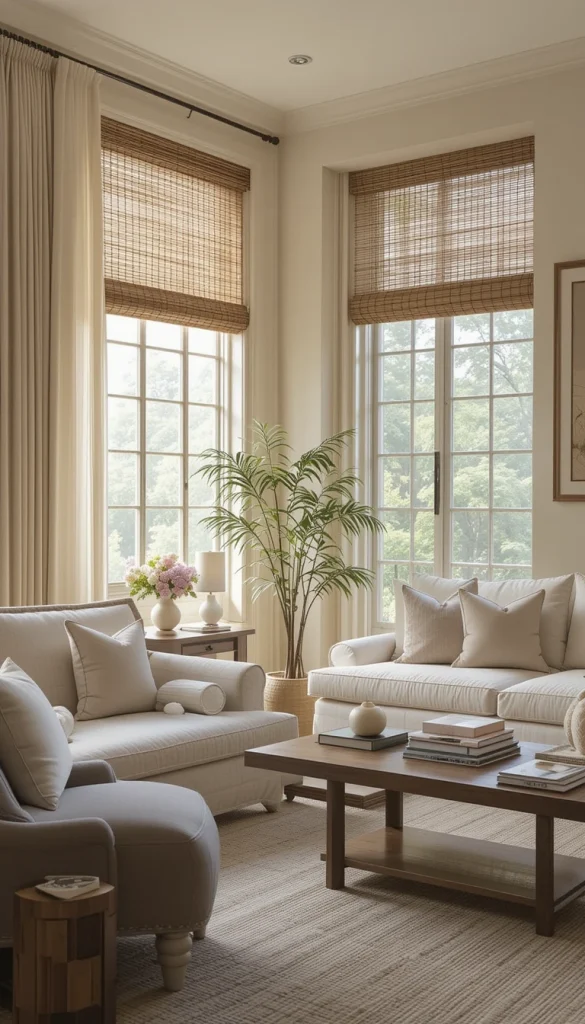
Light control is key for a calm living room. Choose linen curtains, bamboo shades, or soft cotton panels that provide privacy without blocking natural light. These materials add texture without heaviness. Natural light is one of Japandi’s best design tools, and simple treatments highlight it beautifully. Your room will feel brighter, softer, and more open.
1. A Balanced Mix of Warmth and Minimalism
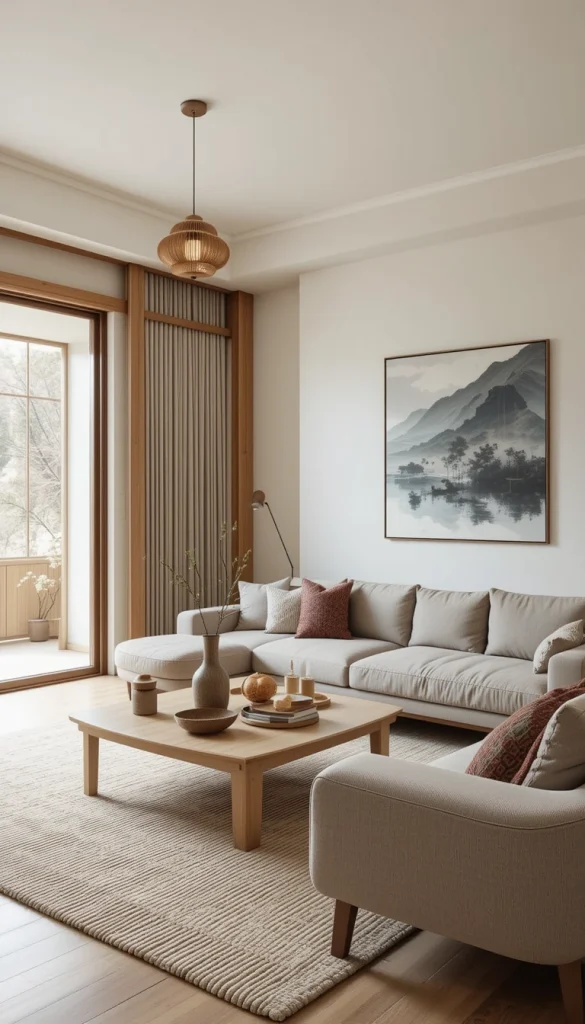
The heart of Japandi design lies in achieving balance—simplicity without sterility, warmth without clutter. A truly Japandi living room feels peaceful yet practical. It embraces natural materials, clean lines, and intentional living. Every choice has a purpose, but nothing feels forced. When warmth meets minimalism, the room becomes a space you genuinely love spending time in.
Conclusion
Japandi style isn’t about having a picture-perfect home—it’s about creating a living room that feels calm, grounded, and beautifully functional.