Chic Transitional Style Interiors: 13 Timeless Ideas for a Beautiful Home
Transitional style is the sweet spot between classic and contemporary. It gives you the elegance of traditional interiors without making your home feel dated, while modern touches keep everything fresh and comfortable. If you love neutral colors, beautiful furniture, and rooms that feel polished without looking overly decorated, this style is worth considering.
The best part is that you don’t need to completely redesign your home to get the look. A neutral sofa, elegant lighting, natural wood accents, and carefully chosen decorative pieces can make a dramatic difference. These 13 chic transitional interior ideas will help you create a home that feels sophisticated, welcoming, and easy to live in.
1. Start with a Soft Neutral Color Palette
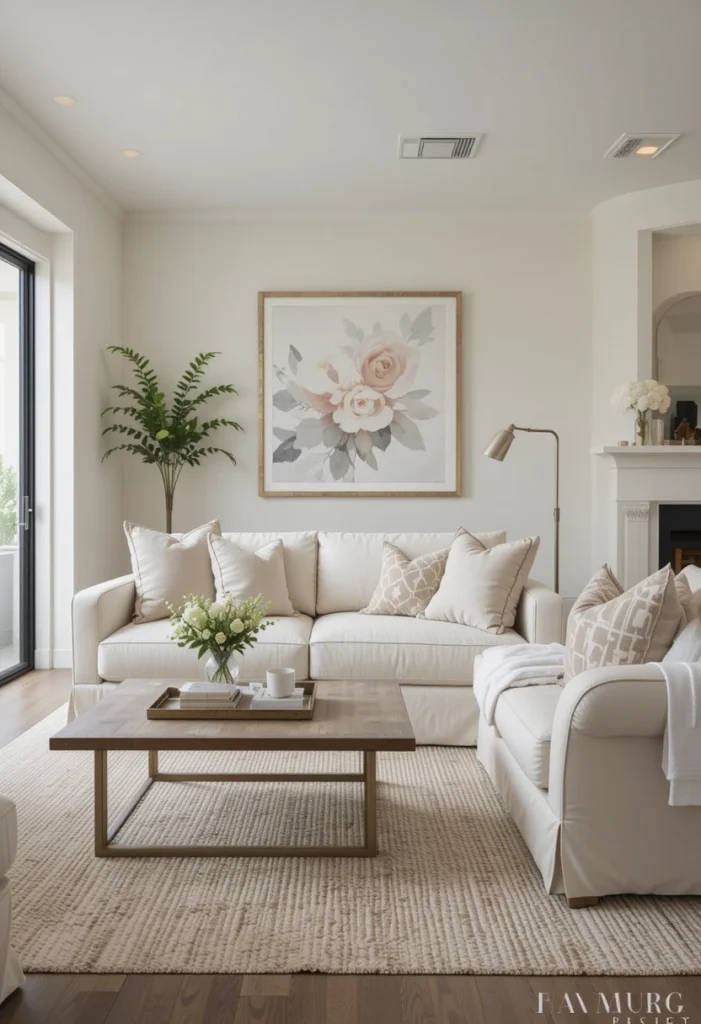
A soft neutral palette is one of the easiest ways to establish a chic transitional interior. Layer shades of cream, beige, taupe, warm white, and soft gray instead of relying on a single color throughout the room. A cream upholstered sofa, beige textured area rug, and warm neutral throw pillows create a comfortable foundation while leaving plenty of room for decorative accents. This approach works especially well in open-plan homes because the restrained palette allows different spaces to flow together naturally.
2. Pair a Modern Sofa with Traditional Accents
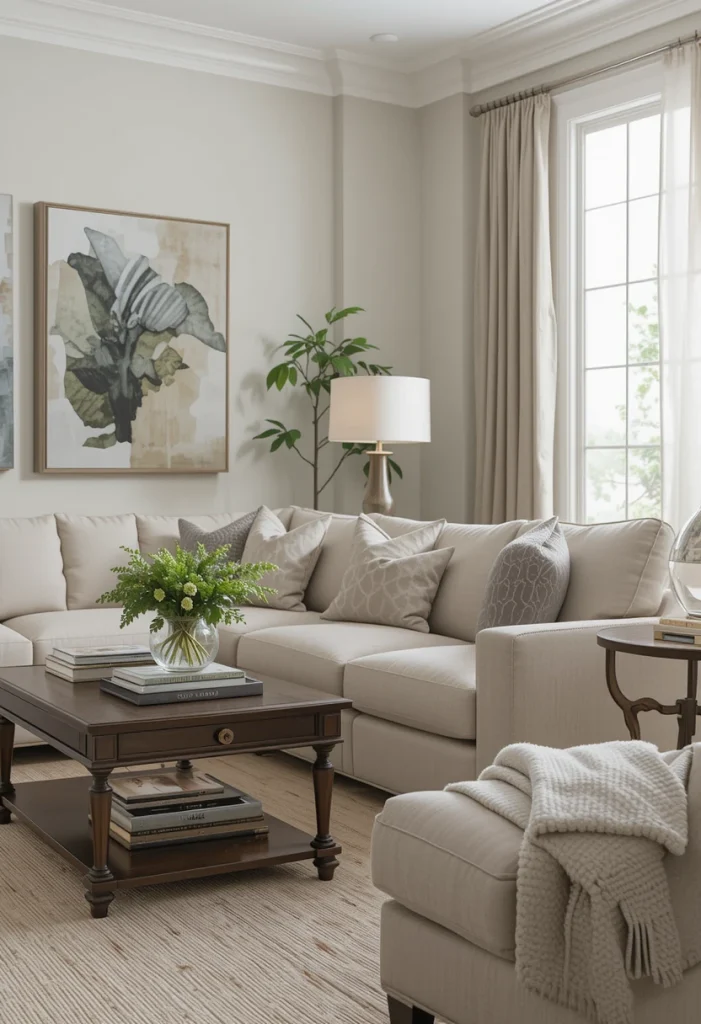
You don’t have to choose between modern and traditional furniture in a transitional home. Try combining a clean-lined beige sofa, classic wooden coffee table, and traditional table lamp for a balanced look. The streamlined sofa keeps the room feeling current, while the wood and classic lighting introduce the character that prevents the space from looking too stark. This mix is particularly useful if you already own traditional furniture and want to gradually give your living room a more contemporary appearance.
3. Add Elegant Statement Lighting
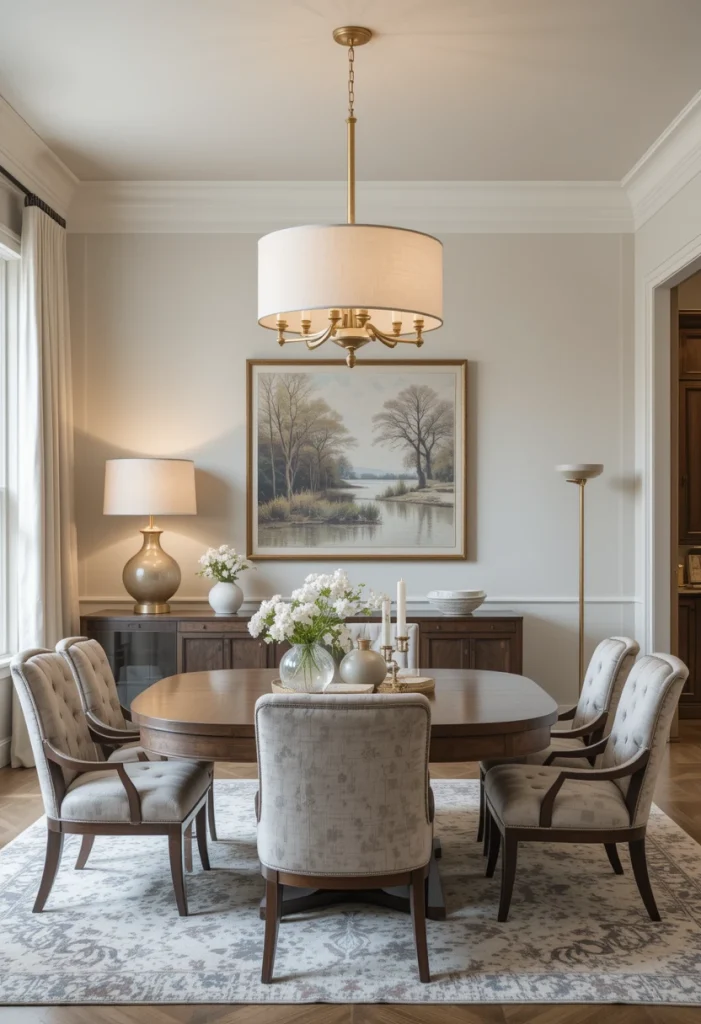
Lighting can completely change the personality of a room, and a transitional interior benefits from fixtures that feel elegant but not overly ornate. A modern brass chandelier, linen-shade table lamp, and arched floor lamp can provide three different layers of lighting while creating visual interest. Brass works beautifully with neutral upholstery and natural wood because it adds warmth without overwhelming the room. Use a statement fixture above a dining table or seating area to create a natural focal point.
4. Mix Light and Dark Wood Finishes
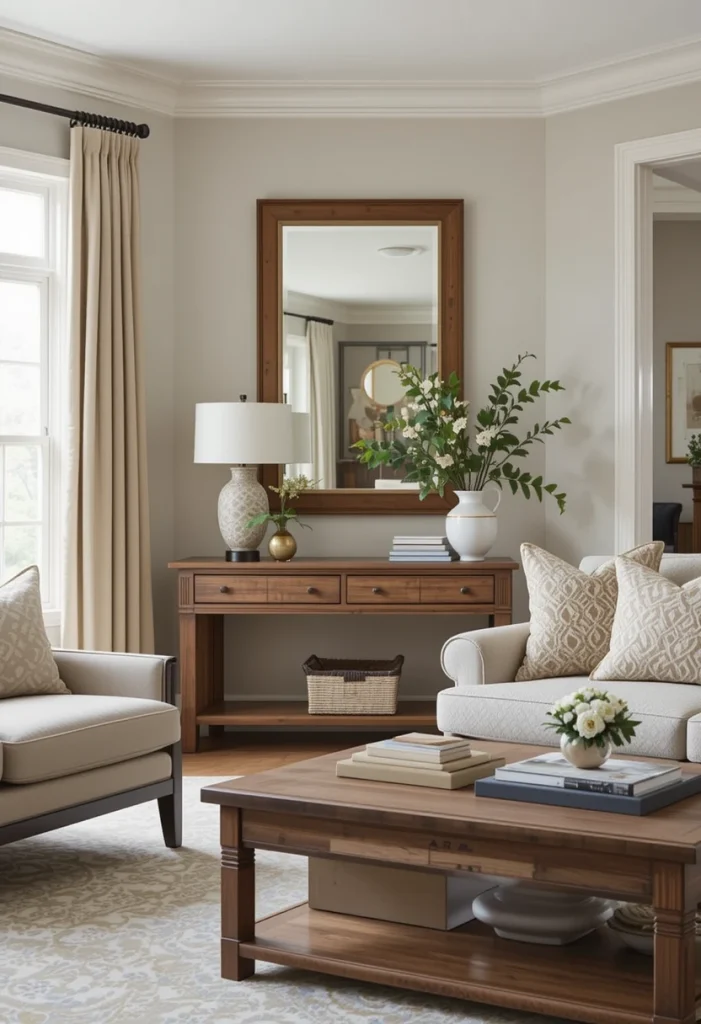
A transitional room becomes much more interesting when you combine different wood tones rather than matching every piece of furniture. Consider a light oak console table, dark walnut coffee table, and wood-framed accent mirror to create subtle contrast. Mixing finishes gives the room a collected appearance and prevents a furniture set from making everything look too coordinated. Keep the undertones relatively warm so the different woods still feel connected.
5. Choose an Elegant Neutral Area Rug
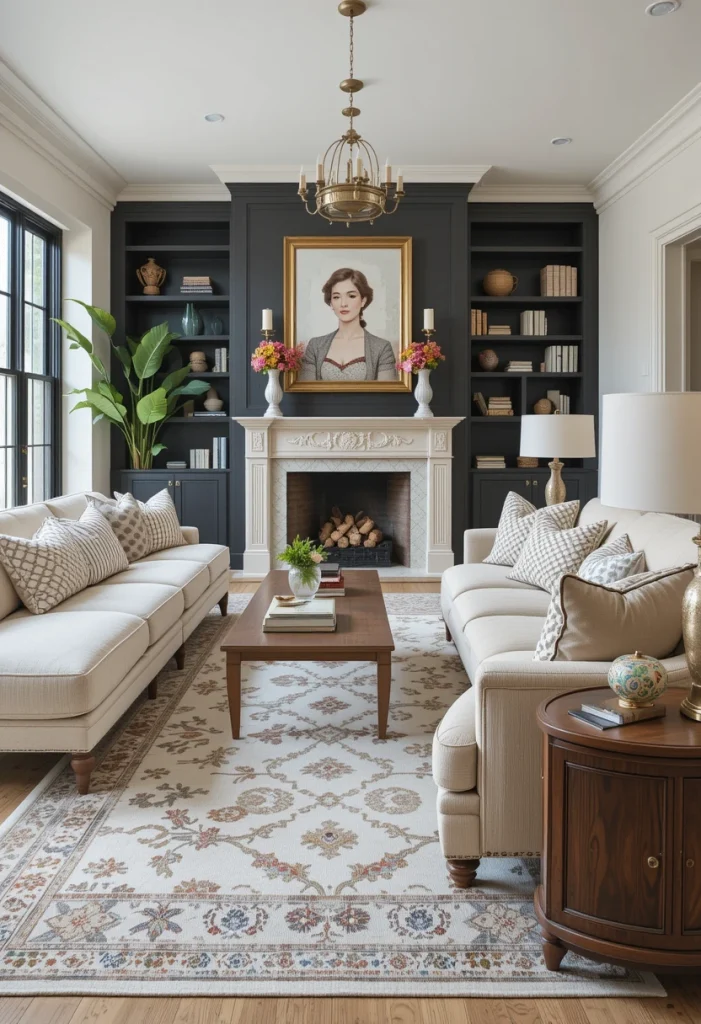
A large rug can visually anchor your furniture and make the entire room feel more finished. Look for a neutral vintage-style area rug, soft geometric runner, or cream textured rug with subtle patterns rather than bold colors. Transitional interiors benefit from understated patterns because they add dimension without competing with furniture and artwork. In a living room, make sure the rug is large enough for at least the front legs of your main seating pieces to sit comfortably on it.
6. Bring in Curved Furniture
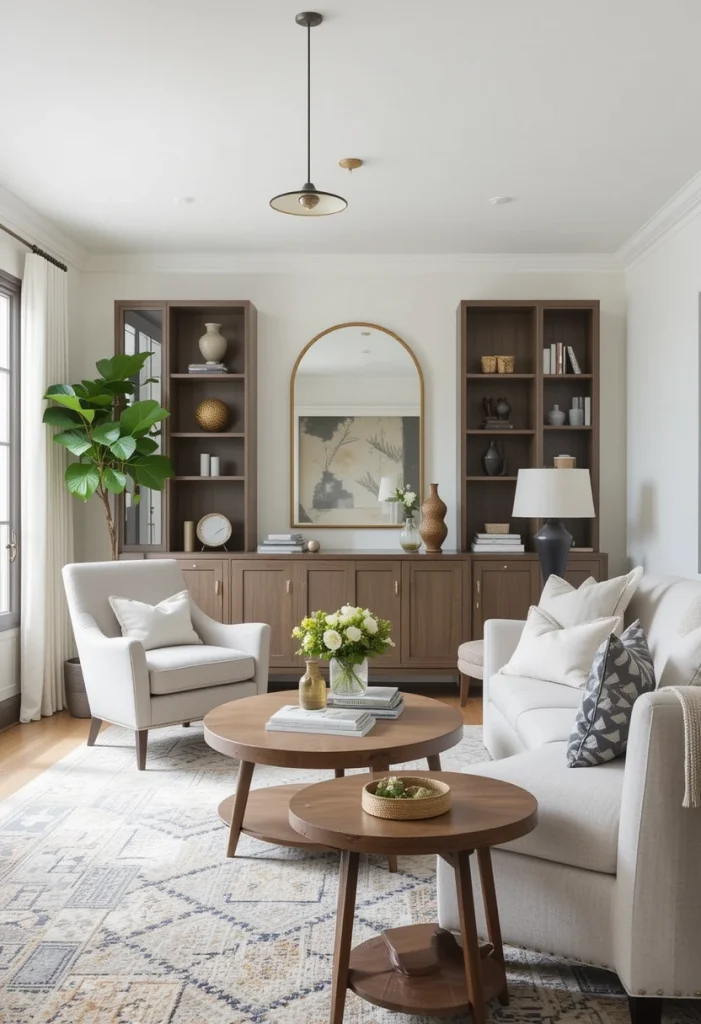
Straight lines are common in modern interiors, but adding a few curves can make a transitional room feel much softer and more inviting. A curved accent chair, round wood coffee table, and arched decorative mirror introduce gentle shapes that balance boxier sofas and cabinets. This is especially effective in living rooms where too many rectangular pieces can make the layout feel rigid. The combination of curved and straight silhouettes creates the polished but relaxed quality that makes transitional design so appealing.
7. Create Contrast with Black Accents
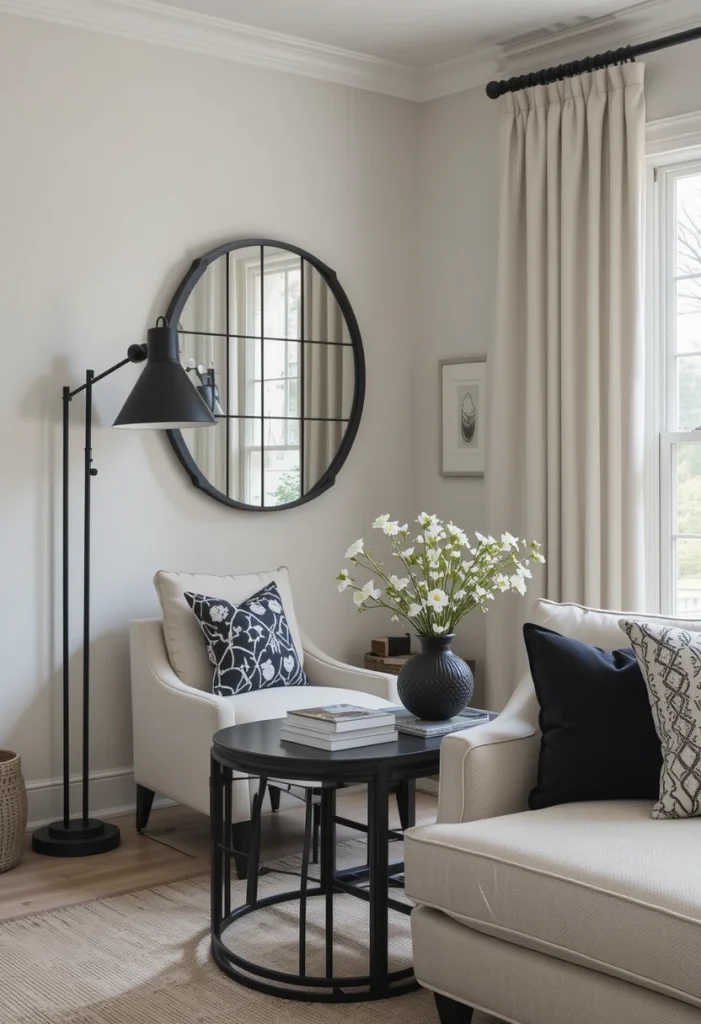
A few black accents can give a neutral transitional room the definition it needs. Add a black metal floor lamp, black-framed wall mirror, and matte black curtain rods to create crisp visual contrast against cream and beige furnishings. You don’t need much black to make an impact, so use it strategically around the room rather than introducing it everywhere. These small touches can also help connect modern elements with more traditional furniture.
8. Layer Different Textures
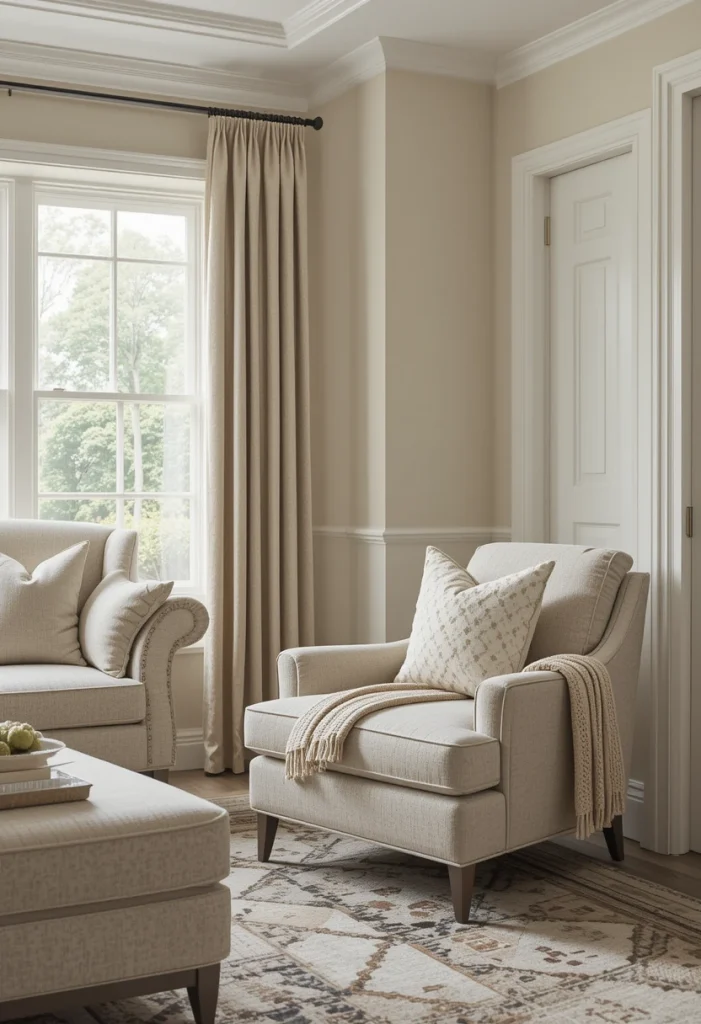
Neutral rooms can sometimes feel flat when everything has the same finish, so texture is essential. Combine a bouclé accent chair, woven throw blanket, and linen decorative pillows to give your room depth without introducing lots of color. Texture becomes particularly important in beige and cream interiors because it creates visual interest while keeping the palette calm. This combination also makes a space feel more comfortable, which is important when you’re designing a room that needs to look elegant but still function for everyday life.
9. Style a Transitional Dining Room
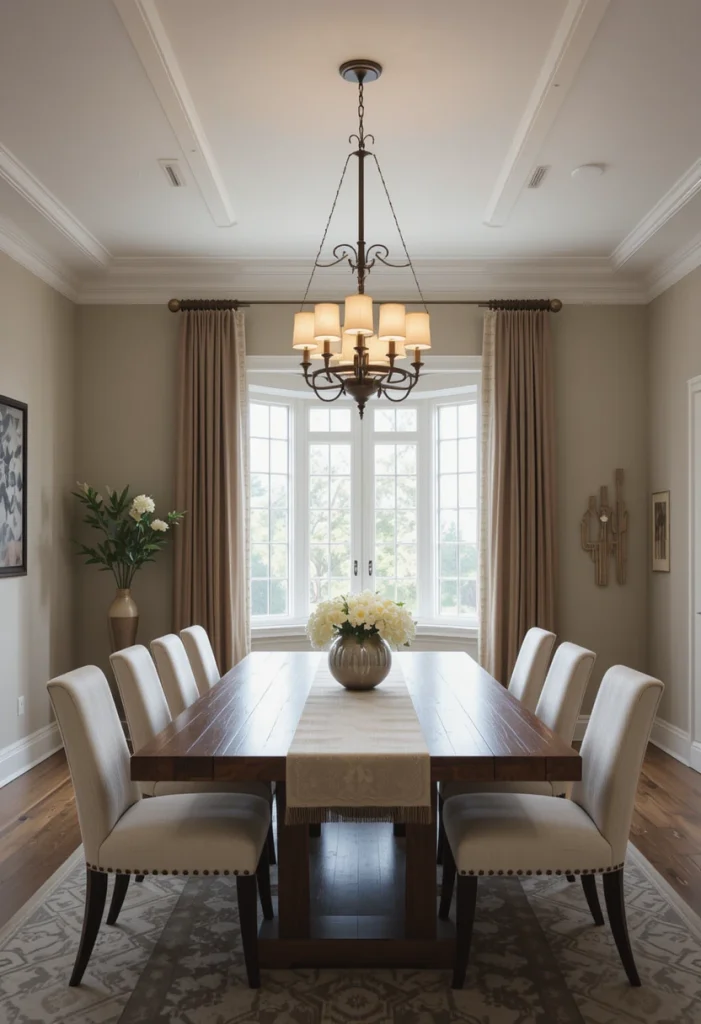
A transitional dining room can look sophisticated without feeling formal or stuffy. Pair a solid wood dining table, upholstered dining chairs, and modern linear chandelier to combine traditional warmth with contemporary simplicity. Add a neutral table runner and a simple centerpiece so the table remains practical for everyday meals. Upholstered chairs are particularly useful because they soften the harder surfaces of the table and lighting fixture.
10. Use Classic Artwork with Modern Frames
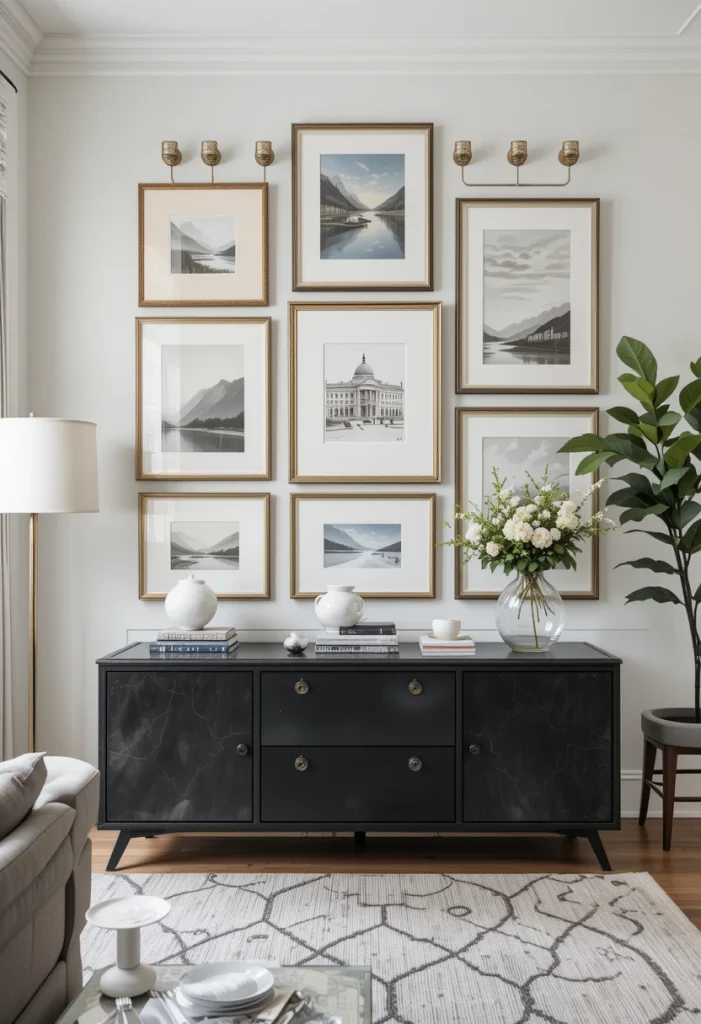
Artwork is an easy way to connect different design styles throughout your home. Try pairing neutral abstract prints, classic landscape artwork, and simple black or brass picture frames for a sophisticated gallery wall. The traditional subject matter can bring warmth and personality, while the cleaner frames keep the arrangement feeling contemporary. Avoid filling every wall; leaving some empty space helps the artwork feel intentional rather than cluttered.
11. Make Your Bedroom Feel Calm and Refined
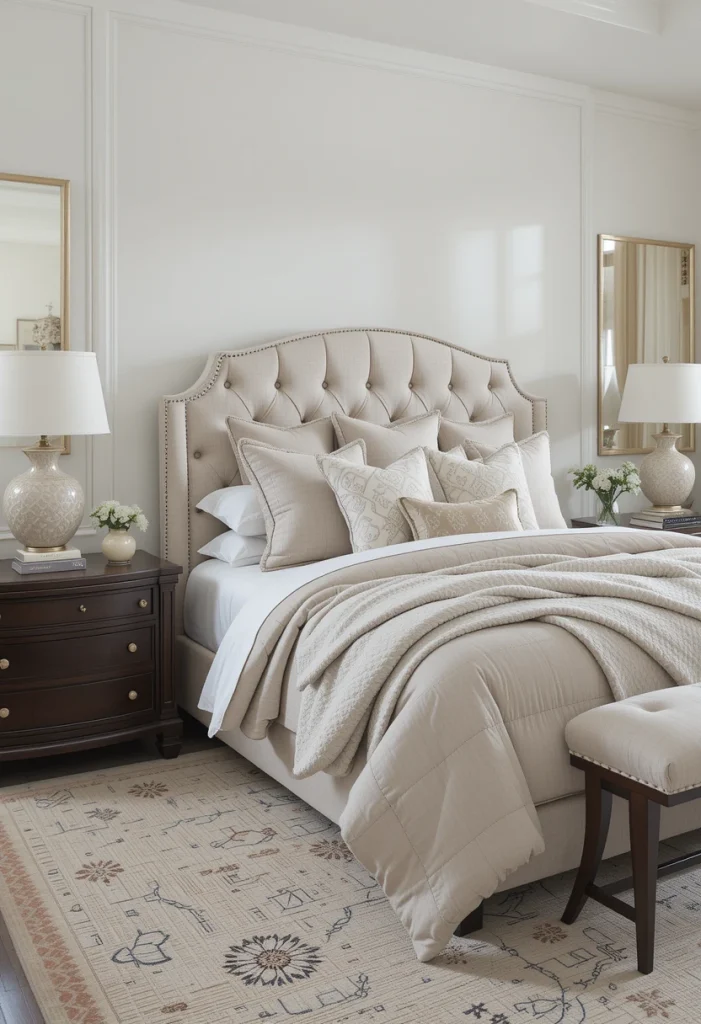
A transitional bedroom should feel comfortable first and elegant second. Start with a tufted upholstered headboard, neutral quilted comforter, and matching bedside lamps to create a balanced and restful foundation. Add layers of cream, beige, soft gray, or muted taupe bedding rather than relying on one flat shade. The result is a bedroom that feels luxurious enough for a boutique hotel but comfortable enough for everyday living.
12. Add Mirrors to Reflect Light
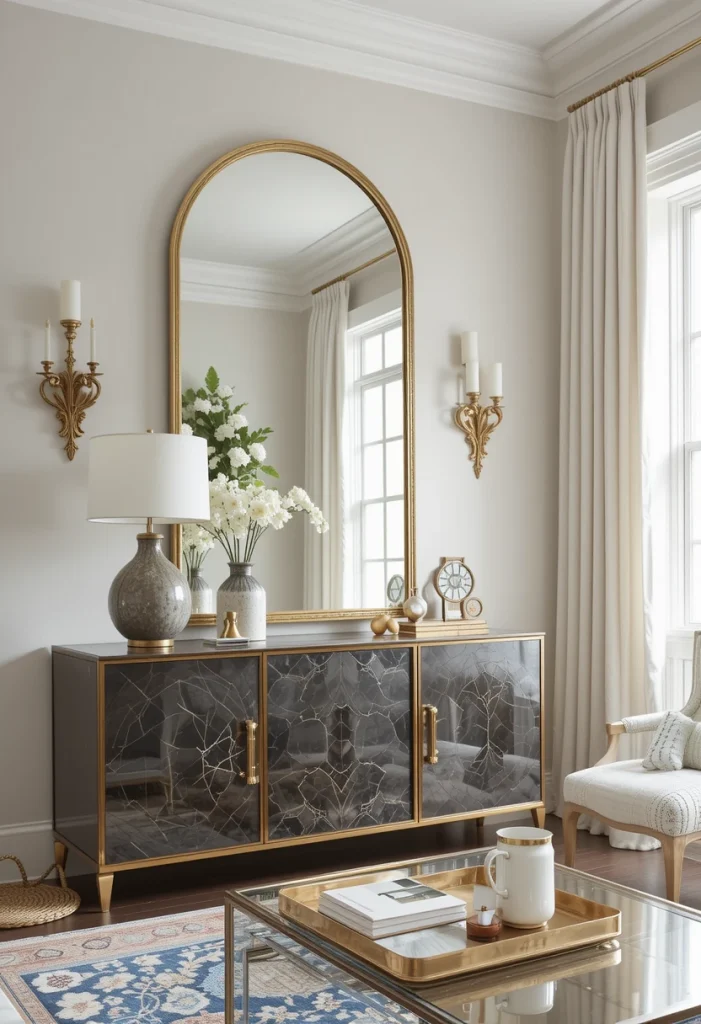
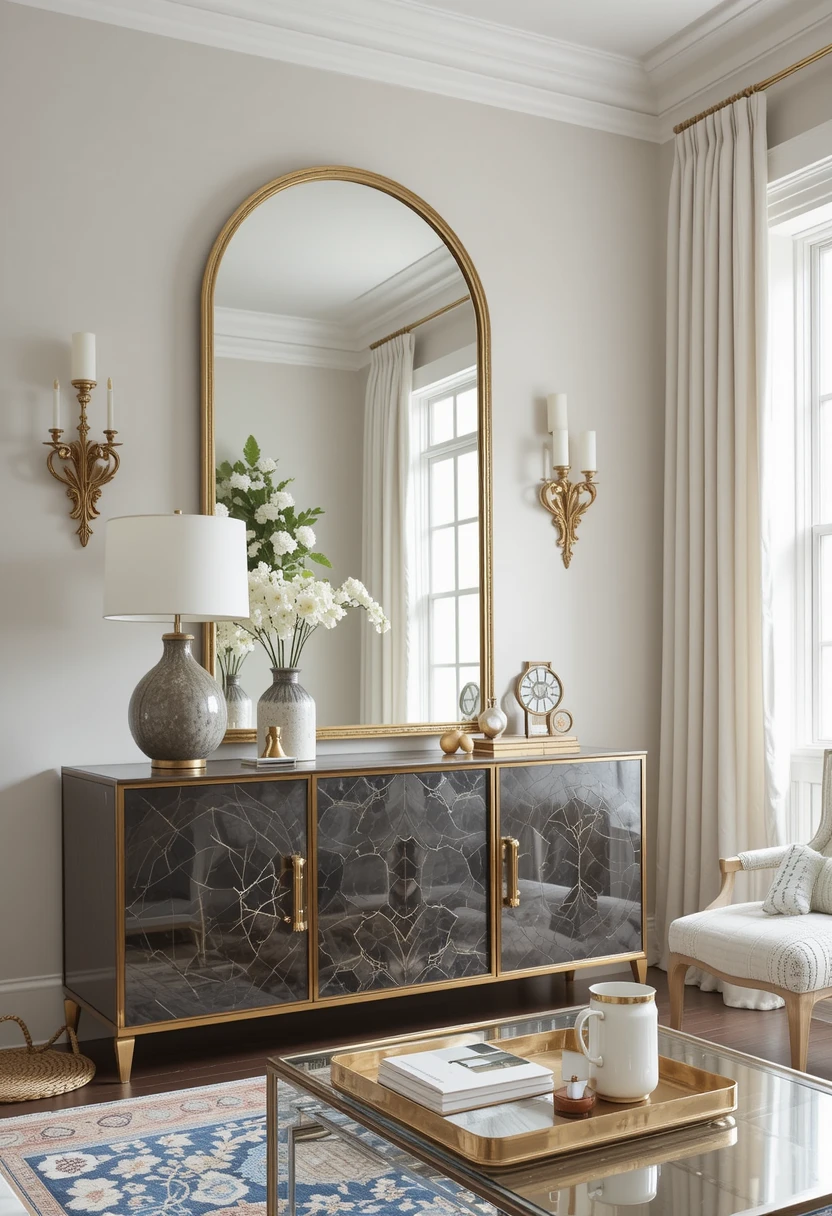
Mirrors are practical decorative pieces that can make a room feel larger and brighter. A large arched wall mirror, gold-framed accent mirror, and decorative mirrored tray can introduce reflection and subtle elegance throughout your home. Position a large mirror opposite a window when possible so it can bounce natural light around the room. Gold and brass frames also work beautifully with transitional interiors because they provide warmth without requiring bold colors.
13. Finish with Carefully Chosen Accessories
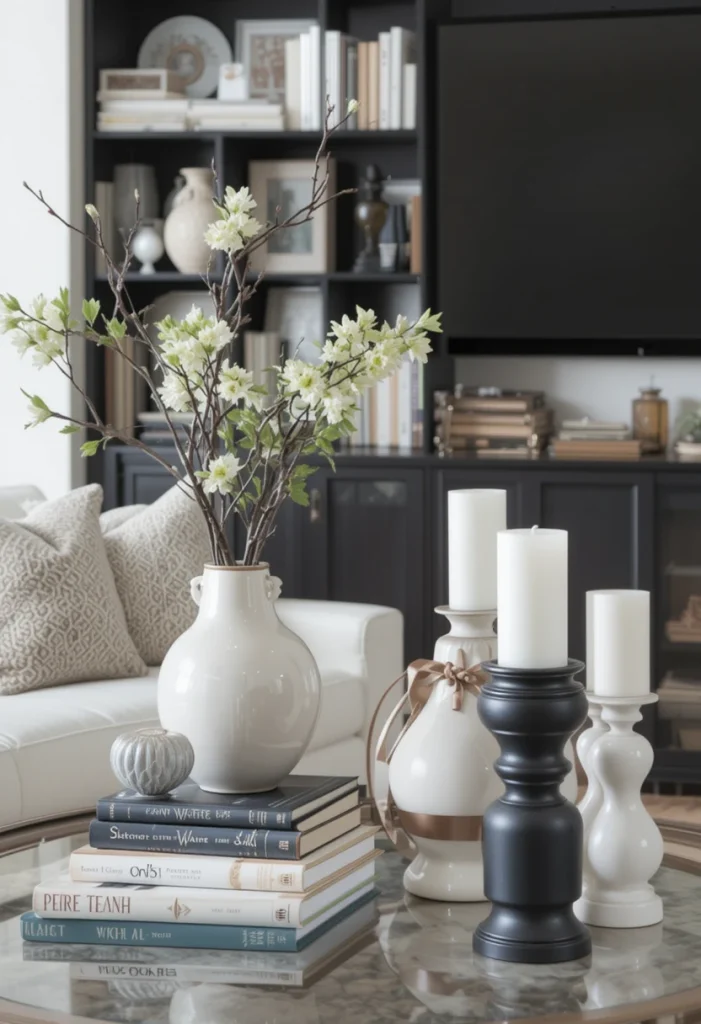
The final layer is where a transitional interior starts to feel personal rather than staged. Use a ceramic decorative vase, stack of hardcover coffee-table books, and sculptural candle holders to add personality to shelves, consoles, and coffee tables. Keep decorative groupings relatively simple and vary their heights so the arrangement feels natural. A few meaningful accessories usually look more sophisticated than covering every available surface.
How to Make Transitional Style Feel Chic, Not Boring
The secret to a beautiful transitional interior is balance rather than perfection. You want traditional details such as wood furniture, classic artwork, and elegant lighting, but you also need modern shapes, simple colors, and uncluttered spaces to keep the room fresh.
Start with a neutral foundation and introduce contrast through wood tones, black accents, metallic finishes, curves, and texture. Instead of buying an entire matching furniture collection, combine pieces with different silhouettes and finishes. This creates a more layered and expensive-looking room while giving you the flexibility to update individual pieces over time.
Conclusion
A chic transitional style interior doesn’t need to follow strict rules. The most successful spaces combine traditional warmth with contemporary simplicity, creating rooms that feel elegant without becoming formal.
Start small with a neutral rug, statement lighting, textured pillows, or a beautiful mirror, then build the room gradually. Choose pieces you genuinely love, keep the color palette cohesive, and let comfort guide your decisions—that’s what makes transitional style timeless.