Open Floor Plan Barndominium Interior Design: 17 Smart Ideas That Actually Work
Wide open spaces, soaring ceilings, and that rugged-meets-modern charm—open floor plan barndominiums have a personality all their own. But here’s the truth: without a thoughtful design strategy, all that openness can quickly feel cold, echoey, or unfinished. The key is knowing how to define spaces without walls, add warmth without clutter, and balance rustic structure with livable comfort.
Creating Functional Zones Without Walls
17. Anchor the Living Room with an Oversized Rug
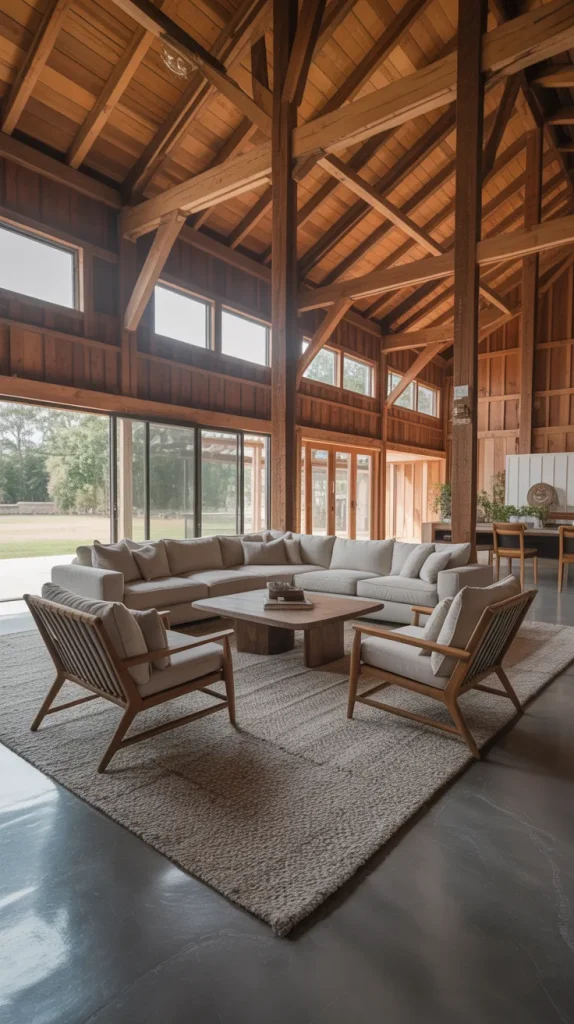
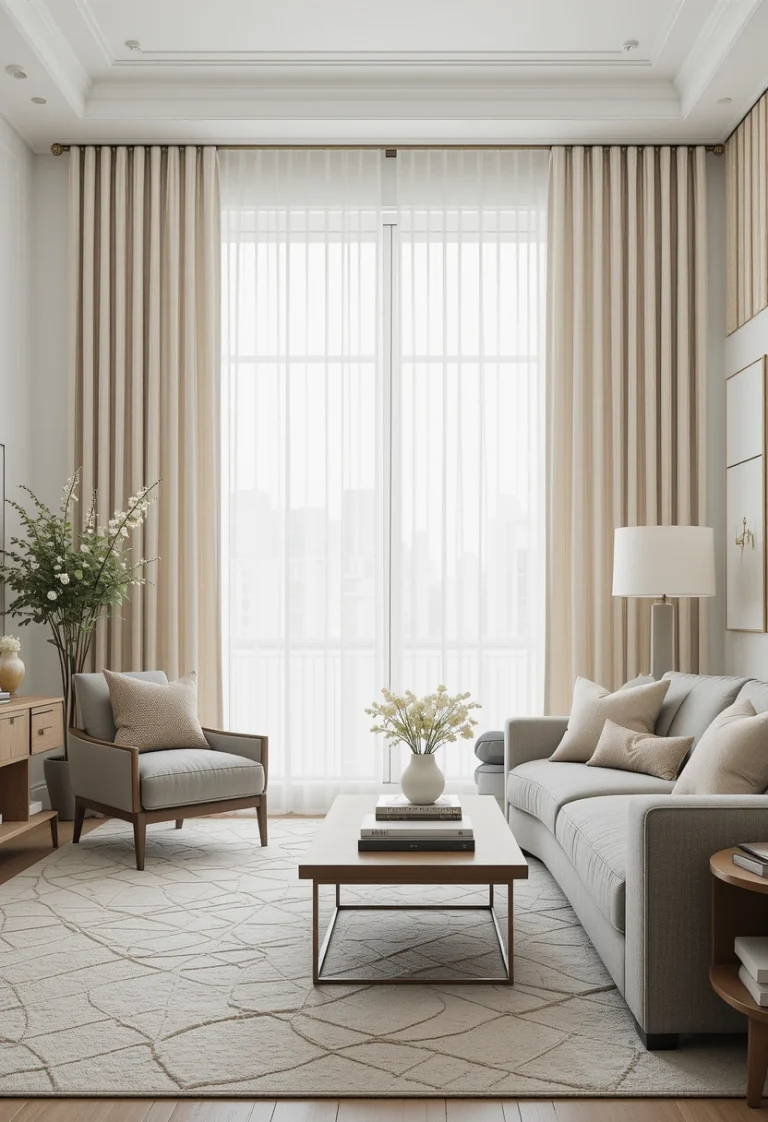
In a wide-open barndominium, furniture can easily feel like it’s floating. An oversized area rug instantly defines the living room zone without adding physical barriers. Choose a rug large enough that at least the front legs of every seating piece sit on it for cohesion. This creates visual boundaries while maintaining the airy feel that makes open plans so appealing. Rugs are one of the simplest tools for defining space without sacrificing openness.
16. Use Ceiling Treatments to Separate Areas
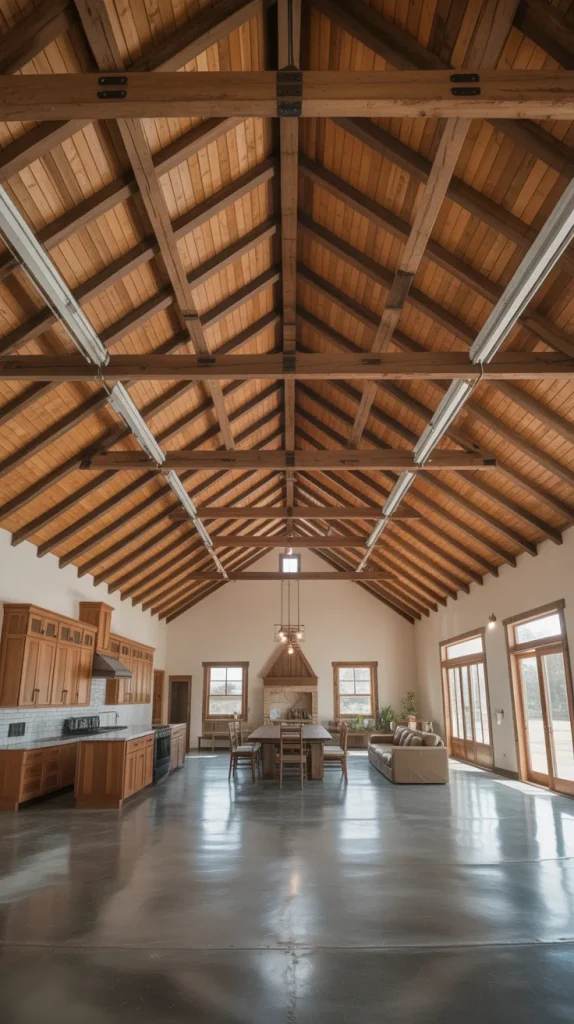
Ceilings are powerful design tools in barndominiums because of their height and scale. Adding wood beams above the living area and a tongue-and-groove treatment over the kitchen subtly distinguishes zones. This approach keeps sightlines clear while still creating architectural definition. It’s especially effective in large rectangular layouts where areas can otherwise blur together. Vertical design changes help organize horizontal space.
15. Position the Sofa as a Natural Divider

Instead of pushing your sofa against a wall, float it in the center of the room facing a focal point. This creates a clear boundary between the living and dining areas without blocking light or flow. Adding a slim console table behind it enhances the separation while providing storage or styling space. It feels deliberate and polished rather than accidental. Furniture placement alone can define an entire layout.
14. Install a Double-Sided Fireplace
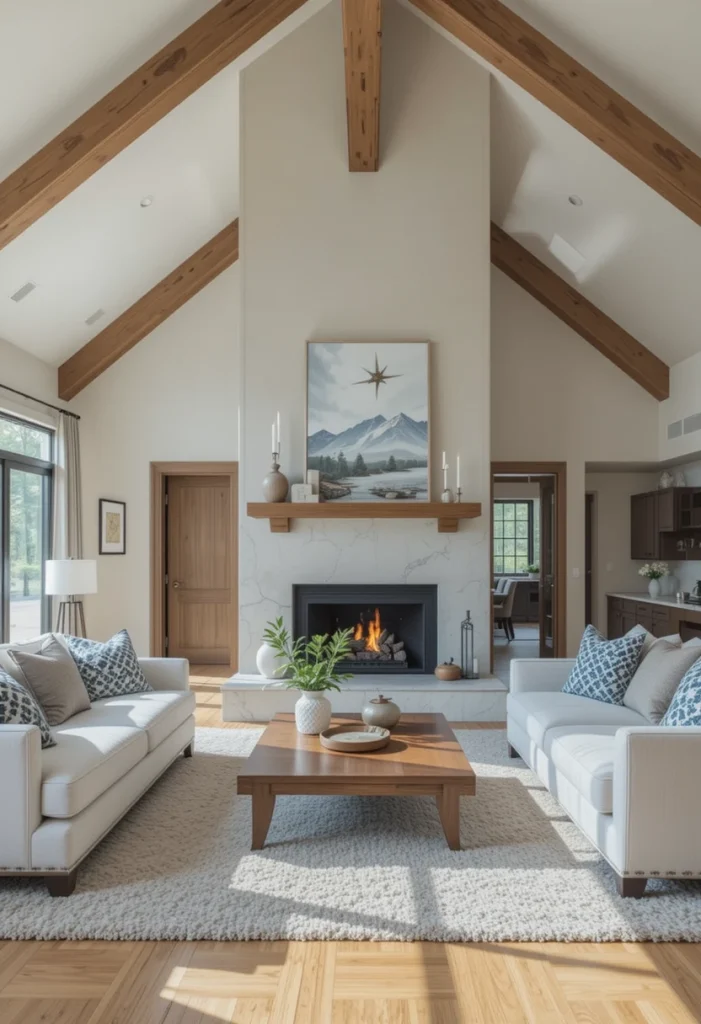
A double-sided fireplace offers warmth, ambiance, and smart zoning in one feature. It creates a visual and physical anchor between two areas, such as the living room and dining space. In colder climates, this also improves heating efficiency in open layouts. The structure adds vertical weight and architectural interest. A shared focal point makes open spaces feel cohesive yet organized.
Balancing Rustic Charm with Modern Comfort
13. Pair Metal Accents with Soft Textiles
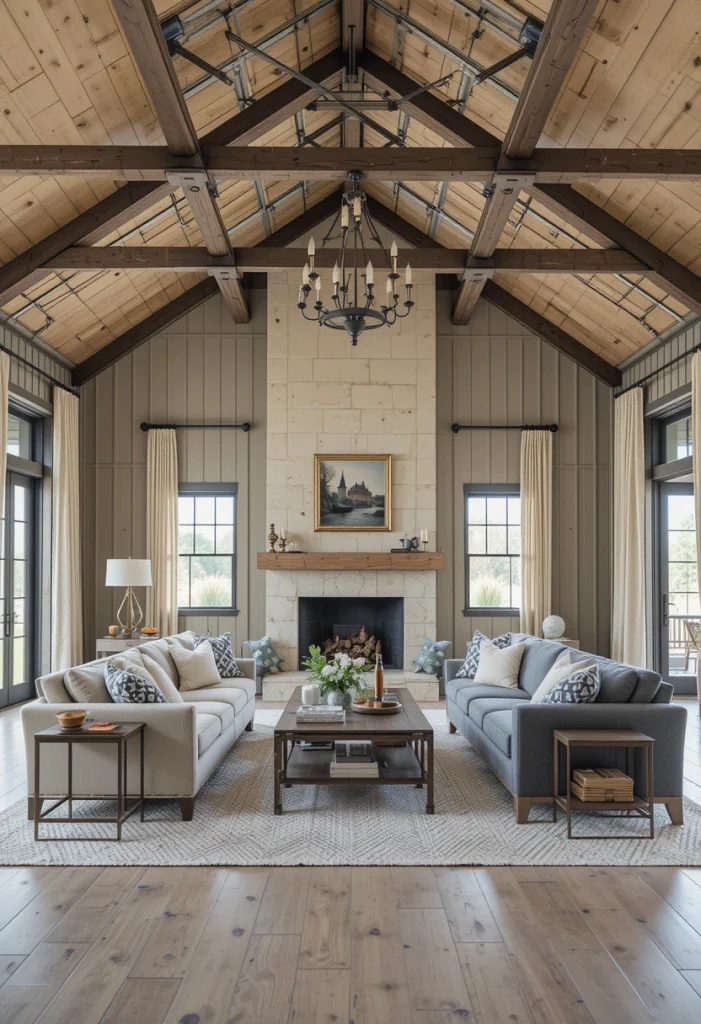
Barndominiums often feature exposed steel beams and metal siding indoors. To avoid an industrial overload, balance those hard surfaces with plush sofas, layered throws, and textured curtains. This contrast softens the environment and improves acoustics at the same time. Think linen, boucle, or chunky knit materials. Contrast is what keeps rustic interiors from feeling harsh.
12. Incorporate Reclaimed Wood Strategically
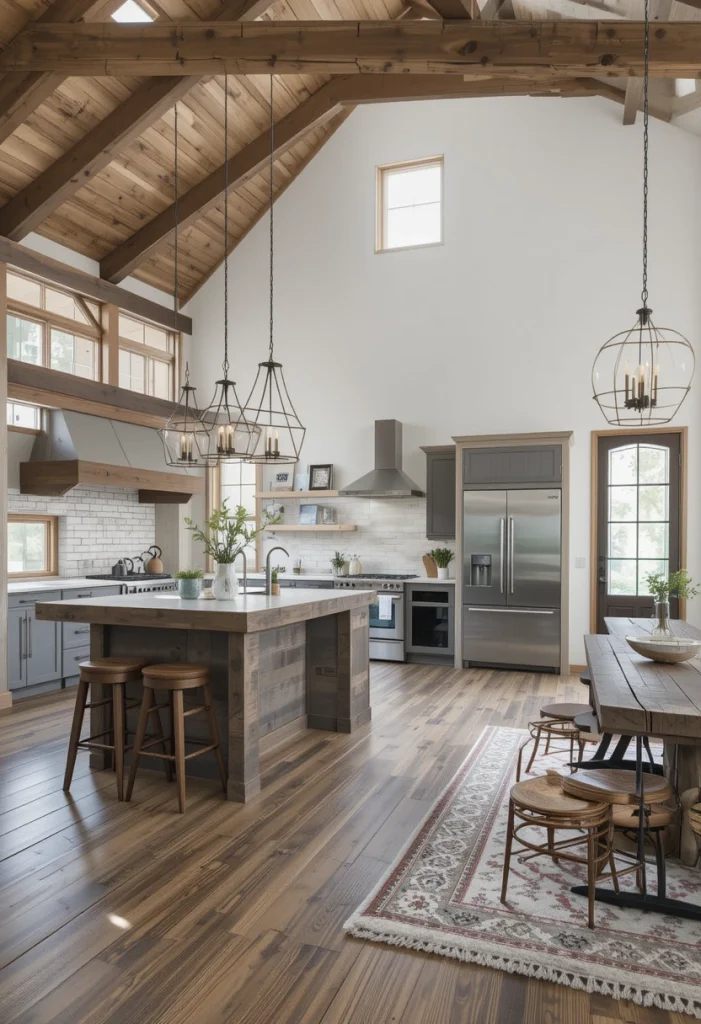
Rather than covering every surface in wood, use reclaimed planks as an accent wall or kitchen island wrap. This keeps the rustic appeal strong but controlled. Too much wood can darken a large open space and make it feel heavy. Select one or two feature areas instead of overwhelming the eye. Intentional wood placement feels curated rather than cluttered.
11. Mix Modern Lighting with Barn-Inspired Fixtures
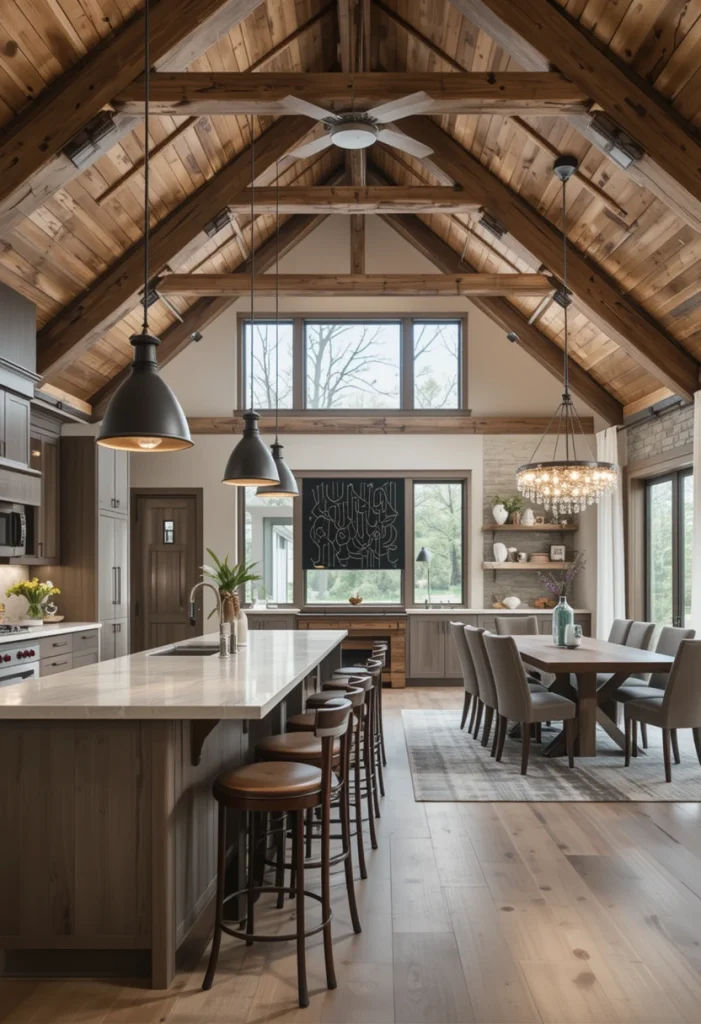
Open barndominiums benefit from layered lighting. Combine matte black pendants over the kitchen island with a modern chandelier in the dining area. This mixture respects the barn aesthetic while elevating the overall design. Lighting is often the difference between a raw space and a refined one. Thoughtful lighting transforms scale into intimacy.
10. Keep the Color Palette Cohesive
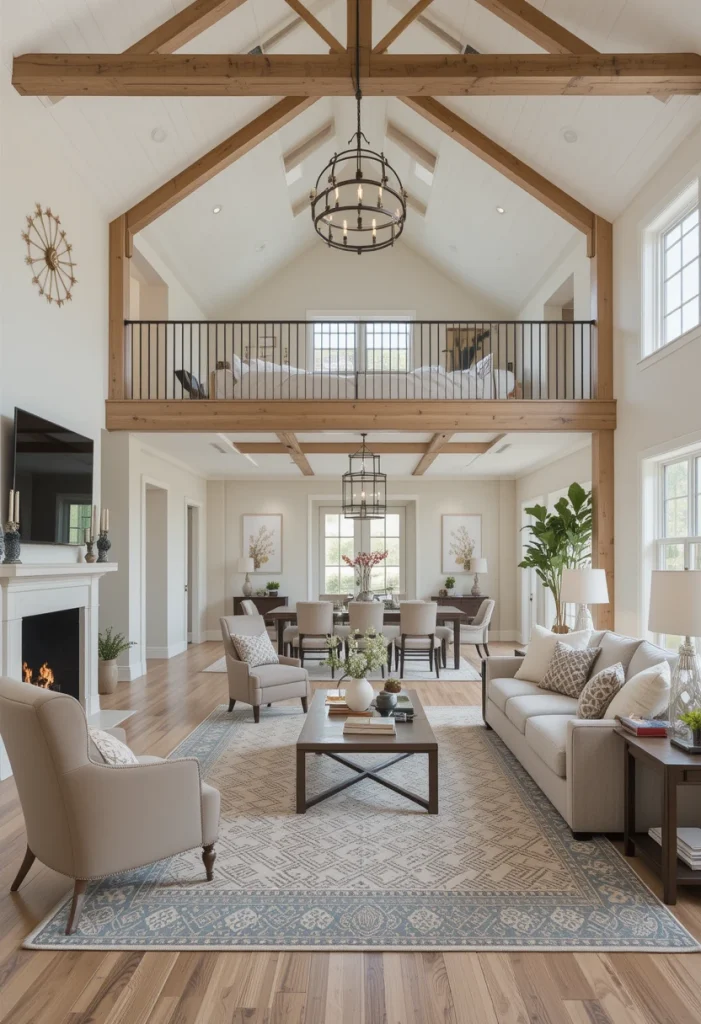
An open floor plan demands color discipline. Choose a base palette—like warm whites, earthy neutrals, or soft greige—and repeat it across the entire space. Accent colors can vary slightly but should complement each other. This prevents the home from feeling visually chaotic. Consistency is what makes large spaces feel calm.
Designing a Kitchen That Flows Seamlessly
9. Add a Large Central Island
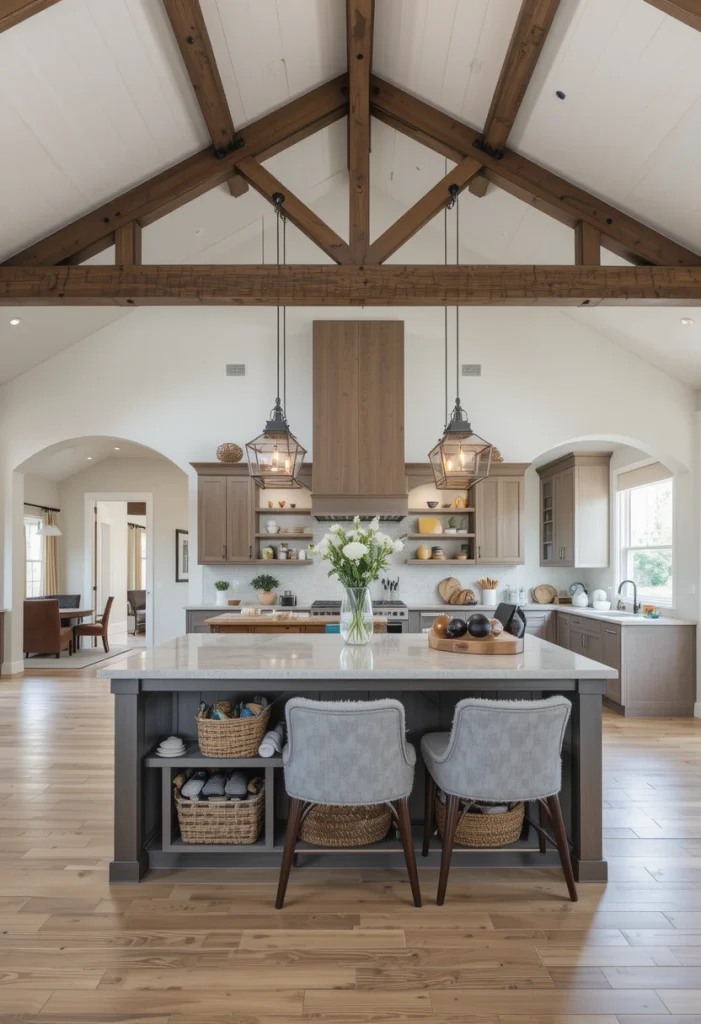
A generous kitchen island acts as both workspace and gathering hub. In open layouts, it naturally bridges the kitchen and living areas. Include seating to encourage interaction without interrupting flow. Storage beneath keeps clutter out of sight. The island becomes the heartbeat of the home.
8. Choose Open Shelving Carefully
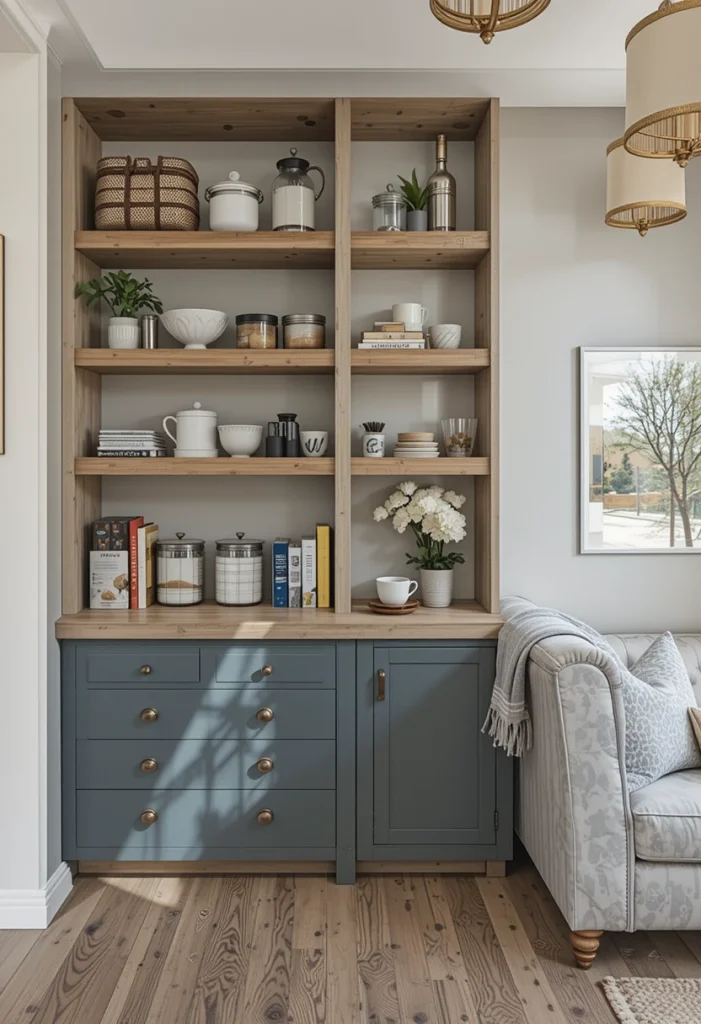
Open shelving fits the relaxed aesthetic of a barndominium. However, it requires organization and styling discipline. Display everyday essentials in coordinated containers to maintain visual order. Too much randomness can disrupt the openness you worked hard to create. Open storage demands intentional styling.
7. Hide Appliances When Possible
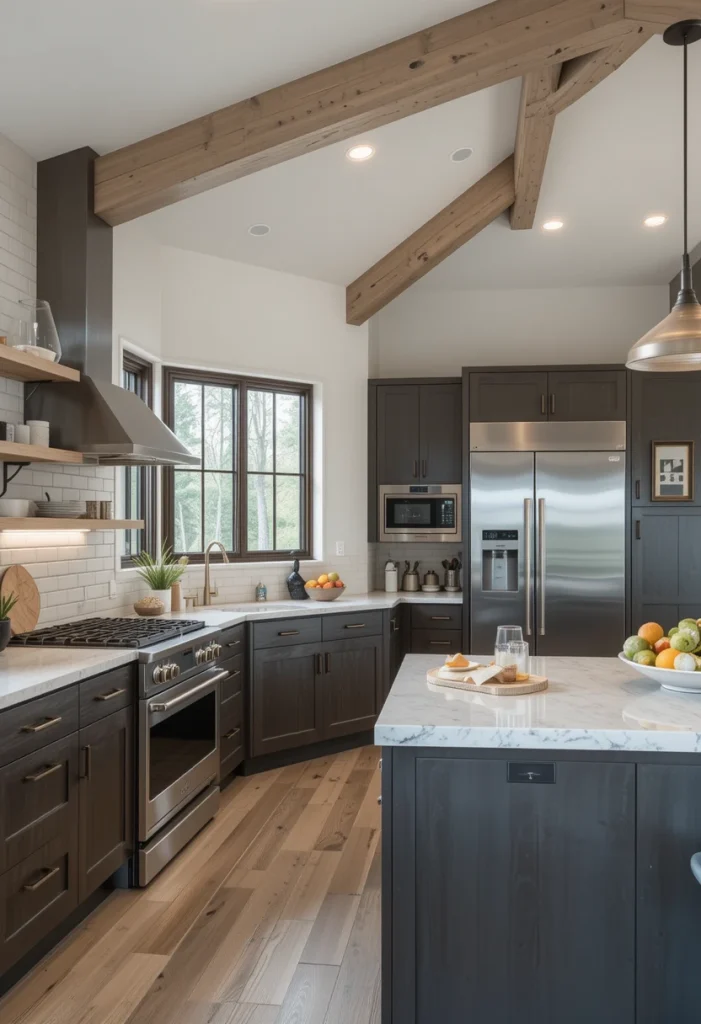
Panel-ready appliances or built-in cabinetry reduce visual noise. In a fully visible kitchen, bulky stainless steel can dominate the room. Blending appliances into cabinetry keeps the focus on architectural features. This works especially well in minimalist or modern-rustic interiors. Less visual interruption equals better flow.
Making High Ceilings Feel Cozy
6. Install Floor-to-Ceiling Curtains
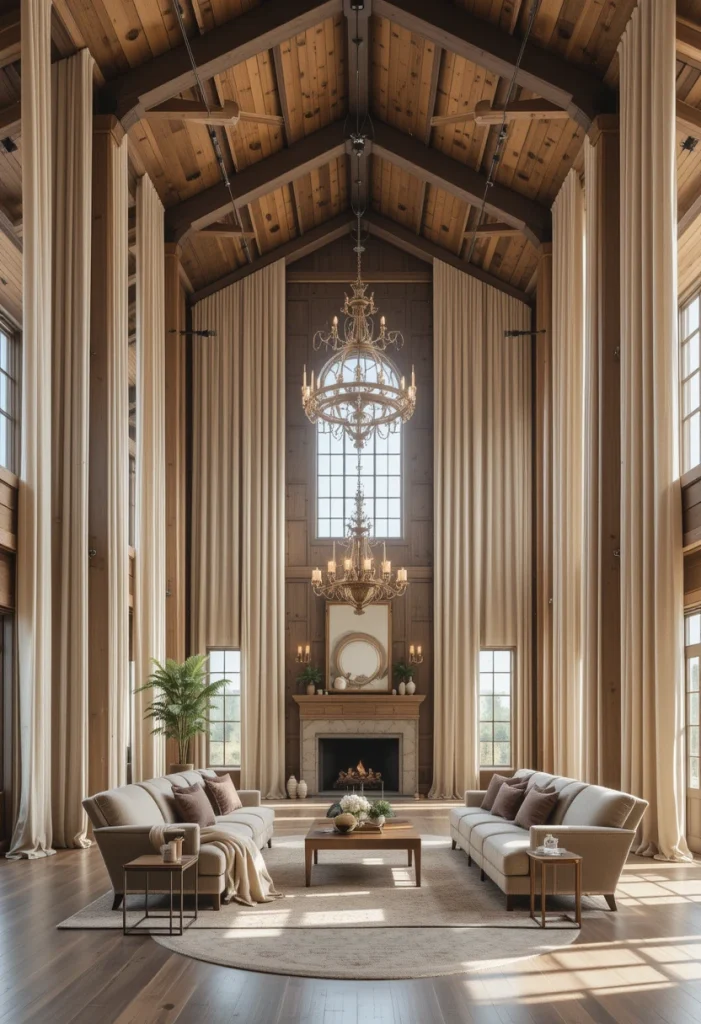
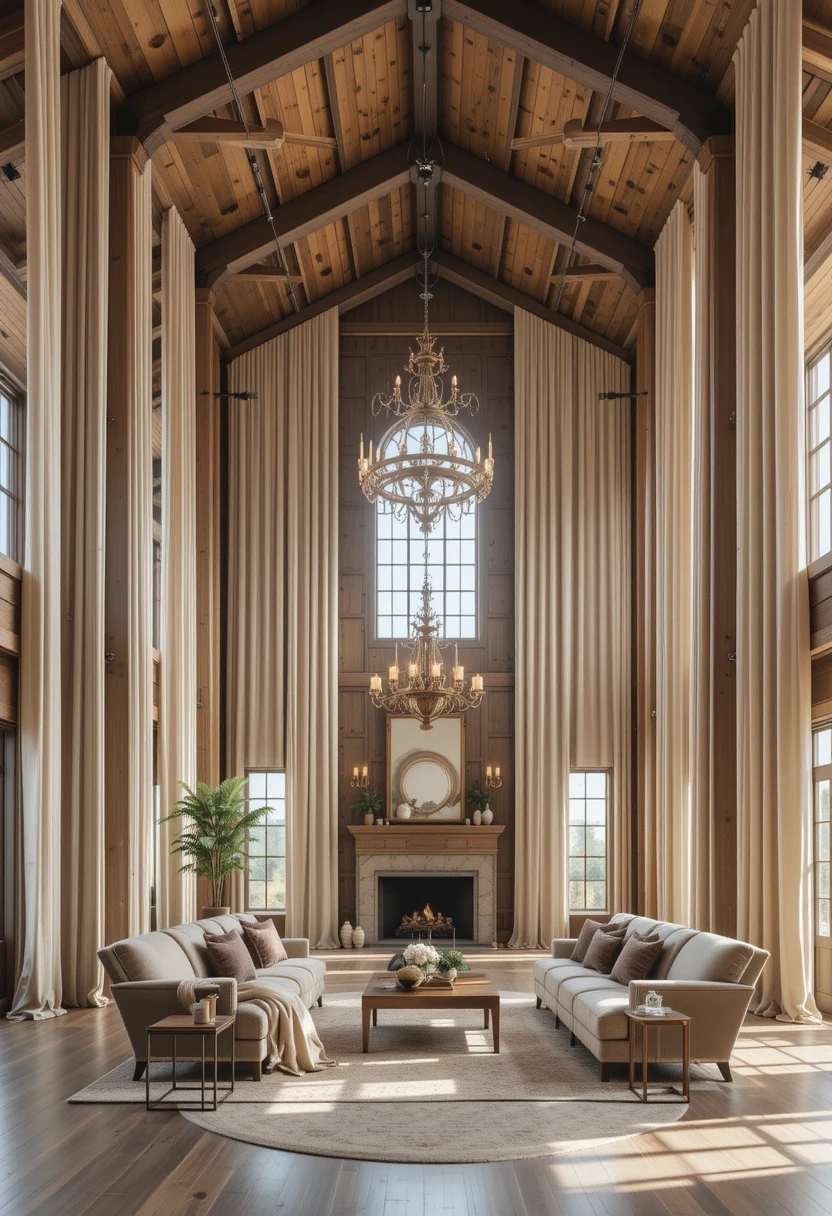
Tall ceilings are beautiful but can feel cavernous. Long, flowing curtains soften vertical height and add warmth. Mount curtain rods close to the ceiling to emphasize scale while maintaining comfort. Choose textured fabrics for added depth. Vertical softness balances industrial structure.
5. Use Statement Light Fixtures
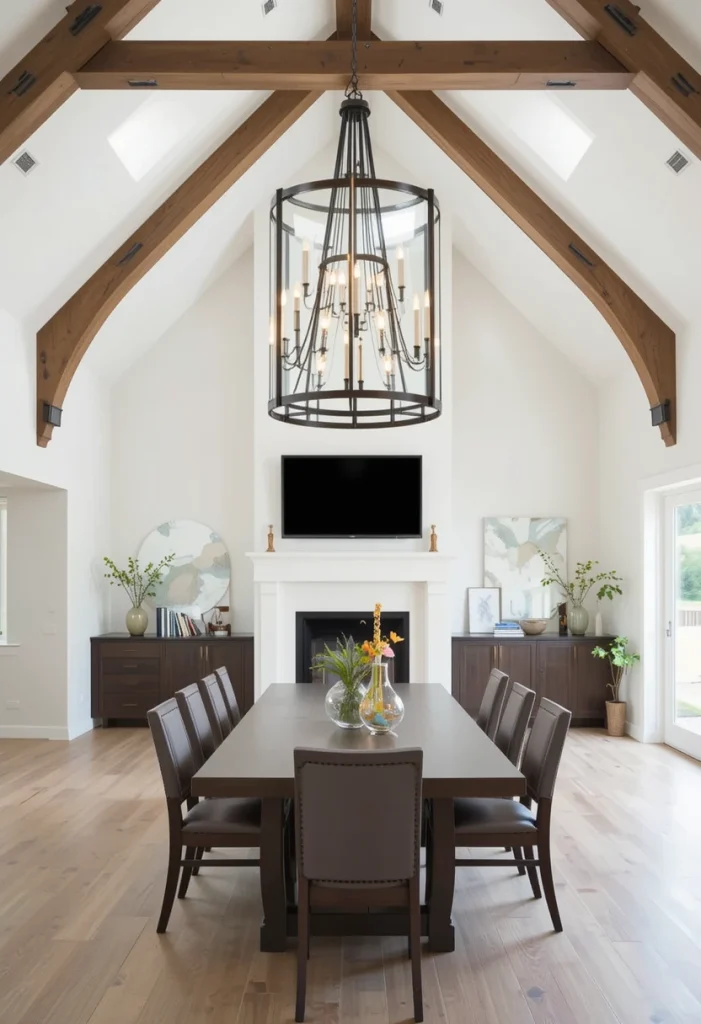
Large chandeliers or oversized pendant lights fill empty overhead space beautifully. Proportion matters—small fixtures get lost in tall ceilings. A dramatic piece draws the eye upward intentionally rather than leaving it wandering. It also enhances the character of the home. Scale is everything in open barndominiums.
4. Add Loft Spaces for Visual Interest
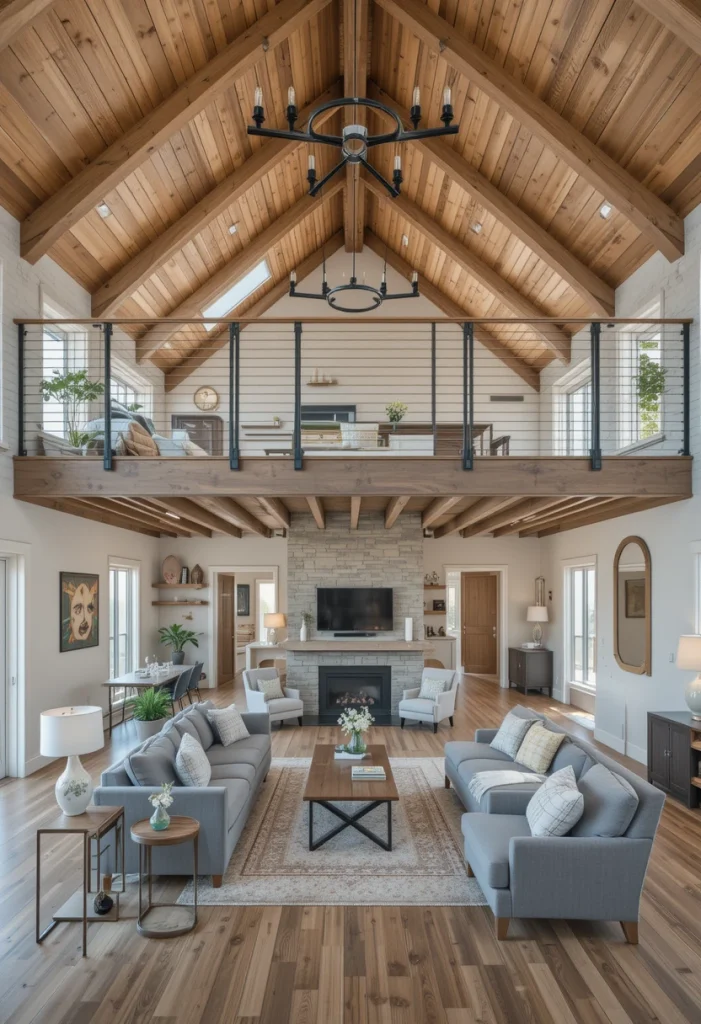
If ceiling height allows, incorporate a loft overlooking the main living area. This creates a layered, dynamic environment while adding usable square footage. Railings can be modern cable or rustic wood depending on your style. The loft makes the vertical space functional instead of purely decorative. Multi-level design adds depth to openness.
Prioritizing Comfort and Livability
3. Improve Acoustics with Soft Surfaces
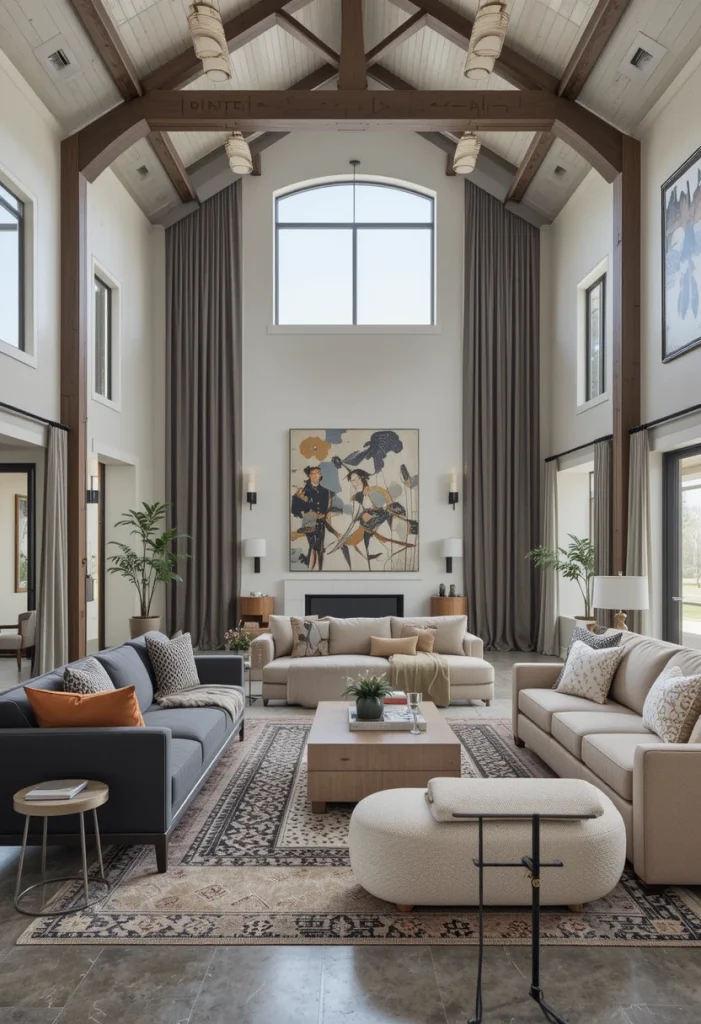
Open layouts can echo, especially with metal and concrete finishes. Incorporate upholstered furniture, rugs, curtains, and even acoustic panels disguised as artwork. This improves sound quality and everyday comfort. It also makes conversations more enjoyable during gatherings. Good acoustics are essential in open homes.
2. Create Cozy Corners Within the Openness
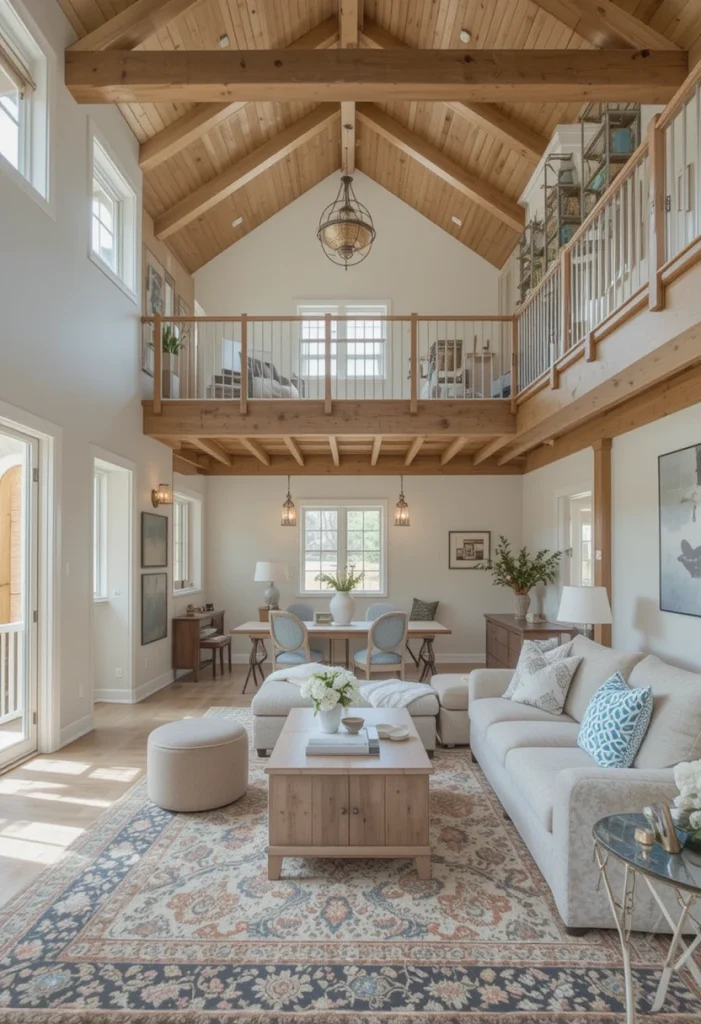
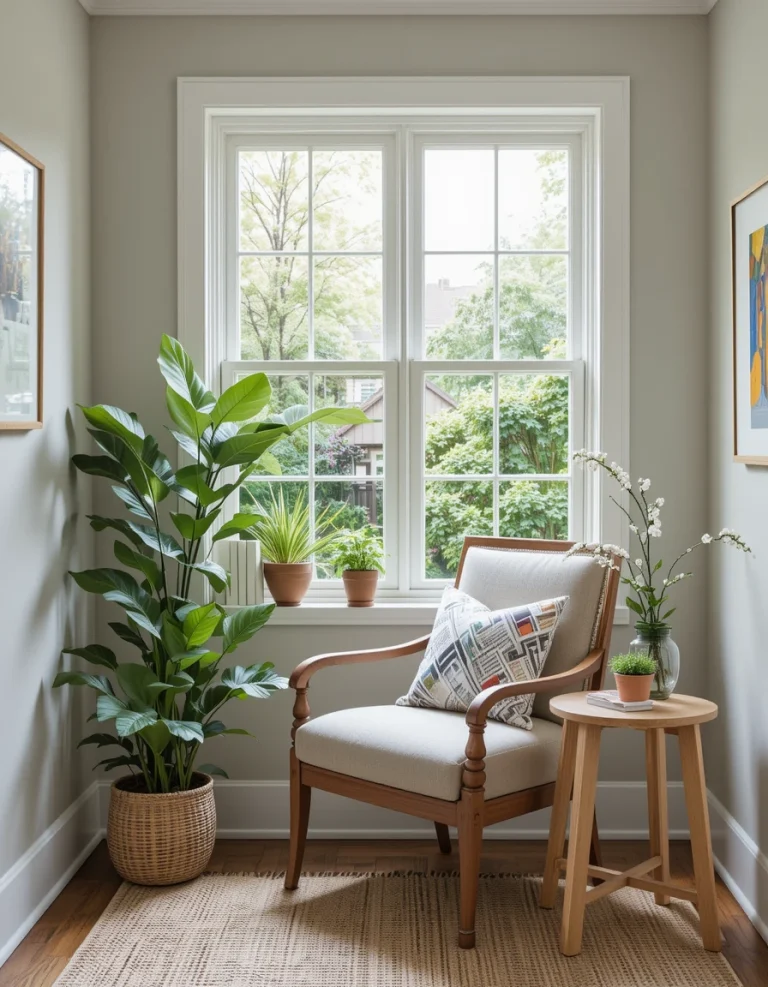
Even in a large shared space, carve out smaller intimate spots. A reading nook near a window or a compact desk area under the stairs adds personality. These mini zones prevent the layout from feeling like one giant room. They make the home adaptable for both entertaining and quiet time. Open doesn’t mean exposed.
1. Design Around a Strong Central Focal Point
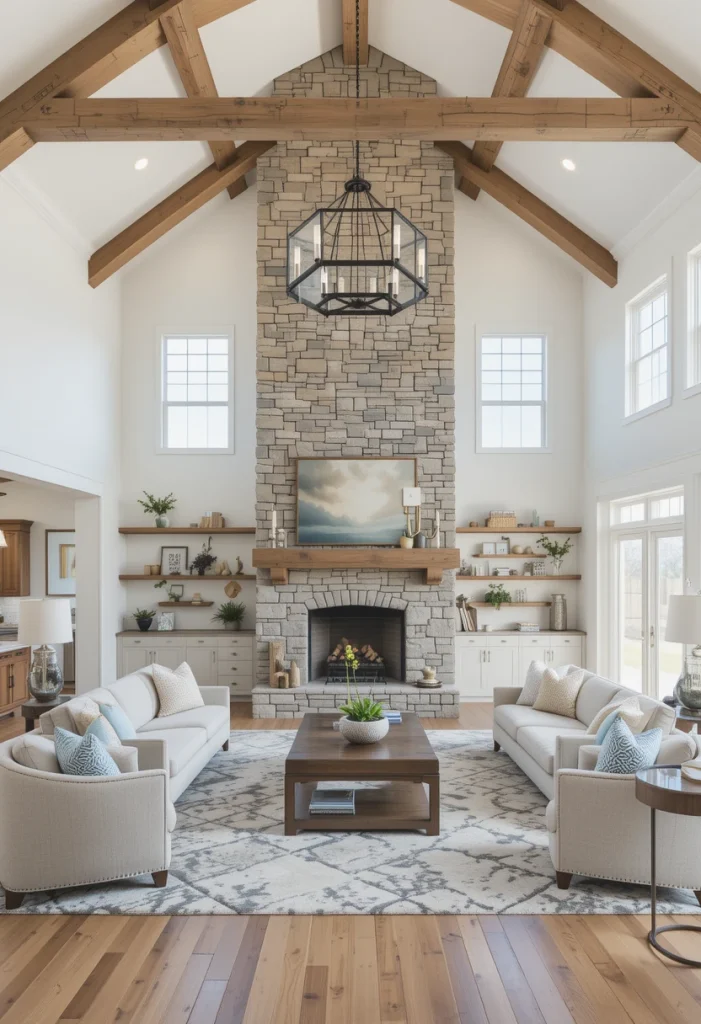
The most important strategy in any open floor plan barndominium is establishing a dominant focal point. This could be a dramatic stone fireplace, a panoramic window wall, or a striking kitchen range hood. Everything else in the layout should visually support this anchor. Without it, the space can feel directionless. A clear focal point brings harmony to wide-open living.
Conclusion
Open floor plan barndominiums offer freedom, flexibility, and undeniable character—but only when thoughtfully designed. The secret isn’t filling the space; it’s structuring it with intention. From defining zones with furniture to managing acoustics and scale, each decision should support comfort and visual flow.