Open Concept Living Rooms and Kitchen Ideas That Actually Work (15 Smart Examples)
Last updated on February 14th, 2026 at 09:08 am

Walls down, light up, stress gone. Open concept living rooms and kitchens aren’t just a trend—they’re a lifestyle shift for people who want homes that feel bigger, brighter, and more connected. If you love entertaining, keeping an eye on kids, or just hate feeling boxed in, this layout speaks your language.
But here’s the truth: an open concept only works when it’s designed with intention. Without smart planning, these spaces can feel chaotic instead of cohesive. Below are 15 real, livable open concept living room and kitchen ideas,
15. Dramatic Contrast With Dark Kitchens and Light Living Areas

Using a dark kitchen against a lighter living room instantly defines zones without adding walls. Deep navy or charcoal cabinets anchor the kitchen visually while soft neutrals in the living area keep things open and airy. This contrast prevents the space from feeling flat or washed out. Lighting plays a huge role here, with pendants highlighting the kitchen and ambient lamps warming the living zone. It’s a bold choice that feels polished when done right.
14. Open Concept With Matching Flooring Throughout
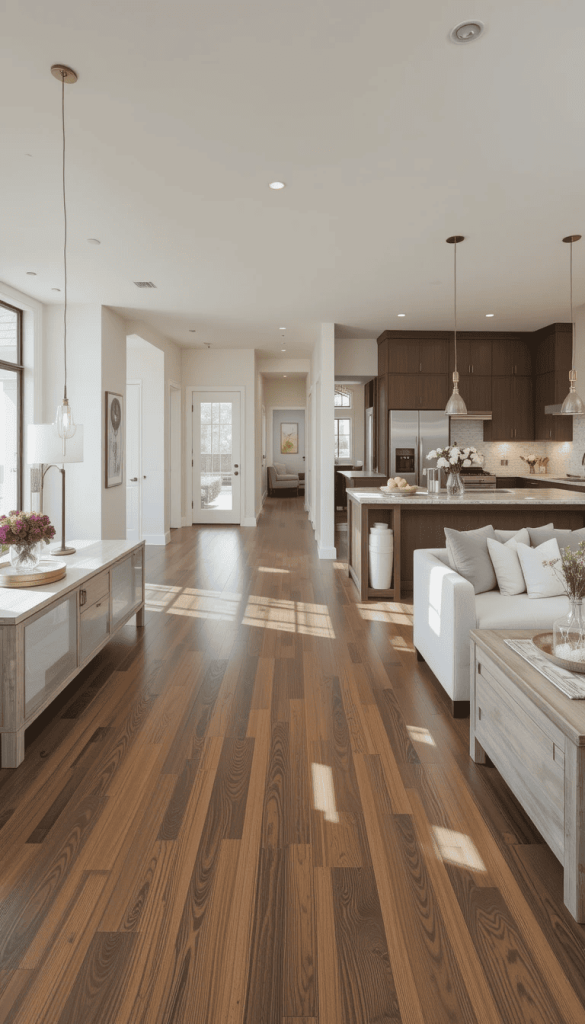
One continuous flooring material is one of the simplest ways to unify an open concept space. Hardwood, luxury vinyl, or polished concrete helps the living room and kitchen feel like one intentional design. This approach also visually enlarges the space, especially in smaller homes. It works particularly well when furniture and cabinetry add contrast. Real-life homes with limited square footage benefit most from this trick.
13. Kitchen Island as the Visual Divider

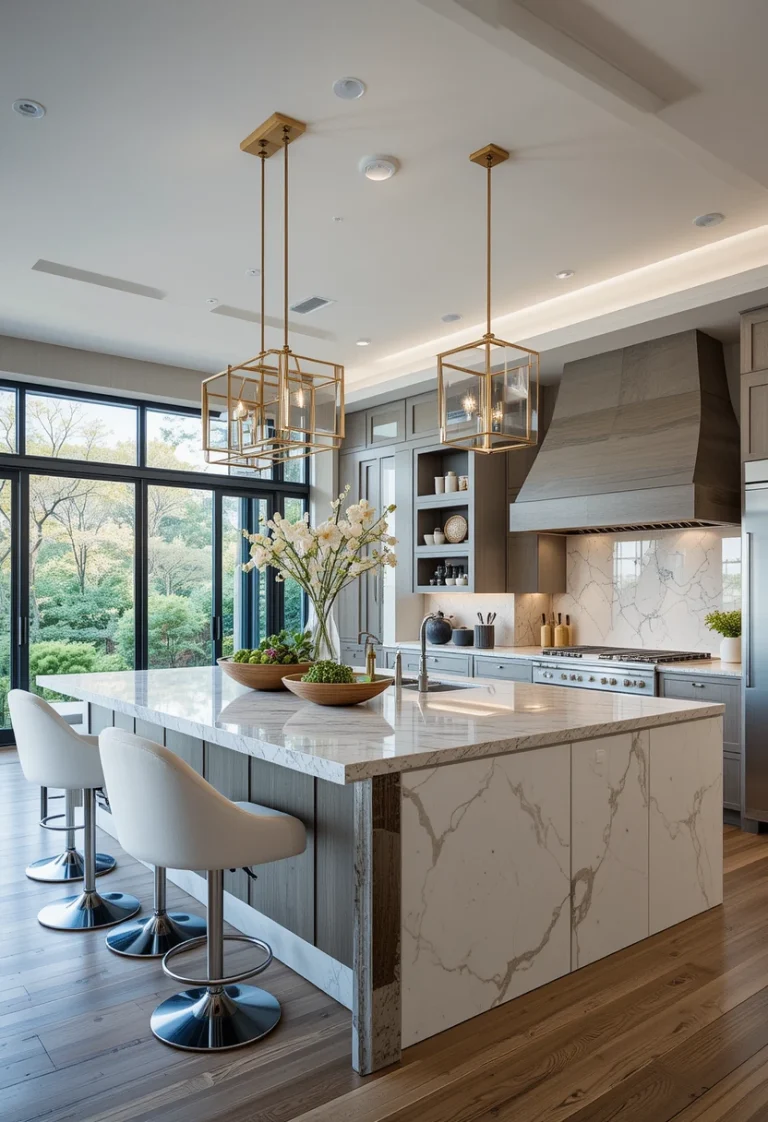
A well-designed kitchen island acts like a soft wall without blocking sightlines. It separates cooking from lounging while still encouraging conversation. Islands with seating make the kitchen feel social rather than isolated. This setup is ideal for families and entertainers, offering prep space, storage, and gathering space in one. It’s practical and visually grounding.
- Dark Academia Living Room Ideas: 13 Moody and Sophisticated Looks
- Chic Casual Style Outfits for Women: 13 Effortless Looks to Try
- Modern Apartment Chandeliers Decorations: 13 Stunning Ideas to Elevate Your Space
- Midcentury Wall Wood Accent Modern Living Room Ideas: 13 Stylish Ways to Add Warmth and Character
- Purple and White Modern Living Room Decor: 13 Elegant Ideas for a Stylish and Inviting Space
12. Open Concept With Statement Lighting Zones

Lighting defines function in an open plan better than walls ever could. Use bold pendants over the island and softer, layered lighting in the living room. This helps each area feel intentional while maintaining flow. Different lighting temperatures can subtly signal transitions between spaces. Homes that feel “off” often just need better lighting separation.
11. Neutral Base With Warm Wood Accents
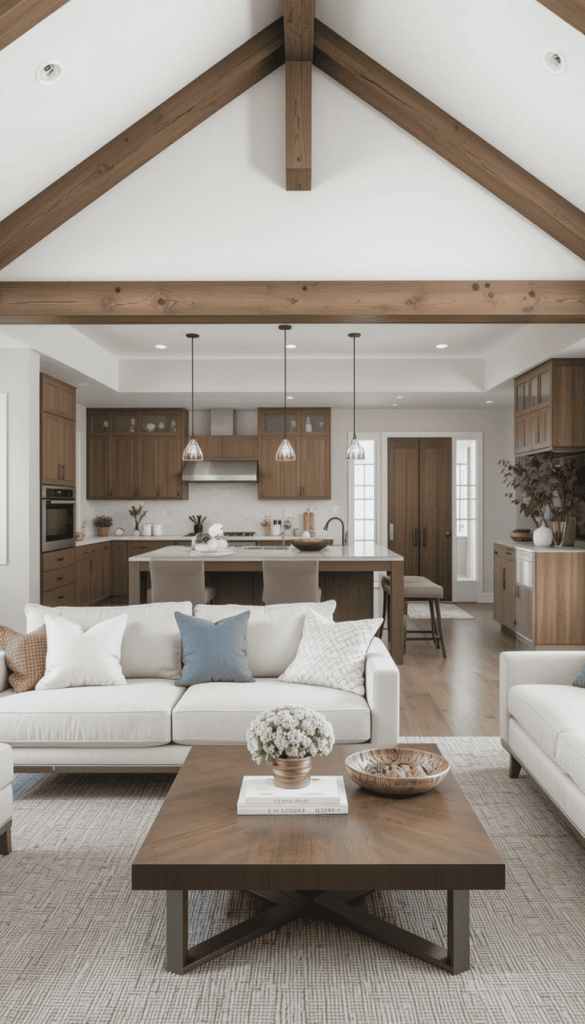
Neutral open concepts can feel cold unless warmth is added thoughtfully. Wood cabinets, ceiling beams, or furniture bring balance and texture. This combination feels timeless and welcoming, not sterile. It’s especially effective in modern or minimalist homes. The result is a space that feels calm but not boring.
10. Open Shelving That Connects Kitchen and Living Room

Open shelving in the kitchen can visually link it to the living area. When styled with books, ceramics, or plants, it mirrors living room decor rather than feeling purely functional. This works best when shelves are kept intentional and uncluttered. Consistency in color and materials is key. It’s a subtle way to blend spaces naturally.
9. L-Shaped Kitchen Flowing Into a Cozy Living Area

An L-shaped kitchen keeps work zones efficient while opening directly into the living space. This layout avoids crowding and maintains good traffic flow. It’s particularly useful in apartments or narrow floor plans. Furniture placement in the living room completes the separation, not walls. Many real homes use this layout because it simply works.
8. Built-In Storage That Serves Both Spaces
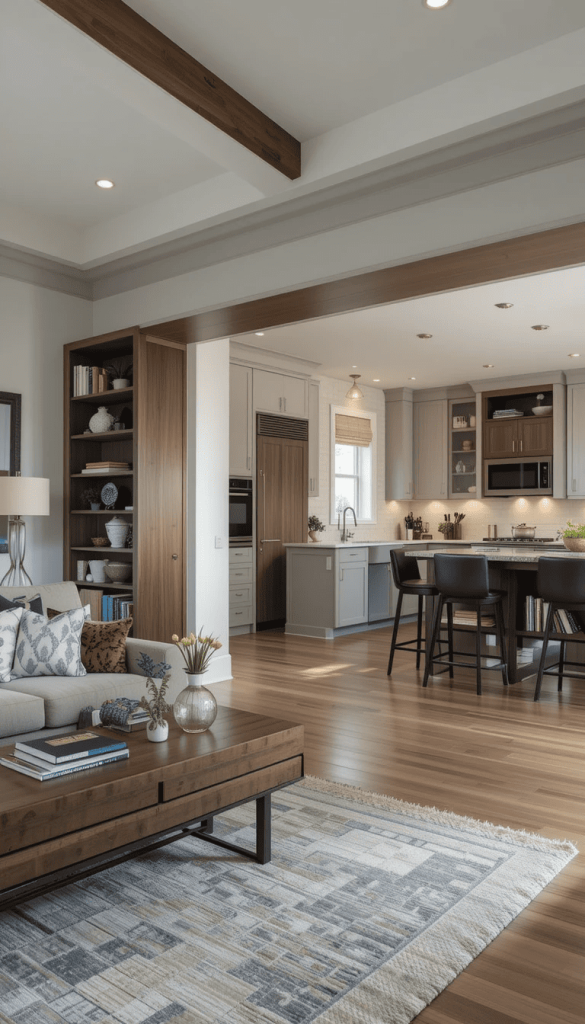
Built-ins can bridge the kitchen and living room beautifully. Think cabinets that start in the kitchen and transition into shelving or media storage. This creates continuity and reduces visual clutter. Shared storage makes the open layout feel planned, not accidental. It’s a smart solution for busy households.
7. Open Concept With Defined Furniture Groupings

Furniture does the zoning when walls are gone. A sofa facing away from the kitchen creates a clear living area boundary. Rugs further anchor each zone visually. This approach keeps the layout flexible, allowing changes without construction. Designers rely on this method constantly for good reason.
6. White Kitchen, Soft-Colored Living Room

A crisp white kitchen reflects light and keeps the cooking area feeling clean. Pairing it with muted colors in the living room adds personality without overwhelming the space. This balance keeps the kitchen timeless while letting the living area evolve. It’s ideal for homeowners who like to refresh decor often. The contrast feels gentle and intentional.
5. Open Concept With Ceiling Design Changes
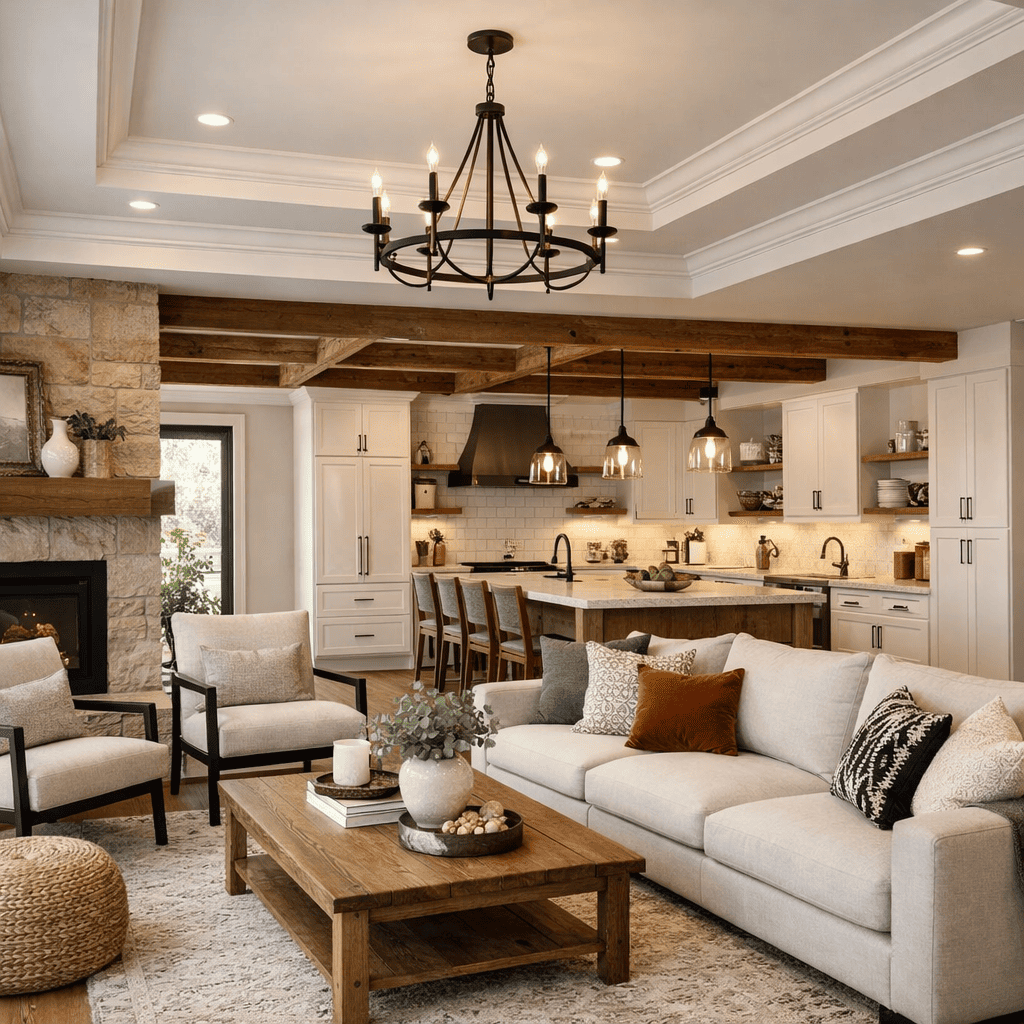
Ceilings are often overlooked but incredibly powerful. A tray ceiling over the living room or exposed beams over the kitchen subtly define spaces. This keeps the open feel while adding architectural interest. It’s especially effective in large open plans where zones can otherwise blur. The space feels custom rather than generic.
4. Compact Open Concept for Small Homes
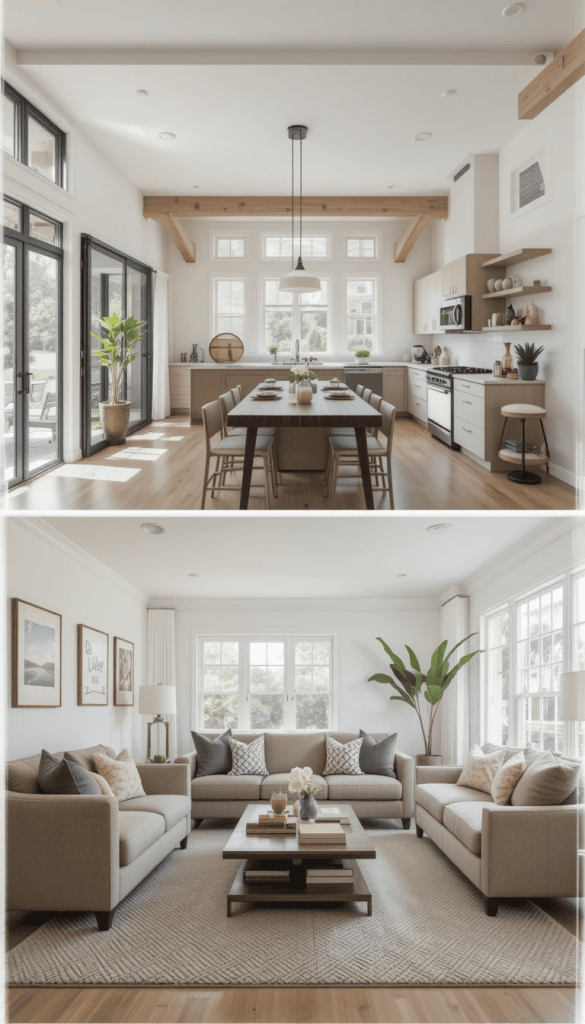
Open layouts aren’t just for big houses. Removing walls in small homes allows light to travel and makes rooms feel larger. Smart storage and scaled-down furniture are essential here. Every piece must earn its place. When done right, small open concepts feel efficient and stylish, not cramped.
3. Modern Open Concept With Clean Lines

Flat-panel cabinets, streamlined furniture, and minimal decor create a sleek open space. This style relies on restraint and consistency. Visual noise is the enemy here. The payoff is a calm, uncluttered environment that feels easy to live in. Real-life modern homes benefit from this clarity.
2. Family-Friendly Open Concept With Durable Finishes

Open layouts shine in family homes when durability is prioritized. Easy-clean surfaces, stain-resistant fabrics, and practical layouts keep the space functional. Kids can do homework at the island while meals are prepared nearby. This layout supports real daily life, not just looks. It’s one of the most popular reasons people choose open concepts.
1. Seamless Indoor-Outdoor Open Concept Living

The ultimate open concept extends beyond the walls. Large sliding doors connect the kitchen and living room to a patio or deck. This creates flow, light, and extra entertaining space. It’s a game-changer for how the home is used year-round. When inside and outside feel connected, the entire home feels bigger.
Conclusion
Open concept living rooms and kitchens succeed when design choices are intentional, not trendy. The best layouts balance openness with subtle structure, comfort with function, and beauty with real-life use. Whether you’re renovating or just rearranging, small decisions can make a huge difference. Choose the ideas that match how you actually live, and your open concept will feel effortless—not overwhelming.