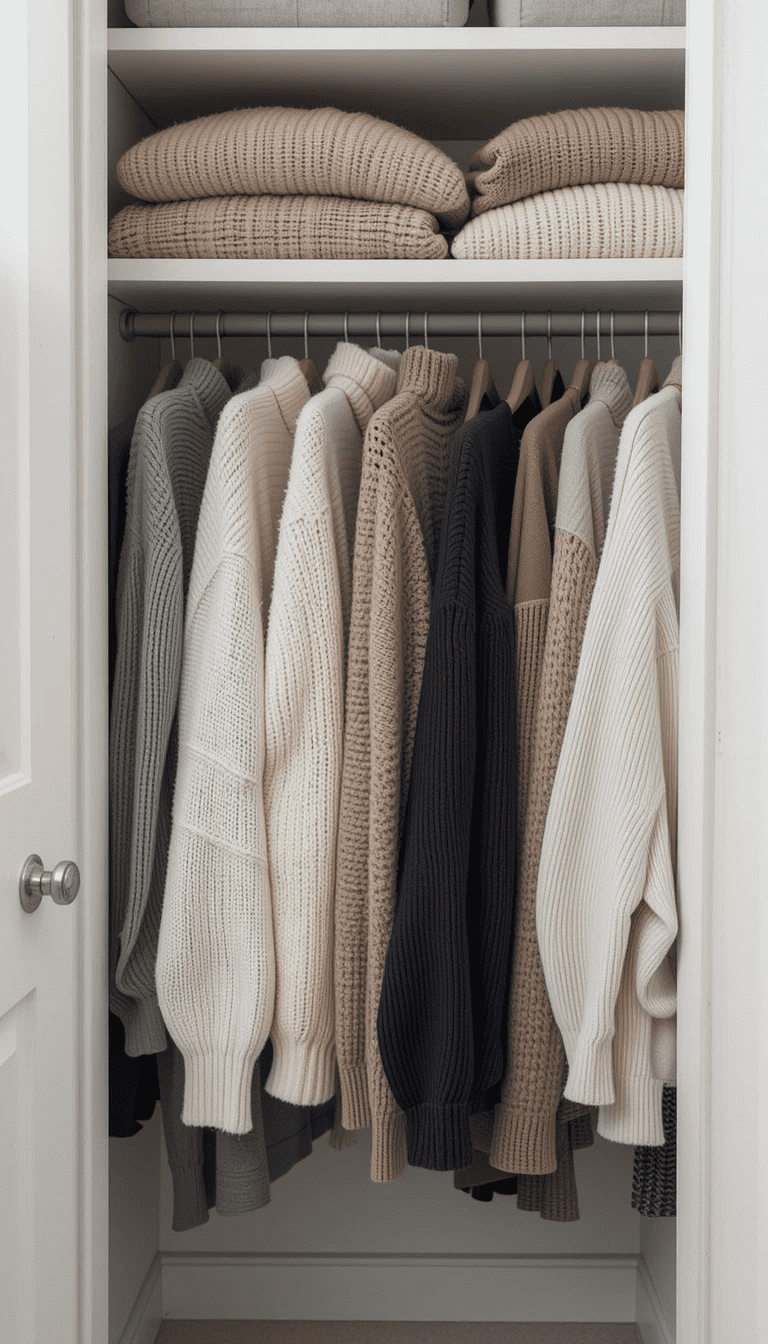
How to Organize Your Closet (Without Losing Your Mind)
Last updated on February 14th, 2026 at 09:11 am

Your closet shouldn’t make you sigh every morning. If getting dressed feels harder than it needs to be, chances are your closet is working against you instead of for you. The good news is that organizing your closet doesn’t require a full renovation or a weekend of misery—just smarter decisions and a little intention.
A well-organized closet saves time, money, and mental energy, and it helps you actually wear the clothes you already own. When everything has a place and makes sense visually, outfits come together faster and stress levels drop. Let’s walk through practical, real-life ways to organize your closet so it finally supports your daily routine instead of sabotaging it.
Start With a Full Reset

The fastest way to organize your closet is to empty it completely. Pulling everything out forces you to see how much you actually own, which is often eye-opening. This step also breaks the habit of rearranging clutter instead of dealing with it. Lay items on your bed or floor so you can sort with intention. Starting from zero makes every item you put back feel like a conscious choice, not an obligation.
Sort Clothes by Category First
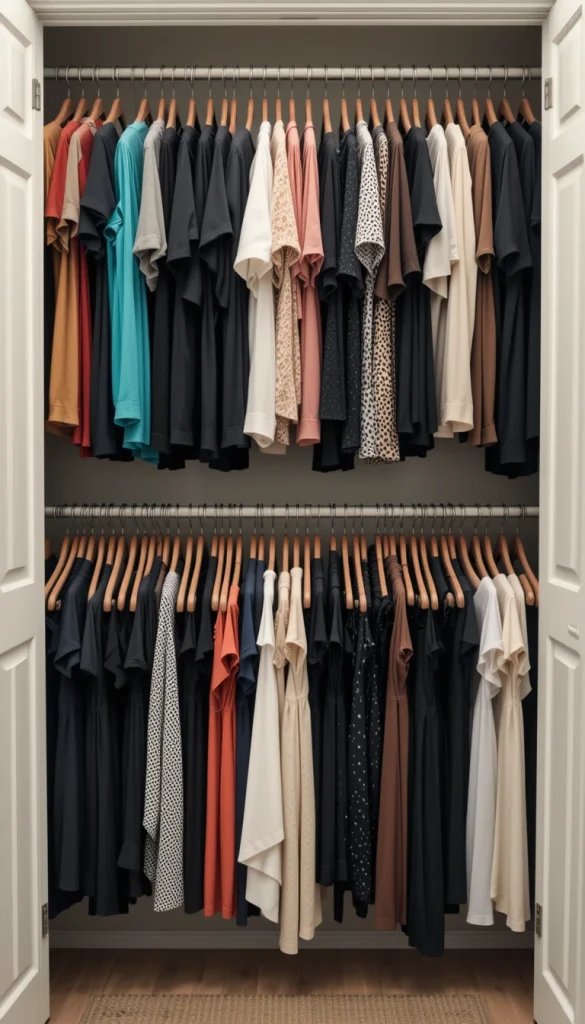
Grouping clothes by type creates instant order. Keep tops with tops, bottoms with bottoms, dresses together, and outerwear in one zone. This method makes it easier to see duplicates, like five nearly identical black tees. When categories are clear, your closet feels less chaotic even before you fine-tune it. Visual clarity is one of the biggest wins in closet organization.
Be Honest About What You Actually Wear

If you haven’t worn something in a year, there’s usually a reason. Maybe it doesn’t fit, doesn’t suit your lifestyle, or never felt right to begin with. Holding onto “someday” clothes creates unnecessary clutter and guilt. Let go of items that don’t support who you are now, not who you used to be. A smaller, intentional wardrobe is far easier to organize and maintain.
- 14 Outdoor Patio Fire Pit Decorations to Create a Cozy, Stylish Backyard
- 14 Linen Closet Organization Ideas With Storage Baskets and Bins for a Tidy, Clutter-Free Space
- 13 Modern Living Room Luxury-Looking Curtain Designs That Make Your Home Look Expensive
- 13 Modern Sunroom Kitchen Designs for a Bright Breakfast
- Walk-In Closet Ideas: 13 Stylish and Practical Designs
Organize by Frequency of Use

Your most-worn items should be the easiest to reach. Everyday clothes deserve prime real estate at eye level and arm’s reach. Special occasion pieces can live higher up or toward the ends of the rod. This setup mirrors how you actually live, which makes your closet feel intuitive. Good organization follows habits, not perfection.
Use Matching Hangers for Visual Calm

Matching hangers instantly make a closet feel more polished. They reduce visual noise and help clothes hang evenly, which protects fabrics over time. Slim hangers also save space, especially in smaller closets. This is one of the simplest upgrades with the biggest impact. When your closet looks calm, it’s easier to keep it that way.
Fold Strategically, Not Randomly
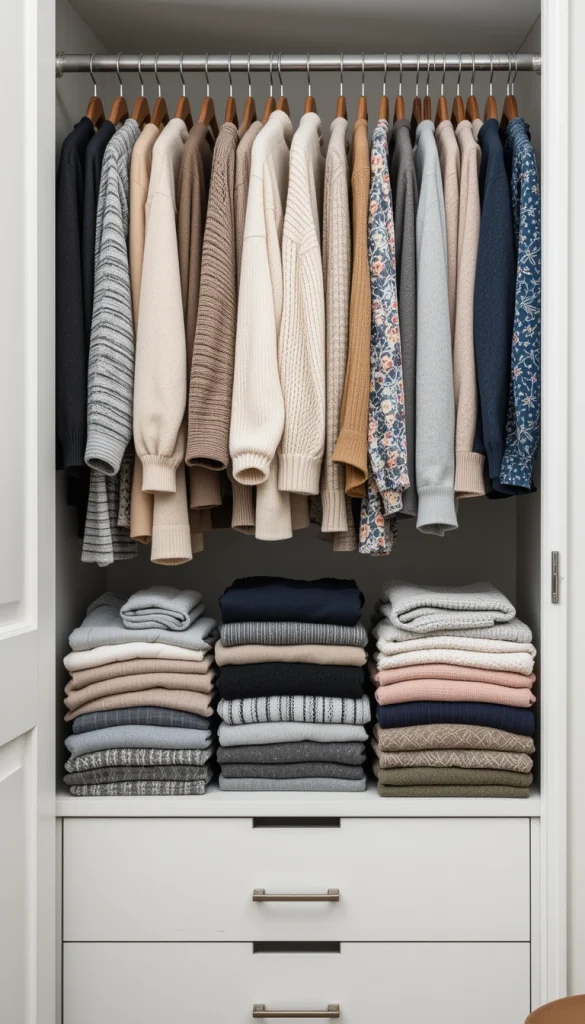
Not everything belongs on a hanger. Sweaters, knits, and delicate fabrics last longer when folded properly. Stack items vertically so you can see everything at a glance instead of digging through piles. This method works especially well for drawers and shelves. Visibility prevents forgotten clothes and unnecessary shopping.
Create Zones for Accessories

Belts, scarves, bags, and jewelry need their own systems. Hooks, trays, and small bins keep accessories accessible and prevent tangling or damage. When accessories are visible, you’re more likely to use them to elevate outfits. This also stops them from becoming clutter magnets. Treat accessories like styling tools, not afterthoughts.
Make Shoes Easy to See and Reach
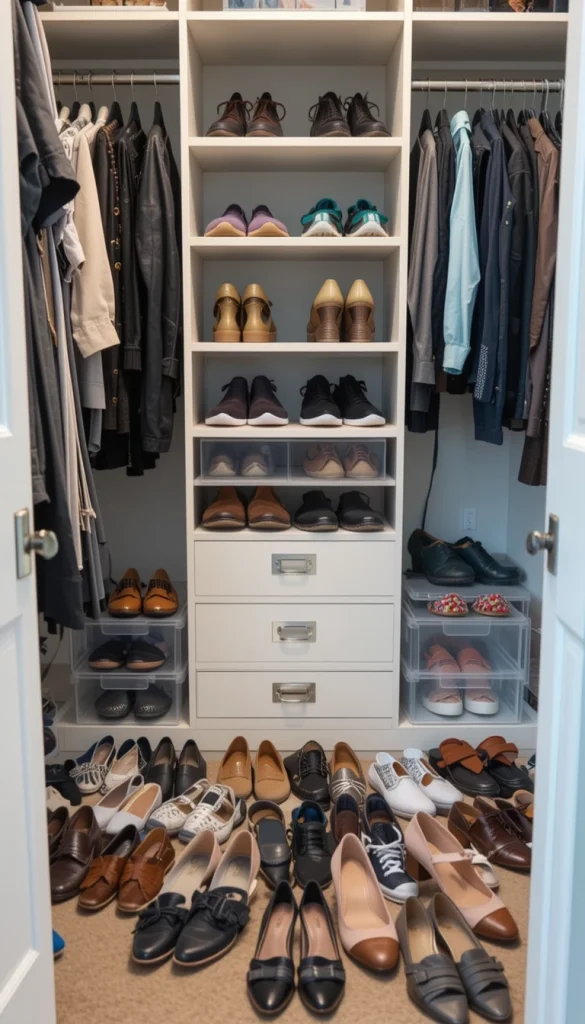
Shoes scattered across the floor instantly make a closet feel messy. Store them in clear boxes, open shelving, or angled racks so pairs stay together. Keep everyday shoes front and center and seasonal shoes stored higher or lower. This setup saves time and protects shoes from damage. An organized shoe area sets the tone for the entire closet.
Use Shelf Dividers to Maintain Order

Stacks of clothing tend to topple without boundaries. Shelf dividers keep piles upright and defined, especially for jeans, sweaters, and handbags. They prevent the “one pull, everything falls” problem. This small tool makes your system sustainable, not just pretty. Structure is what keeps a closet organized long-term.
Store Seasonal Items Separately
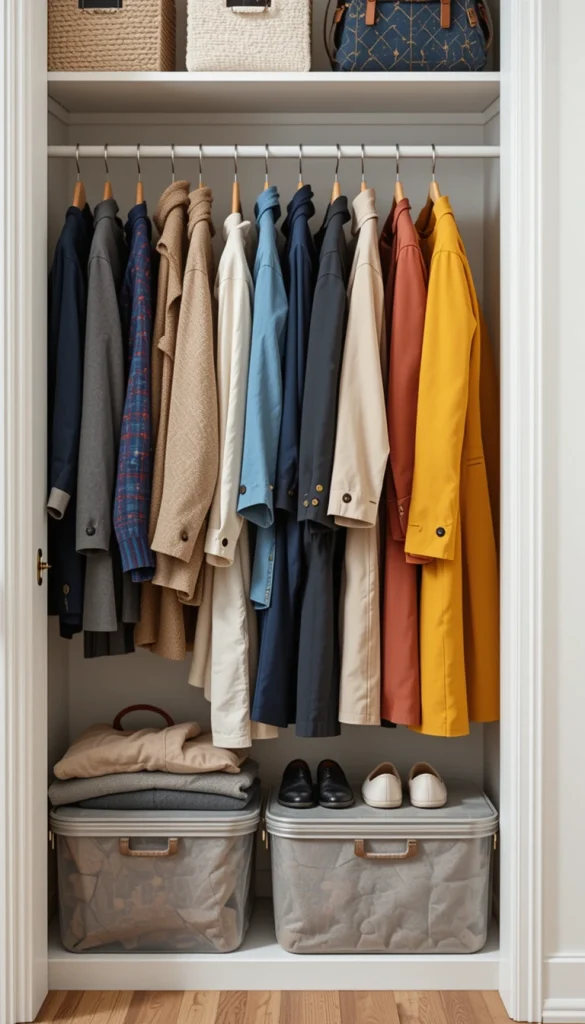
You don’t need winter coats in your way during summer. Rotate seasonal clothing into bins, vacuum bags, or higher shelves. This frees up space for what you actually need right now. Seasonal rotation keeps your closet relevant and less crowded. Less visual clutter equals faster decision-making.
Label Storage for Easy Maintenance

Labels may seem unnecessary, but they eliminate guesswork. When bins and boxes are clearly labeled, everything goes back where it belongs. This is especially helpful for shared closets or busy households. Labels turn organization into a habit instead of a one-time project. They also make future clean-outs much faster.
Leave a Little Breathing Room

An overstuffed closet will never stay organized. Aim to leave some empty space on rods and shelves. This makes it easier to add new items without chaos. Breathing room also gives your closet a lighter, more intentional feel. Organization works best when there’s room to grow and change.
Conclusion
Organizing your closet isn’t about perfection—it’s about creating a space that works for your real life. When your clothes are visible, accessible, and aligned with how you live, getting dressed becomes easier and more enjoyable. Start small, stay honest, and build systems you can maintain. A well-organized closet isn’t just tidy—it’s quietly supportive every single day.