Sweater Storage Solutions That Actually Work (And Don’t Ruin Your Knits)
Last updated on October 21st, 2026 at 04:39 pm

Sweaters are cozy, timeless, and surprisingly high-maintenance when it comes to storage. Fold them wrong, stack them carelessly, or hang them improperly, and suddenly your favorite knit looks stretched, wrinkled, or misshapen. If you’ve ever pulled out a sweater and thought, “What happened to you?”—you’re not alone.
The good news is that sweater storage doesn’t need fancy systems or expensive closets. What it does need is intention, the right method for your space, and a little understanding of how knits behave.
15. Open Shelf Folding With Breathable Spacing

Open shelving works beautifully for sweaters when done correctly.
Start by folding sweaters into uniform rectangles, keeping sleeves tucked neatly inside. Leave small gaps between stacks so air can circulate and prevent musty odors. Avoid stacking more than five sweaters to reduce pressure on lower pieces. This method works well in bedrooms where sweaters double as decor, especially when color-coordinated.
14. Drawer Storage With Vertical Folding
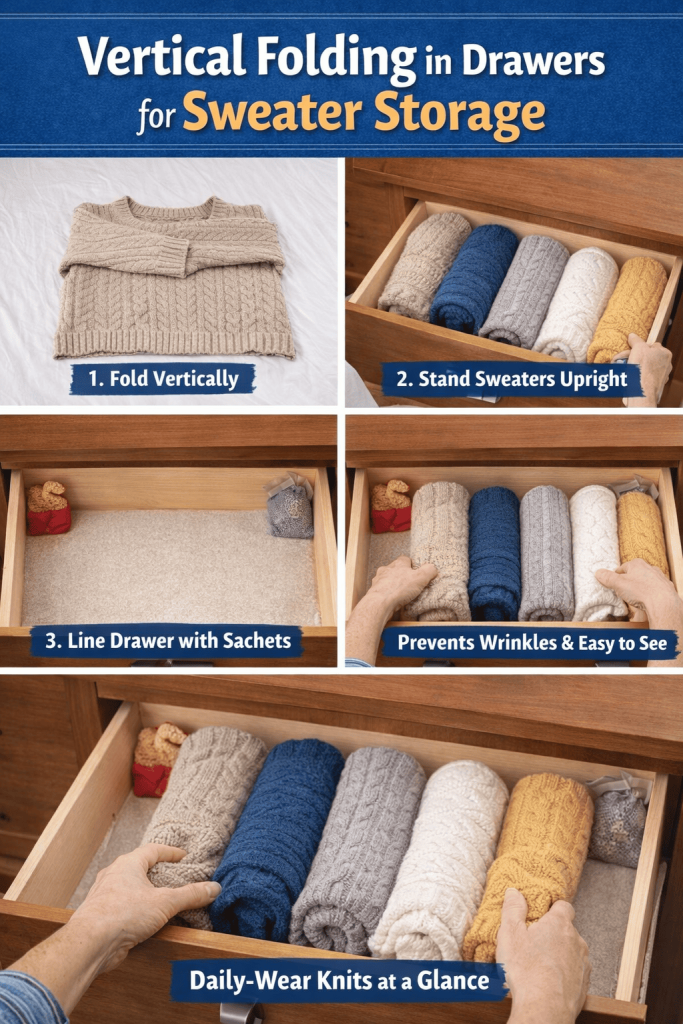
Drawers are ideal for protecting sweaters from dust and light.
Use the vertical folding method, similar to file organization, so each sweater stands upright. This prevents wrinkles and makes every sweater visible at a glance. Line drawers with cedar or lavender sachets for natural pest control. It’s especially useful for daily-wear knits you rotate often.
13. Fabric Storage Bins Inside Closets

Fabric bins offer flexibility without damaging delicate fibers.
Choose breathable cotton or canvas bins, not plastic, to avoid trapped moisture. Fold sweaters neatly and place them flat inside the bin without overfilling. Label each bin clearly so you’re not digging through stacks. This solution works well for shared closets or small apartments.
12. Shelf Dividers for Neat Stacks

Shelf dividers keep folded sweaters from collapsing into chaos.
Install adjustable dividers on closet shelves to create defined sections. Fold sweaters uniformly and stack them vertically within each divider. This prevents leaning piles and keeps edges crisp. It’s a smart solution for closets that feel messy even when they’re technically organized.
11. Under-Bed Storage for Off-Season Sweaters
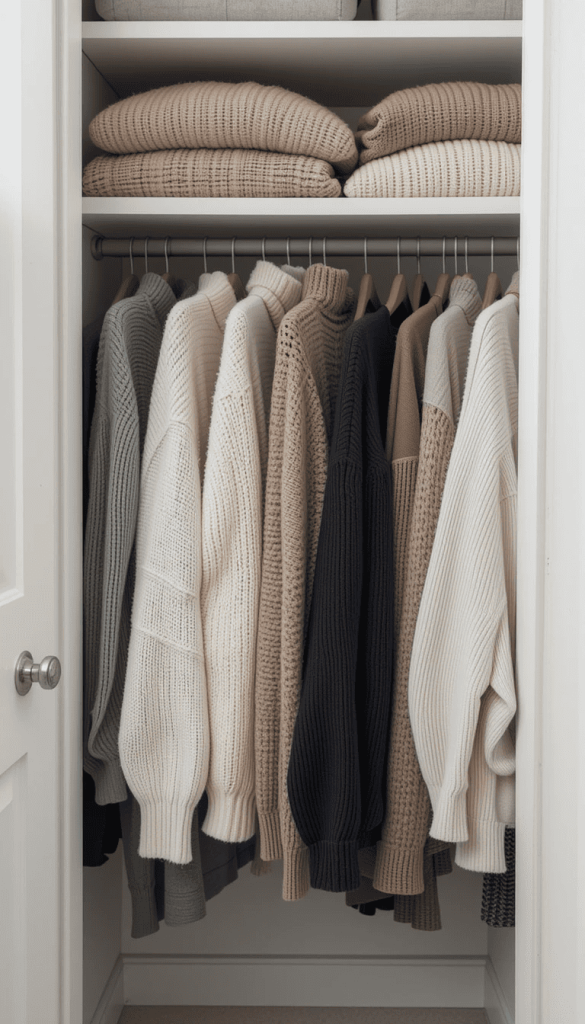
Under-bed storage is perfect for sweaters you won’t wear for months.
Use zippered fabric storage bags that block dust but still breathe. Wash sweaters before storing to prevent attracting pests. Lay them flat rather than stuffing to preserve shape. This keeps your closet lighter and more functional during warmer seasons.
10. Closet Cubes for Category Sorting

Closet cube systems make sweater organization intuitive.
Assign one cube per category—heavy knits, lightweight pullovers, cardigans, and lounge sweaters. Fold each sweater consistently so stacks stay even. Cubes prevent overstacking by design, which protects fabric integrity. This method is great for visual thinkers who like clear boundaries.
9. Cedar Chest Storage for Long-Term Protection

Cedar chests offer both storage and natural preservation.
Line the chest with acid-free tissue paper to prevent fiber stress. Fold sweaters gently and avoid tight compression. Cedar naturally repels moths without chemicals. This is ideal for heirloom or high-quality wool sweaters you want to keep pristine.
8. Rolling Sweaters for Travel-Style Storage
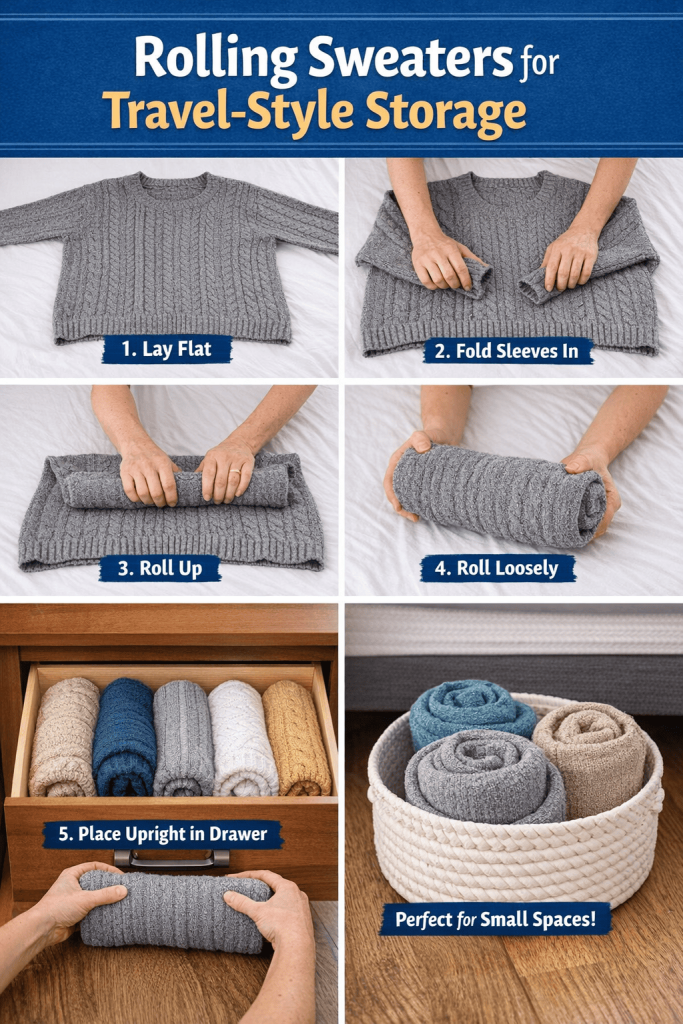
Rolling isn’t just for suitcases—it works at home too.
Lay the sweater flat, fold sleeves inward, and roll loosely from bottom to top. Place rolled sweaters upright in drawers or bins. This minimizes creases and makes items easy to grab. It’s especially useful for small spaces or studio apartments.
7. Closet Shelf With Pull-Out Trays

Pull-out trays combine shelving and drawer convenience.
Install sliding trays inside your closet for easy access. Fold sweaters flat and stack them evenly inside each tray. Being able to pull the tray out prevents rummaging through piles. This setup works well in custom or upgraded closets.
6. Hanging Sweaters the Right Way (When Necessary)

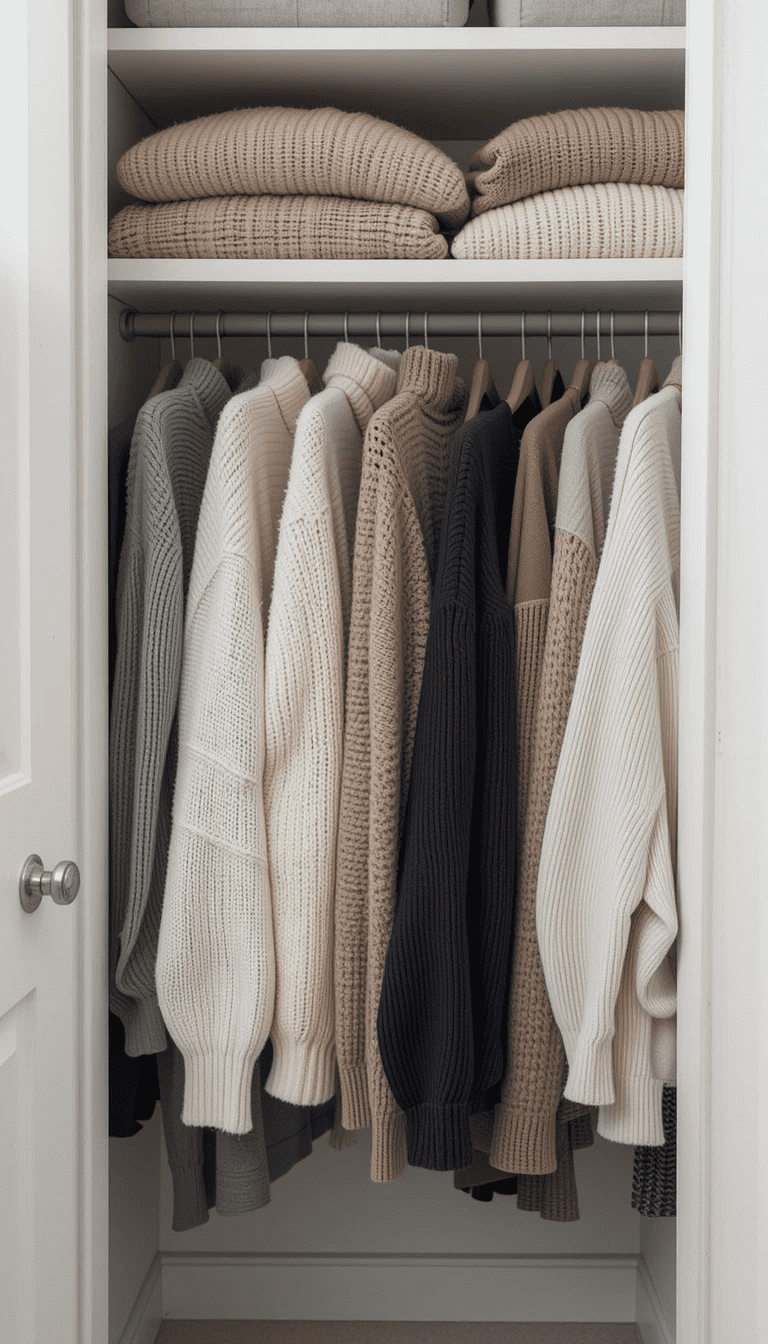
Hanging sweaters isn’t ideal—but sometimes unavoidable.
Use fold-over hanging, where the sweater drapes over the hanger bar at the midsection. Avoid hanging from the shoulders to prevent stretching. Choose wide, padded hangers for support. This method works best for chunky knits worn frequently.
5. Storage Ottomans for Dual-Purpose Spaces

Storage ottomans are practical and stylish.
Fold sweaters neatly and store them flat inside the ottoman compartment. Avoid mixing with shoes or heavy items to prevent compression. This solution works well in bedrooms or living rooms with limited closet space. It keeps sweaters accessible while doubling as furniture.
4. Seasonal Rotation Using Garment Boxes
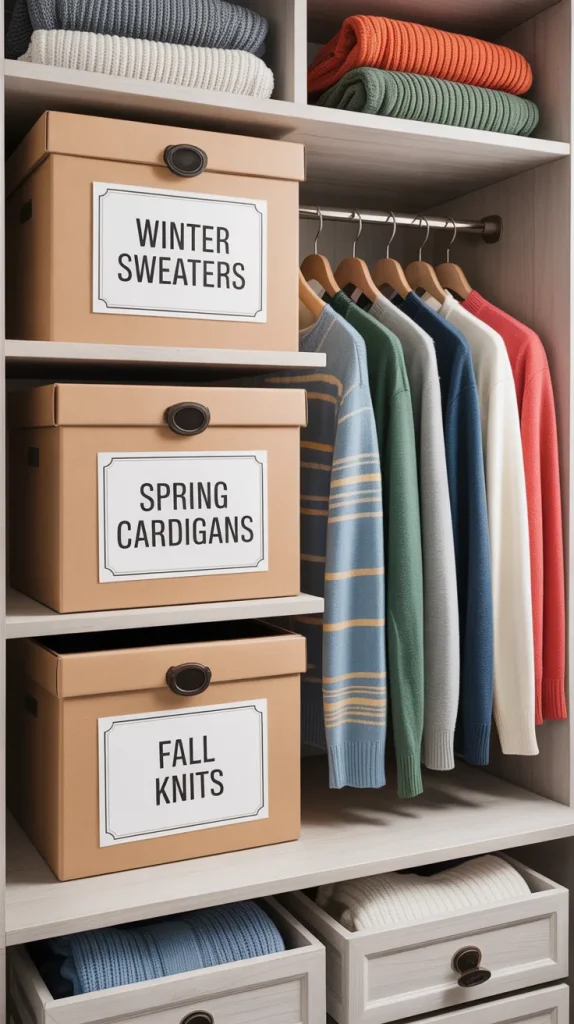
Rotating sweaters seasonally reduces wear and clutter.
Use sturdy garment boxes for off-season storage. Clearly label boxes by season or sweater type. Store boxes in a cool, dry place away from direct sunlight. This system keeps your everyday closet light and manageable.
3. Dedicated Sweater Drawer With Layered Protection
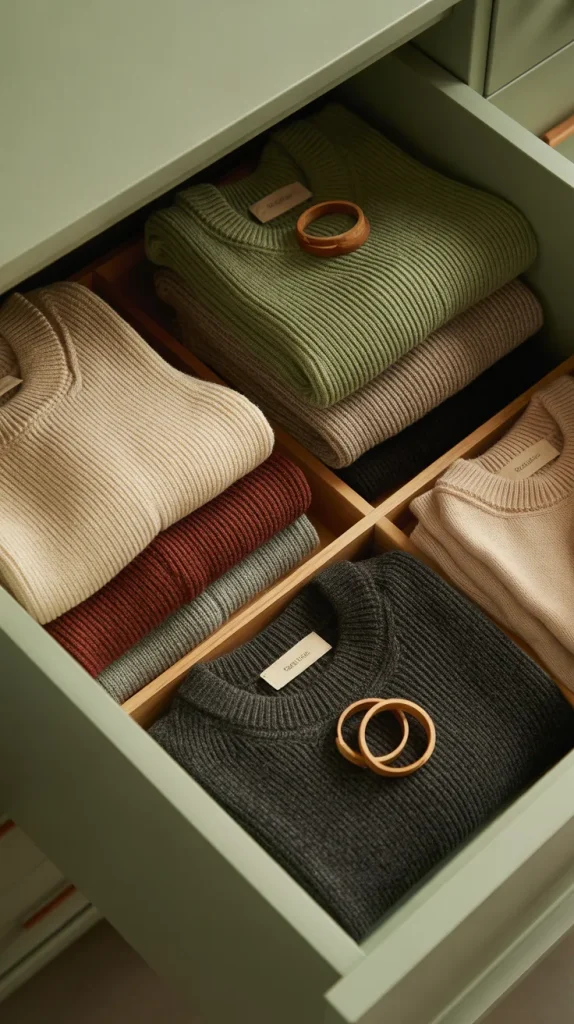
A drawer dedicated only to sweaters keeps them in top shape.
Line the drawer with drawer liners to reduce friction. Fold sweaters carefully and stack by weight, heaviest on the bottom. Add natural repellents like cedar rings. This method works especially well for high-rotation wardrobes.
2. Closet Shelf With Color-Coded Folding

Color-coding turns storage into a time-saving system.
Arrange folded sweaters by color gradient from light to dark. This makes outfits faster to plan and highlights what you actually own. Keep stacks low and evenly folded. It’s functional, visually calming, and surprisingly motivating to maintain.
1. Flat Storage With Individual Fabric Covers
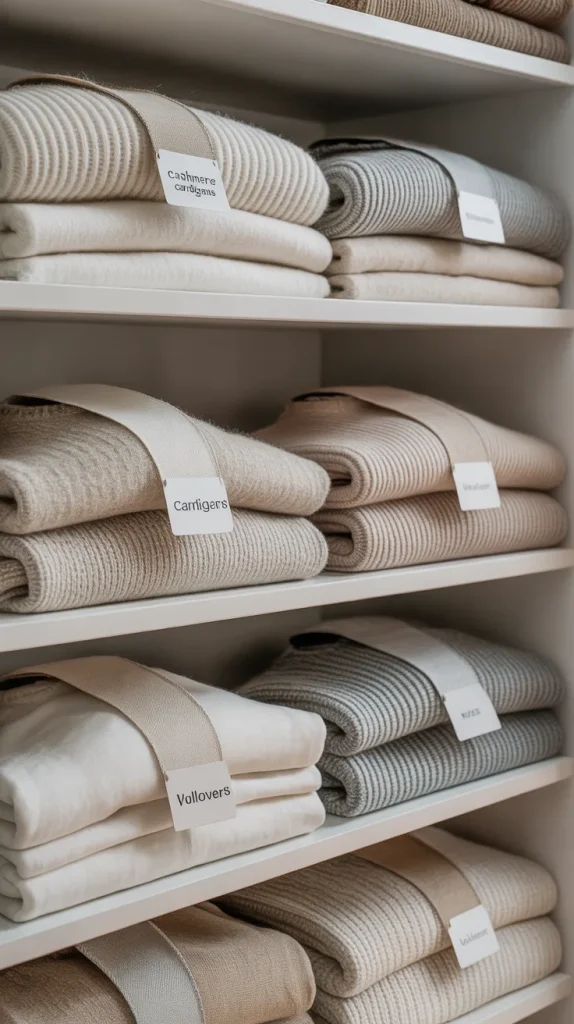
This is the gold standard for sweater care.
Lay sweaters flat on shelves and cover each stack with breathable fabric covers. This protects against dust while allowing airflow. It prevents stretching, wrinkling, and fiber fatigue. If you want sweaters to last years without losing shape, this is the most reliable solution.
Conclusion
Sweater storage isn’t about perfection—it’s about protecting shape, fibers, and longevity. The right method depends on your space, climate, and how often you wear each piece. Whether you use drawers, shelves, or creative furniture storage, consistency is what keeps sweaters looking new. Treat your knits well now, and they’ll return the favor every cold season.